
Title
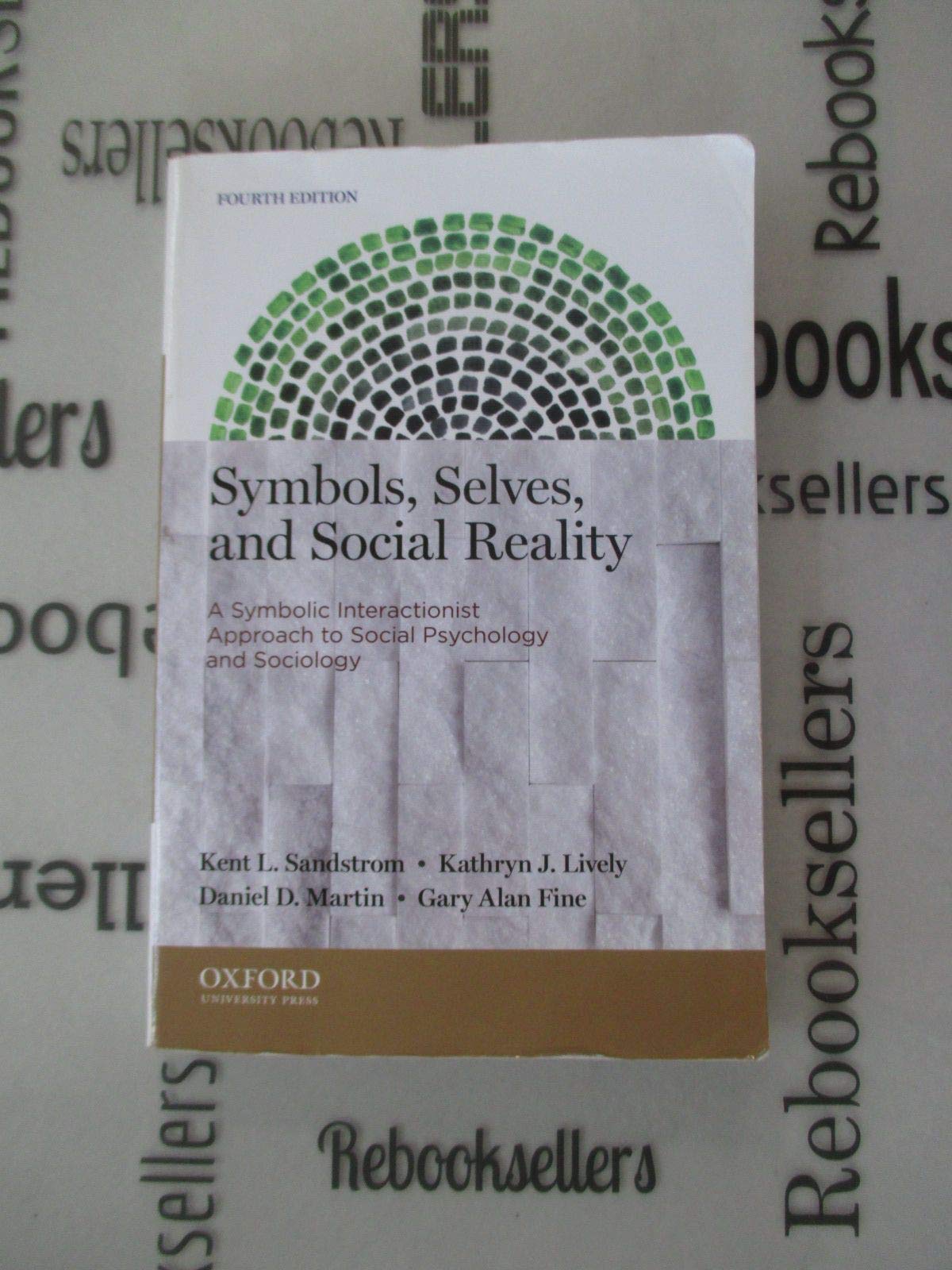
Symbols, Selves, and Social Reality: A Symbolic Interactionist Approach to Social Psychology and Sociology,New
Sold by Ergodebooks, an authorized reseller.
Returns accepted within 30 days | support@ergodebooks.com
Shipping Information
- Free Standard Shipping — United States only
- Processing Time: 3–5 business days
- Estimated Delivery: 6–10 business days after dispatch
- Double-boxed, fully insured & discreetly packaged
- Tracking number sent via email once dispatched
Returns & Refund
Returns accepted within 30 days of delivery.
Damaged or Defective Item
Free return shipping + replacement or full refund
Wrong Item Received
Free return shipping + replacement or full refund
Change of Mind
Return shipping at customer's expense · 25% restocking fee applies
Payment Option

The fourth edition of Symbols, Selves, and Social Reality provides students with a succinct, engaging, and affordable introduction to symbolic interactionismthe perspective that social reality is created, negotiated, and changed through the process of social interaction.Focusing on how elements of race and gender affect identity, the authors use realworld examples to discuss the personal significance of symbolic interactionism, its expanding theoretical scope, and its relationship to other prominent perspectives in sociology and social psychology. They skillfully cover empirical research topics that are inherently interesting to students, such as the dynamics of selfdevelopment, impression management, identity transformation, gender play, rumor transmission, and collective action.
⚠️ WARNING (California Proposition 65):
This product may contain chemicals known to the State of California to cause cancer, birth defects, or other reproductive harm.
For more information, please visit www.P65Warnings.ca.gov.
- Q: What is the main focus of 'Symbols, Selves, and Social Reality'? A: The book primarily focuses on symbolic interactionism, exploring how social reality is created and negotiated through social interactions, particularly in relation to race and gender.
- Q: Who is the author of the book? A: The book is authored by Kent L. Sandstrom.
- Q: What is the publication date of this edition? A: This fourth edition was published on January 16, 2013.
- Q: How many pages are in the book? A: The book contains 352 pages.
- Q: What is the condition of the book? A: The book is listed as 'New'.
- Q: What type of binding does this book have? A: The book is available in paperback binding.
- Q: What are some topics covered in the book? A: The book covers topics such as self-development, impression management, identity transformation, gender play, rumor transmission, and collective action.
- Q: Is this book suitable for beginners in social psychology? A: Yes, the book provides a succinct and engaging introduction to symbolic interactionism, making it suitable for students and beginners in social psychology.
- Q: Are there real-world examples included in the book? A: Yes, the authors use real-world examples to illustrate the concepts of symbolic interactionism and their significance.
- Q: What is the primary audience for this book? A: The primary audience for this book includes students studying sociology and social psychology.