
Title
Symmetry, Causality, Mind (Bradford Books),Used
Sold by Ergodebooks, an authorized reseller.
Returns accepted within 30 days | support@ergodebooks.com
Shipping Information
- Free Standard Shipping — United States only
- Processing Time: 3–5 business days
- Estimated Delivery: 6–10 business days after dispatch
- Double-boxed, fully insured & discreetly packaged
- Tracking number sent via email once dispatched
Returns & Refund
Returns accepted within 30 days of delivery.
Damaged or Defective Item
Free return shipping + replacement or full refund
Wrong Item Received
Free return shipping + replacement or full refund
Change of Mind
Return shipping at customer's expense · 25% restocking fee applies
Payment Option

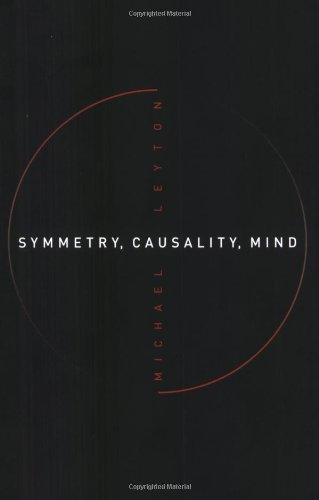
In this investigation of the psychological relationship between shape and time, Leyton argues compellingly that shape is used by the mind to recover the past and as such it forms a basis for memory.Michael Leyton's arguments about the nature of perception and cognition are fascinating, exciting, and sure to be controversial. In this investigation of the psychological relationship between shape and time, Leyton argues compellingly that shape is used by the mind to recover the past and as such it forms a basis for memory. He elaborates a system of rules by which the conversion to memory takes place and presents a number of detailed case studiesin perception, linguistics, art, and even political subjugationthat support these rules.Leyton observes that the mind assigns to any shape a causal history explaining how the shape was formed. We cannot help but perceive a deformed can as a dented can. Moreover, by reducing the study of shape to the study of symmetry, he shows that symmetry is crucial to our everyday cognitive processing. Symmetry is the means by which shape is converted into memory.Perception is usually regarded as the recovery of the spatial layout of the environment. Leyton, however, shows that perception is fundamentally the extraction of time from shape. In doing so, he is able to reduce the several areas of computational vision purely to symmetry principles. Examining grammar in linguistics, he argues that a sentence is psychologically represented as a piece of causal history, an archeological relic disinterred by the listener so that the sentence reveals the past. Again through a detailed analysis of art he shows that what the viewer takes to be the experience of a painting is in fact the extraction of time from the shapes of the painting. Finally he highlights crucial aspects of the mind's attempt to recover time in examples of political subjugation.
⚠️ WARNING (California Proposition 65):
This product may contain chemicals known to the State of California to cause cancer, birth defects, or other reproductive harm.
For more information, please visit www.P65Warnings.ca.gov.