
Title
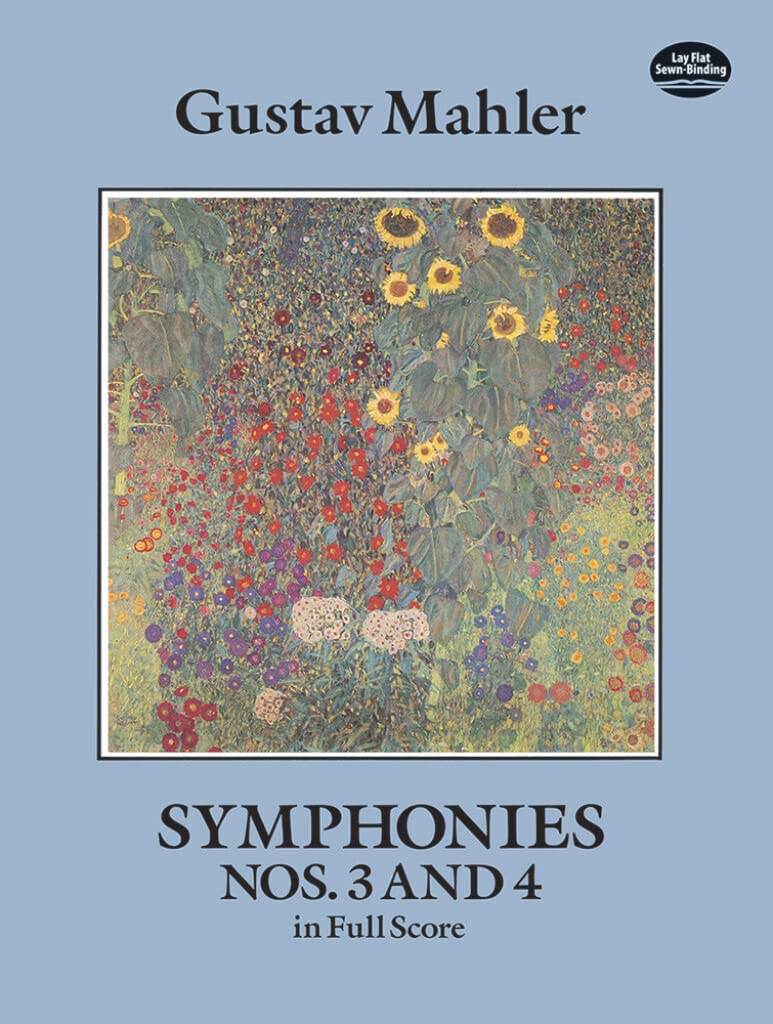
Symphonies Nos. 3 And 4 In Full Score (Dover Orchestral Music Scores),New
Sold by Ergodebooks, an authorized reseller.
Returns accepted within 30 days | support@ergodebooks.com
Shipping Information
- Free Standard Shipping — United States only
- Processing Time: 3–5 business days
- Estimated Delivery: 6–10 business days after dispatch
- Double-boxed, fully insured & discreetly packaged
- Tracking number sent via email once dispatched
Returns & Refund
Returns accepted within 30 days of delivery.
Damaged or Defective Item
Free return shipping + replacement or full refund
Wrong Item Received
Free return shipping + replacement or full refund
Change of Mind
Return shipping at customer's expense · 25% restocking fee applies
Payment Option

Mahler'S Third And Fourth Symphonies Mark A Turning Point In His Development As A Composer. Symphony No. 3 (1896) Predominantly Follows The Musical Style Of The Earlier Two Symphonies, Which Tended To Emphasize A Single Melodic Line With Subordinate Harmonies. Symphony No. 4 (1900) Embodies The More Contrapuntal Style That Characterizes His Later Symphonic Works. At The Same Time, These Works Bring Mahler To The End Of His 'Wunderhorn Years,' When His Inspiration Derived Strongly From Des Knaben Wunderhorn (The Youth'S Magic Horn), An Early 19Thcentury Collection Of Folklike Poetry That Celebrated Themes Of Nature.The Third Symphony, Scored For A Massive Orchestra, Was Conceived As A Vast Nature Cycle In Six Movements. These Include The Great Opening March, The Moving Setting For Alto Of Nietzsche'S 'O Mensch! Gib Acht!' And The Scintillating Bell Song For Women'S And Boys' Choirs 'Es Sungen Drei Engel.' The Fourth Symphony, More Restrained In Expression Yet Filled With Affecting Melody, Is One Of The Most Beloved Of All Mahler'S Symphonies. Smaller In Scale Than The Third And Classically Proportioned, It Progresses From The Striking Sleighbells Of The Opening And The Rich Complexities Of The Early Movements To The Deeply Touching Simplicity And Beauty Of The Closing Soprano Song 'Das Himmlishce Leben.'Now Music Lovers Can Study The Orchestral Richness Of These Two Great Mahler Scores, Reprinted Here From Original Viennese Editions. In The Unusually Diverse Musical Textures Of These Two Contrasting Symphonic Masterworks, Music Professionals, And Students Alike Can Explore The Genius Of The Composer Often Regarded As The Last Great Austrian Symphonist.'
⚠️ WARNING (California Proposition 65):
This product may contain chemicals known to the State of California to cause cancer, birth defects, or other reproductive harm.
For more information, please visit www.P65Warnings.ca.gov.
- Q: What are the dimensions of this book? A: The book measures nine point three three inches in length, zero point eight four inches in width, and twelve point one four inches in height.
- Q: How many pages does this book have? A: This book contains three hundred sixty-eight pages.
- Q: What type of binding does this book have? A: The book is published in paperback binding.
- Q: Who is the author of this book? A: The author of this book is Gustav Mahler.
- Q: What genre does this book belong to? A: This book is categorized under Chamber Music.
- Q: How do I read this music score? A: You can read this music score by following the orchestral notations and dynamics as indicated on each page.
- Q: Is this book suitable for beginners? A: Yes, this book can be suitable for beginners who wish to study Mahler's symphonic compositions.
- Q: Can I use this book for performance? A: Yes, this book is suitable for performance by orchestras or chamber groups.
- Q: What themes are explored in Mahler's Third Symphony? A: Mahler's Third Symphony explores themes of nature and humanity, encapsulated in six movements.
- Q: How should I store this book? A: Store this book in a cool, dry place to prevent damage to the pages and binding.
- Q: What is the shelf-life of this book? A: The shelf-life of this book is indefinite as long as it is stored properly.
- Q: How do I keep this book in good condition? A: Keep this book away from direct sunlight and humidity to maintain its condition.
- Q: What if the book arrives damaged? A: If the book arrives damaged, please contact customer support for a return or exchange.
- Q: Is there a warranty on this book? A: No, there is no warranty on this book as it is a printed publication.
- Q: How does this book compare to other Mahler scores? A: This book is a comprehensive edition of Mahler's Third and Fourth Symphonies, making it essential for both study and performance.
- Q: Is this book appropriate for children? A: Yes, this book can be appropriate for children interested in classical music and orchestration.