If you have any questions, you are always welcome to contact us. We'll get back to you as soon as possible, withing 24 hours on weekdays.
Customer service
All questions about your order, return and delivery must be sent to our customer service team by e-mail at yourstore@yourdomain.com
Sale & Press
If you are interested in selling our products, need more information about our brand or wish to make a collaboration, please contact us at press@yourdomain.com
Help
If you have any questions, you are always welcome to contact us. We'll get back to you as soon as possible, withing 24 hours on weekdays.
Customer service
All questions about your order, return and delivery must be sent to our customer service team by e-mail at yourstore@yourdomain.com
Sale & Press
If you are interested in selling our products, need more information about our brand or wish to make a collaboration, please contact us at press@yourdomain.com
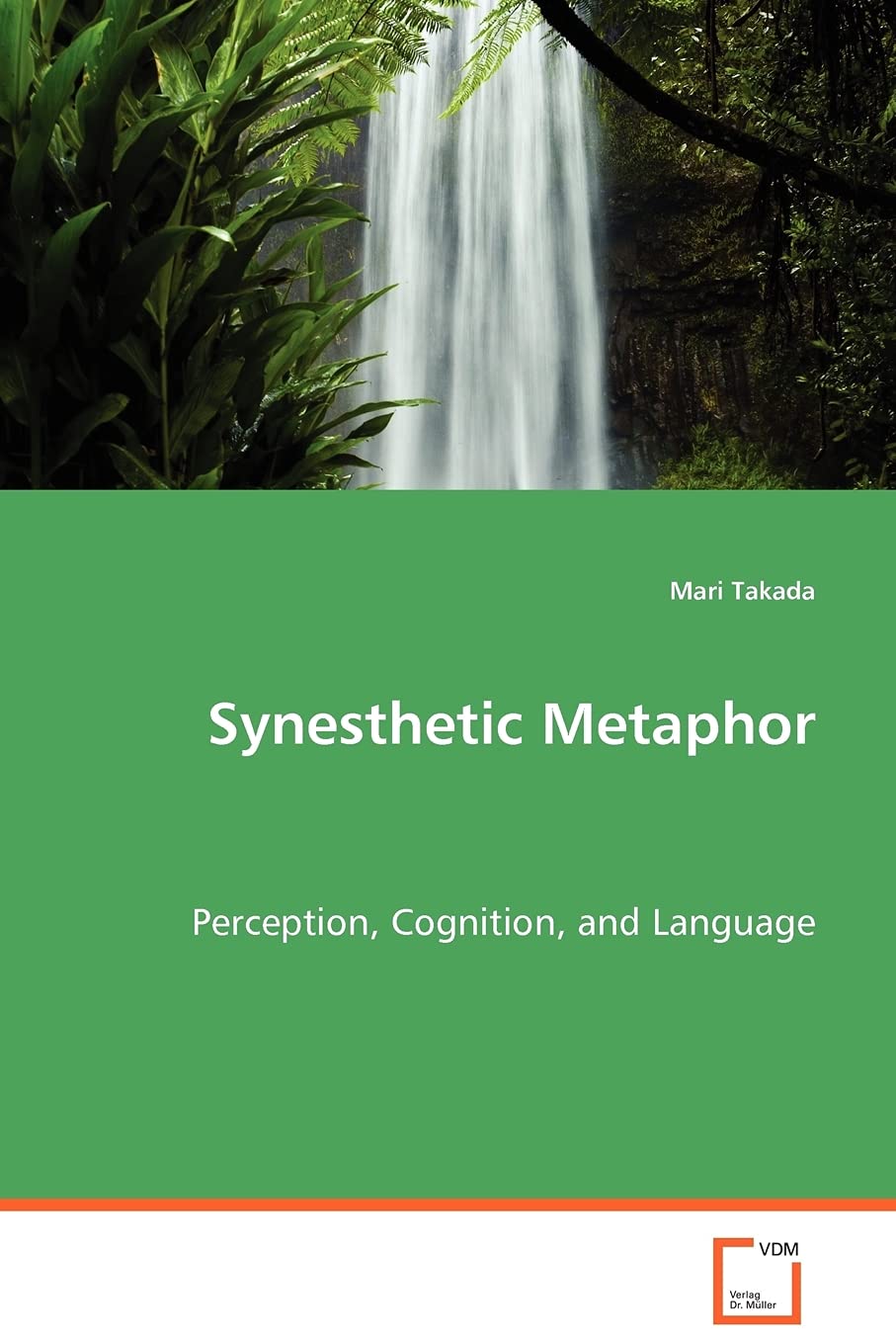
Since the emergence of cognitive linguistics in the 1980s, metaphor has been regarded as one of the fundamental areas of language and cognition. Nevertheless, few empirical studies have focused on synesthetic metaphors, which involve transfer from one sensory domain to another. This study provides a theoretical and empirical analysis of synesthetic metaphors for sound such as bright sound and sharp voice. Corpus analysis of literary works shows that synesthetic metaphors are similar in English and Japanese. However, some differences exist in the types of linguistic expressions that accompany the metaphors (e.g., onomatopoeia) and the aspects of sounds that are described (e.g., sound source). Based on the experimental data involving three different types of sounds environmental sounds, music, and speech it becomes evident that synesthetic metaphors are related to the physical aspects of stimuli as well as cultural tendencies. The study brings together research findings on metaphor and sound from wideranging fields, and should be useful to metaphor researchers in linguistics, philosophy, literature, music theory, anthropology, psychology, and neuroscience.
⚠️ WARNING (California Proposition 65):
This product may contain chemicals known to the State of California to cause cancer,
birth defects, or other reproductive harm.
For MAP (Minimum Advertised Price) violations and Intellectual Property (IP) or Trademark concerns, please contact:
support@ergodebooks.com
⚠️ California Proposition 65 Warning: Some products sold on this website may expose you to chemicals known to the State of California to cause cancer, birth defects, or other reproductive harm. For more information, visit www.P65Warnings.ca.gov.