
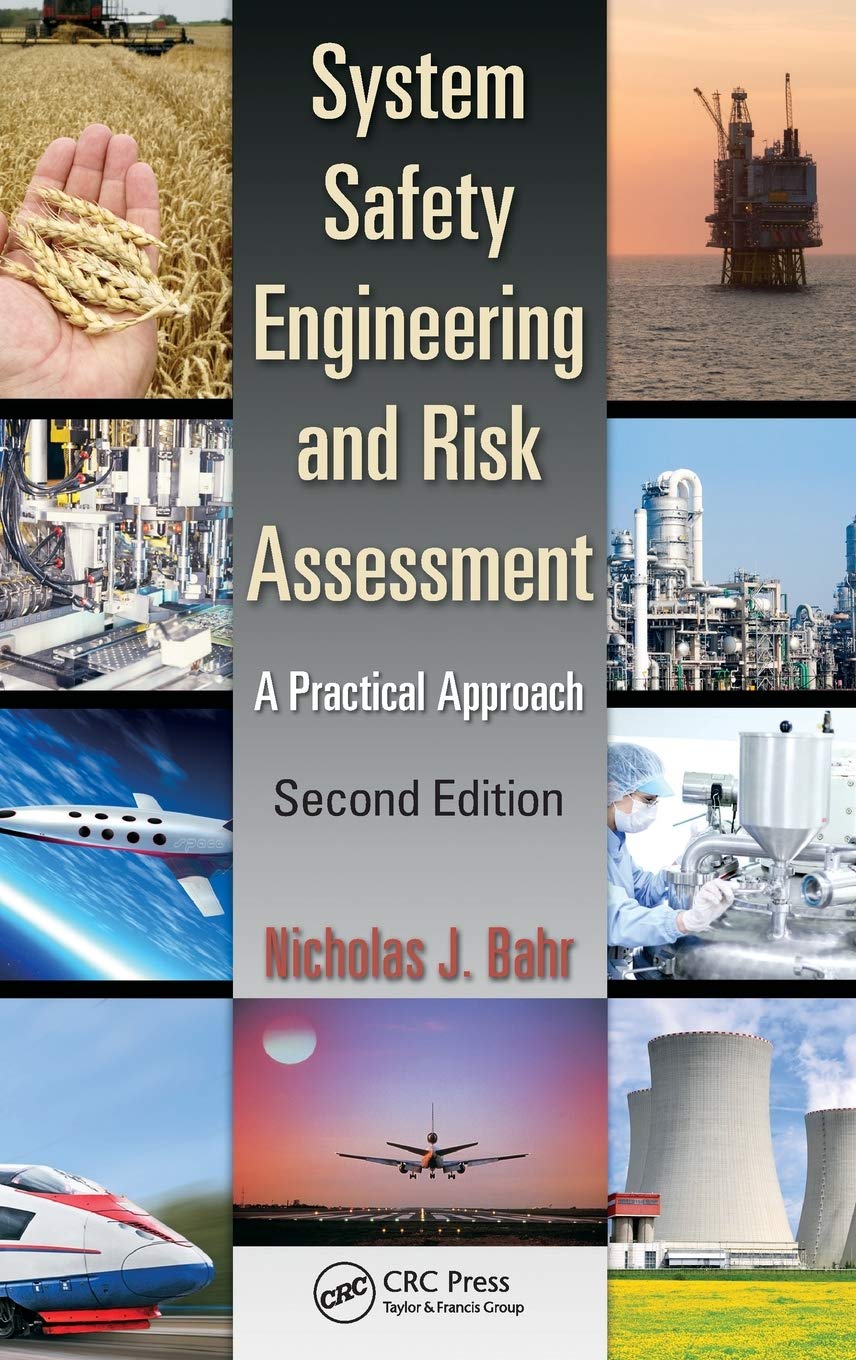
Title
System Safety Engineering And Risk Assessment: A Practical Approach, Second Edition
Sold by Ergodebooks, an authorized reseller.
Returns accepted within 30 days | support@ergodebooks.com
Shipping Information
- Free Standard Shipping — United States only
- Processing Time: 3–5 business days
- Estimated Delivery: 6–10 business days after dispatch
- Double-boxed, fully insured & discreetly packaged
- Tracking number sent via email once dispatched
Returns & Refund
Returns accepted within 30 days of delivery.
Damaged or Defective Item
Free return shipping + replacement or full refund
Wrong Item Received
Free return shipping + replacement or full refund
Change of Mind
Return shipping at customer's expense · 25% restocking fee applies
Payment Option

We All Know That Safety Should Be An Integral Part Of The Systems That We Build And Operate. The Public Demands That They Are Protected From Accidents, Yet Industry And Government Do Not Always Know How To Reach This Common Goal. This Book Gives Engineers And Managers Working In Companies And Governments Around The World A Pragmatic And Reasonable Approach To System Safety And Risk Assessment Techniques. It Explains In Easytounderstand Language How To Design Workable Safety Management Systems And Implement Tested Solutions Immediately.The Book Is Intended For Working Engineers Who Know That They Need To Build Safe Systems, But Arent Sure Where To Start. To Make It Easy To Get Started Quickly, It Includes Numerous Reallife Engineering Examples. The Books Many Practical Tips And Best Practices Explain Not Only How To Prevent Accidents, But Also How To Build Safety Into Systems At A Sensible Price. The Book Also Includes Numerous Case Studies From Real Disasters That Describe What Went Wrong And The Lessons Learned.See Whats New In The Second Edition: New Chapter On Developing Government Safety Oversight Programs And Regulations, Including Designing And Setting Up A New Safety Regulatory Body, Developing Safety Regulatory Oversight Functions And Governance, Developing Safety Regulations, And How To Avoid Common Mistakes In Government Oversight Significantly Expanded Chapter On Safety Management Systems, With Many Practical Applications From Around The World And Information About Designing And Building Robust Safety Management Systems, Auditing Them, Gaining Internal Support, And Creating A Safety Culture New And Expanded Case Studies And Notes From Nicks Files (Examples Of Practical Applications From The Authors Extensive Experience) Increased International Focus On Worldleading Practices From Multiple Industries With Practical Examples, Common Mistakes To Avoid, And New Thinking About How To Build Sustainable Safety Management Systems New Material On Safety Culture, Developing Leading Safety Performance Indicators, Safety Maturity Model, Auditing Safety Management Systems, And Setting Up A Safety Knowledge Management System
⚠️ WARNING (California Proposition 65):
This product may contain chemicals known to the State of California to cause cancer, birth defects, or other reproductive harm.
For more information, please visit www.P65Warnings.ca.gov.
- Q: How many pages are in this book? A: This book contains four hundred forty-four pages. It offers a comprehensive guide to system safety engineering and risk assessment.
- Q: What is the binding type of this book? A: The book is hardcover. This durable binding type is ideal for frequent use and enhances its longevity.
- Q: What are the dimensions of this book? A: The book measures six point twenty-six inches in length, six point fourteen inches in width, and nine point twenty-five inches in height. These dimensions make it portable yet substantial for reading.
- Q: Who is the author of this book? A: The author is Nicholas J. Bahr. He brings a wealth of experience in engineering and safety management to this practical guide.
- Q: What edition is this book? A: This is the second edition of the book. It includes updated content and new case studies for enhanced learning.
- Q: How can I apply the techniques from this book? A: You can apply the techniques by implementing safety management systems based on the real-life examples provided. The book offers practical tips for immediate application.
- Q: Is this book suitable for beginners in safety engineering? A: Yes, this book is suitable for beginners. It explains complex concepts in easy-to-understand language, making it accessible for those new to the field.
- Q: Does this book include case studies? A: Yes, the book includes numerous case studies from real disasters. These case studies highlight what went wrong and the lessons learned.
- Q: Can this book help improve safety culture in organizations? A: Yes, it provides insights on developing a safety culture. The book discusses how to create and promote safety within organizations effectively.
- Q: Are there practical applications included in this book? A: Yes, there are many practical applications included. The author shares experiences and examples that illustrate effective system safety practices.
- Q: What is the focus of the new chapter in the second edition? A: The new chapter focuses on developing government safety oversight programs and regulations. It offers guidance on establishing safety regulatory bodies and avoiding common oversight mistakes.
- Q: What are safety performance indicators discussed in the book? A: The book discusses developing leading safety performance indicators. These indicators help organizations measure and improve their safety outcomes.
- Q: How does this book address common industry mistakes? A: It identifies common mistakes to avoid in safety management. The practical examples serve as cautionary tales for engineers and managers.
- Q: Is there a focus on international practices in this book? A: Yes, the book includes an increased international focus. It highlights world-leading practices from various industries with practical examples.
- Q: What can I learn about auditing safety management systems? A: You can learn how to audit safety management systems effectively. The book provides guidelines for gaining internal support and creating a safety culture.
- Q: How does this book assist in developing safety regulations? A: It provides a framework for developing safety regulations. The author emphasizes designing and setting up oversight functions to enhance safety governance.