
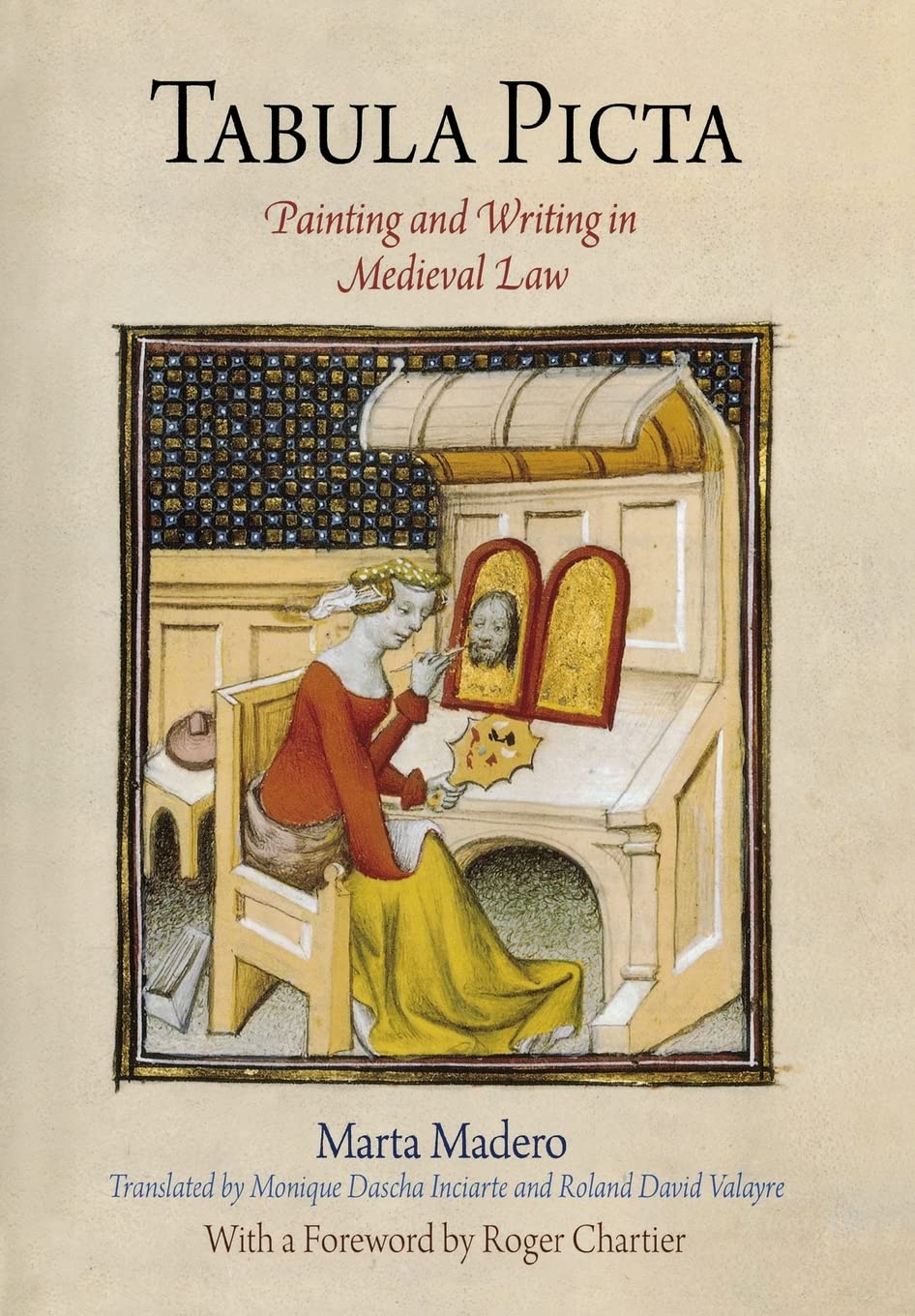
Title
Tabula Picta: Painting and Writing in Medieval Law (Material Texts),New
Sold by Ergodebooks, an authorized reseller.
Returns accepted within 30 days | support@ergodebooks.com
Shipping Information
- Free Standard Shipping — United States only
- Processing Time: 3–5 business days
- Estimated Delivery: 6–10 business days after dispatch
- Double-boxed, fully insured & discreetly packaged
- Tracking number sent via email once dispatched
Returns & Refund
Returns accepted within 30 days of delivery.
Damaged or Defective Item
Free return shipping + replacement or full refund
Wrong Item Received
Free return shipping + replacement or full refund
Change of Mind
Return shipping at customer's expense · 25% restocking fee applies
Payment Option

To whom does a painted tableta tabula pictabelong? To the owner of the physical piece of wood on which an image is painted? Or to the person who made the painting on that piece of wood? By extension, one might ask, who is the owner of a text? Is it the person who has written the words, or the individual who possesses the piece of parchment or slab of stone on which those words are inscribed?In Tabula Picta Marta Madero turns to the extensive glosses and commentaries that medieval jurists dedicated to the above questions when articulating a notion of intellectual and artistic property radically different from our own. The most important goal for these legal thinkers, Madero argues, was to situate thingswhatever they might bewithin a logical framework that would allow for their description, categorization, and placement within a proper hierarchical order. Only juridical reasoning, they claimed, was capable of sorting out the individual elements that nature or human art had brought together in a single unit; by establishing sets of distinctions and taxonomies worthy of Borges, legal discourse sought to demonstrate that behind the deceptive immediacy of things, lie the concepts and arguments of what one might call the artifices of the concrete.
⚠️ WARNING (California Proposition 65):
This product may contain chemicals known to the State of California to cause cancer, birth defects, or other reproductive harm.
For more information, please visit www.P65Warnings.ca.gov.
- Q: What is the main theme of 'Tabula Picta: Painting and Writing in Medieval Law'? A: The main theme of the book explores the concept of ownership regarding painted tablets and texts, questioning whether ownership lies with the creator or the possessor, and delves into medieval jurists' views on intellectual and artistic property.
- Q: Who is the author of this book? A: The author of 'Tabula Picta: Painting and Writing in Medieval Law' is Marta Madero.
- Q: What is the publication date of this book? A: The book was published on October 16, 2009.
- Q: How many pages does the book contain? A: The book contains 160 pages.
- Q: What type of binding does this book have? A: The book is bound in hardcover.
- Q: Is this book new or used? A: The condition of the book is new.
- Q: In which category is this book listed? A: This book is categorized under Europe.
- Q: What is the significance of the glosses and commentaries discussed in the book? A: The glosses and commentaries are significant as they provide insight into how medieval jurists articulated their understanding of intellectual property, situating items within a logical framework.
- Q: What insights does the book offer regarding medieval law? A: The book offers insights into how medieval law perceived ownership and intellectual property, showcasing a framework that diverges from contemporary views.
- Q: Where are orders for this book dispatched from? A: Orders for this book are dispatched from a UK warehouse the next working day.