
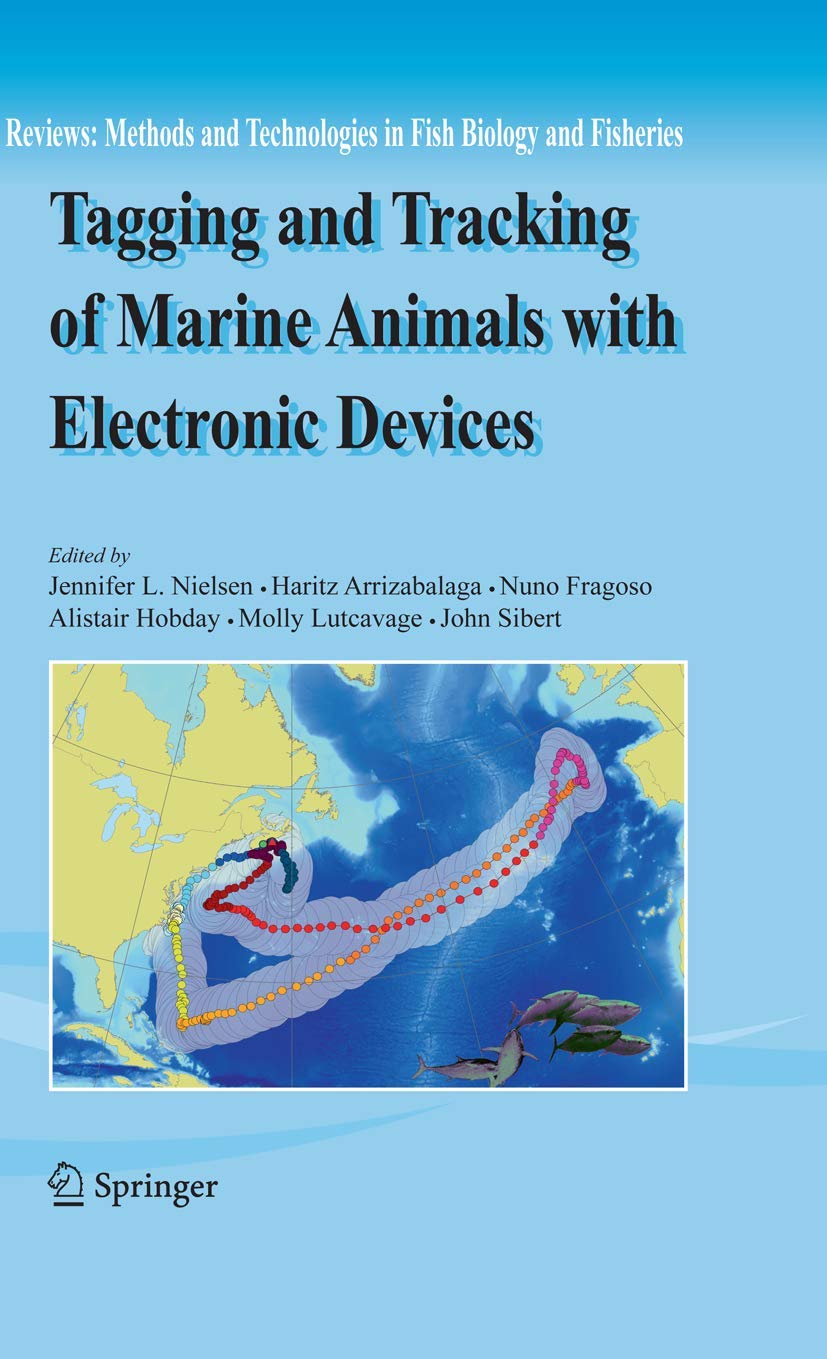
Title
Tagging And Tracking Of Marine Animals With Electronic Devices (Reviews: Methods And Technologies In Fish Biology And Fisheries,
Sold by Ergodebooks, an authorized reseller.
Returns accepted within 30 days | support@ergodebooks.com
Shipping Information
- Free Standard Shipping — United States only
- Processing Time: 3–5 business days
- Estimated Delivery: 6–10 business days after dispatch
- Double-boxed, fully insured & discreetly packaged
- Tracking number sent via email once dispatched
Returns & Refund
Returns accepted within 30 days of delivery.
Damaged or Defective Item
Free return shipping + replacement or full refund
Wrong Item Received
Free return shipping + replacement or full refund
Change of Mind
Return shipping at customer's expense · 25% restocking fee applies
Payment Option

The 2Nd International Tagging And Tracking Symposium Was Held In San Sebastian, Spain, In October 2007, Seven Years After The First Symposium Was Held In Hawaii In 2000 (Sibert And Nielsen 2001). In The Intervening Seven Years, There Have Been Major Advances In Both The Capability And Reliability Of Electronic Tags And Analytical Approaches For Geolocation Of Tagged Animals In Marine Habitats. Advances Such As Increased Data Storage Capacity, Sensor Development, And Tag Miniaturization Have Allowed Researchers To Track A Much Wider Array Of Marine Animals, Not Just Large And Charismatic Species. Importantly, Data Returned By These Tags Are Now Being Used In Population Analyses And Movement Simulations That Can Be Directly Utilized In Stock Assessments And Other Management Applications.Papers In This Volume Are Divided Into Three Sections, The First Describing Insights Into Behavior Achieved Using Acoustic, Archival, And Novel Tags, The Second Reporting On Advances In Methods Of Geolocation, While The Final Section Includes Contributions Where Tag Data Have Been Used In Management Of Marine Species. Accurate Documentation Of Animal Movements And Behaviors In Critical Marine Habitats Are Impossible To Obtain With Other Technologies. The Management And Conservation Of Marine Species Are Critical In Todays Changing Ocean Environment And As Electronic Tags Become More Accurate And Functional For A Diversity Of Organisms Their Application Continues To Grow, Setting New Standards In Science And Technology.
⚠️ WARNING (California Proposition 65):
This product may contain chemicals known to the State of California to cause cancer, birth defects, or other reproductive harm.
For more information, please visit www.P65Warnings.ca.gov.
- Q: How many pages does the book have? A: The book has four hundred seventy-eight pages. This extensive length allows for in-depth discussions on the tagging and tracking of marine animals.
- Q: What are the dimensions of the book? A: The book measures six point three inches in length, nine point three inches in height, and zero point nine one inches in width. These dimensions make it a standard-sized hardcover book.
- Q: What type of binding does this book have? A: This book is bound in hardcover. Hardcover binding offers durability and longevity for frequent use.
- Q: Who is the author of the book? A: The author of the book is Jennifer L. Nielsen. She contributes significant expertise in the field of marine biology.
- Q: What is the main topic of the book? A: The main topic of the book is the tagging and tracking of marine animals. It covers methods, technologies, and their implications in fish biology and fisheries.
- Q: Is this book suitable for beginners in marine biology? A: Yes, this book is suitable for beginners. It provides foundational insights into electronic tagging technologies, making it accessible for newcomers.
- Q: Can this book be used for academic research? A: Yes, this book can be used for academic research. It includes advanced methods and case studies that are relevant for scholars and practitioners.
- Q: What kind of insights does the book provide about marine animal behavior? A: The book provides insights into behavior achieved using acoustic and archival tags. It discusses how these technologies have advanced our understanding of marine species.
- Q: What is the book's category in the library system? A: The book is categorized under Psychology and Counseling. This classification may seem unusual but reflects the interdisciplinary nature of marine research.
- Q: How should I store this book to keep it in good condition? A: Store the book in a cool, dry place away from direct sunlight. This helps prevent damage to the hardcover and preserves the integrity of the pages.
- Q: What is the recommended care for a used copy of this book? A: For a used copy, handle it gently and keep it clean. Avoid exposing it to moisture to prevent warping or staining.
- Q: Is there a warranty or return policy for this book? A: Typically, books do not come with a warranty. However, return policies may vary by seller, so check with the retailer for specific terms.
- Q: What if the book arrives damaged? A: If the book arrives damaged, you should contact the seller immediately for a replacement or refund. Most retailers have policies to address such issues.
- Q: Are there any notable reviews of this book? A: Yes, the book has received positive reviews for its comprehensive coverage of electronic tagging technologies. Readers appreciate the depth of information provided.
- Q: How does this book compare to others in marine biology? A: This book stands out due to its focus on electronic tagging advancements. Unlike others, it integrates technological developments with practical applications in marine management.
- Q: Is this book appropriate for children? A: No, this book is not specifically aimed at children. Its advanced topics are better suited for adults and students with a background in marine biology.