

Title
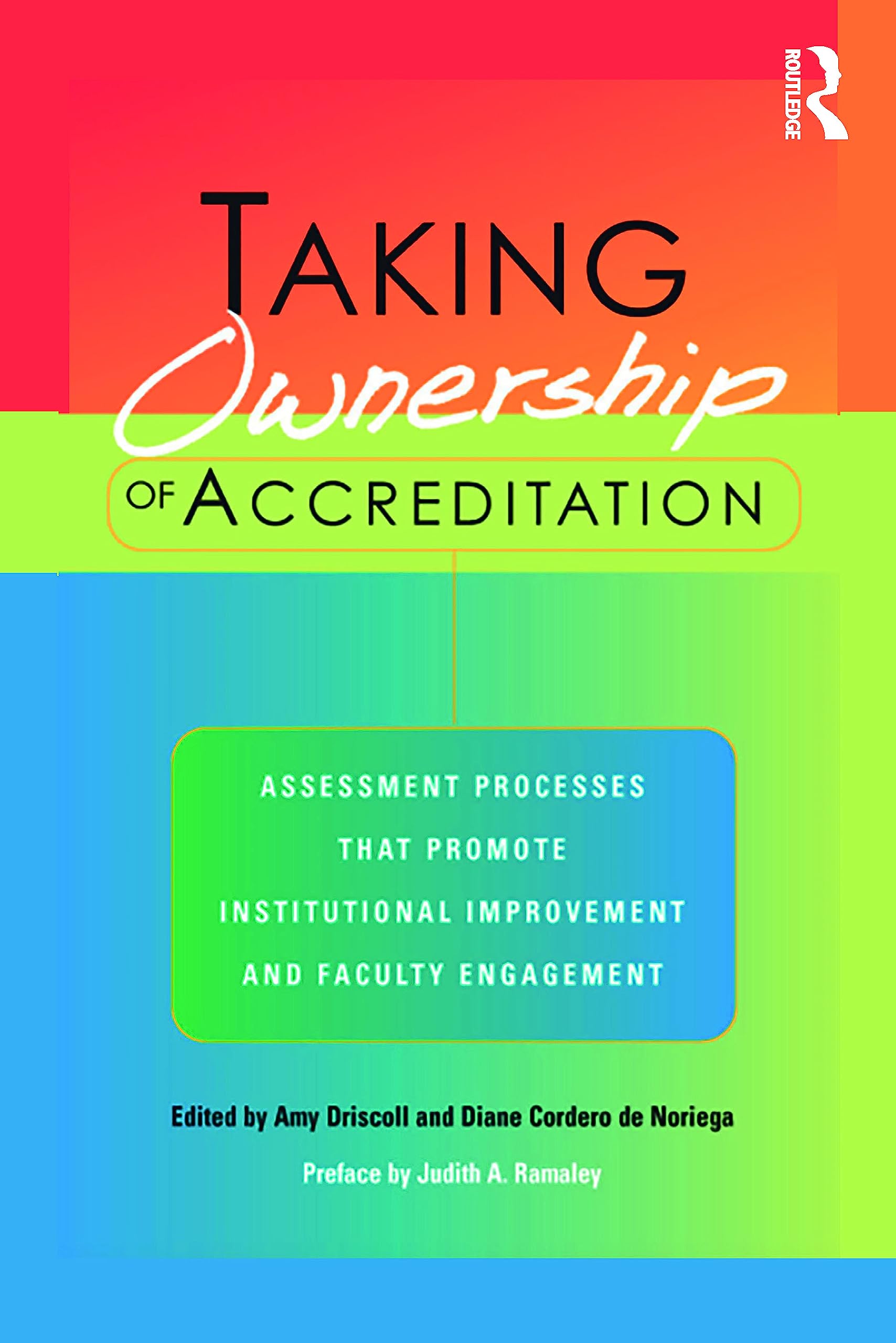


Taking Ownership of Accreditation,Used
Sold by Ergodebooks, an authorized reseller.
Returns accepted within 30 days | support@ergodebooks.com
Shipping Information
- Free Standard Shipping — United States only
- Processing Time: 3–5 business days
- Estimated Delivery: 6–10 business days after dispatch
- Double-boxed, fully insured & discreetly packaged
- Tracking number sent via email once dispatched
Returns & Refund
Returns accepted within 30 days of delivery.
Damaged or Defective Item
Free return shipping + replacement or full refund
Wrong Item Received
Free return shipping + replacement or full refund
Change of Mind
Return shipping at customer's expense · 25% restocking fee applies
Payment Option

This book demonstrates how a participatory approach to assessment and accreditation in their new forms creates a synergy for learnercentered education. It is a guide to approaching the accreditation process from a campuswide perspective of ownershipillustrated by rich descriptions of how faculty, students, and administrators at California State University Monterey Bay engaged with and successfully focused their accreditation processes on the improvement of their practices. The approach that the authors describe was driven by a commitment to go beyond satisfying the accreditation expectations so as to promote ongoing and longterm improvement of student learning. It also reflects the shift of responsibility for assessment within institutions from a designated office to individual faculty and staff, entire departments, and the campus as a whole.The authors document strategies that are practicalready to use or adaptthat are appropriate for all campuses. They also provide guidelines for the documentation process that accreditation demands. They demonstrate how they reduced traditional resistance to assessment by emphasizing its use for the improvement of student learning, helping faculty with their own teaching, and creating frameworks for continuing improvements that are valued by faculty.The authors emphasize the need for every institution to take into account its unique mission, vision, and core values; and to recognize the importance of individual departmental cultures. Although their accreditation "triggered" CSUMBs engagement with assessment, the authors discuss other opportunities for jumpstarting the process.
⚠️ WARNING (California Proposition 65):
This product may contain chemicals known to the State of California to cause cancer, birth defects, or other reproductive harm.
For more information, please visit www.P65Warnings.ca.gov.