
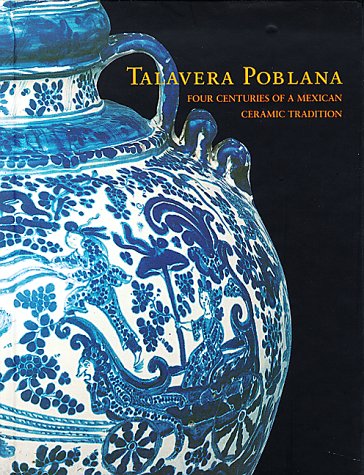
Title
Talavera Poblana: Four Centuries of a Mexican Ceramic Tradition,Used
Sold by Ergodebooks, an authorized reseller.
Returns accepted within 30 days | support@ergodebooks.com
Shipping Information
- Free Standard Shipping — United States only
- Processing Time: 3–5 business days
- Estimated Delivery: 6–10 business days after dispatch
- Double-boxed, fully insured & discreetly packaged
- Tracking number sent via email once dispatched
Returns & Refund
Returns accepted within 30 days of delivery.
Damaged or Defective Item
Free return shipping + replacement or full refund
Wrong Item Received
Free return shipping + replacement or full refund
Change of Mind
Return shipping at customer's expense · 25% restocking fee applies
Payment Option

This illustrated bilingual study explores the development of Talavera Poblana tinglazed earthenware, from the seventeenth century when it was introduced to the New World in Puebla, Mexico, to the present day. These distinctive ceramic basins, vases, drug jars, tile panels, and sculptures synthesize forms and motifs of Spanish, Islamic, Chinese, and Italian origins to create a magnificent, uniquely Mexican style.In 1565, when trade opened with Asia, Spain began importing Chinese porcelain in large quantities, and by the midseventeenth century, Puebla ceramists had succumbed to the fashion for Chinese blueonwhite porcelain. At the height of the Spanish empire, Talavera Poblana enjoyed the widest distribution of any ceramic ware in the New World. Around the time of Mexican independence the Talavera Poblana ceramic tradition experienced a collapse, to be revived in the early twentieth century.This collection of important examples of colonial, modern, and contemporary ceramics from Puebla celebrates the continuity of a ceramic tradition that both looks back to its cultural history and reveals a renewed contemporary vision.
⚠️ WARNING (California Proposition 65):
This product may contain chemicals known to the State of California to cause cancer, birth defects, or other reproductive harm.
For more information, please visit www.P65Warnings.ca.gov.