
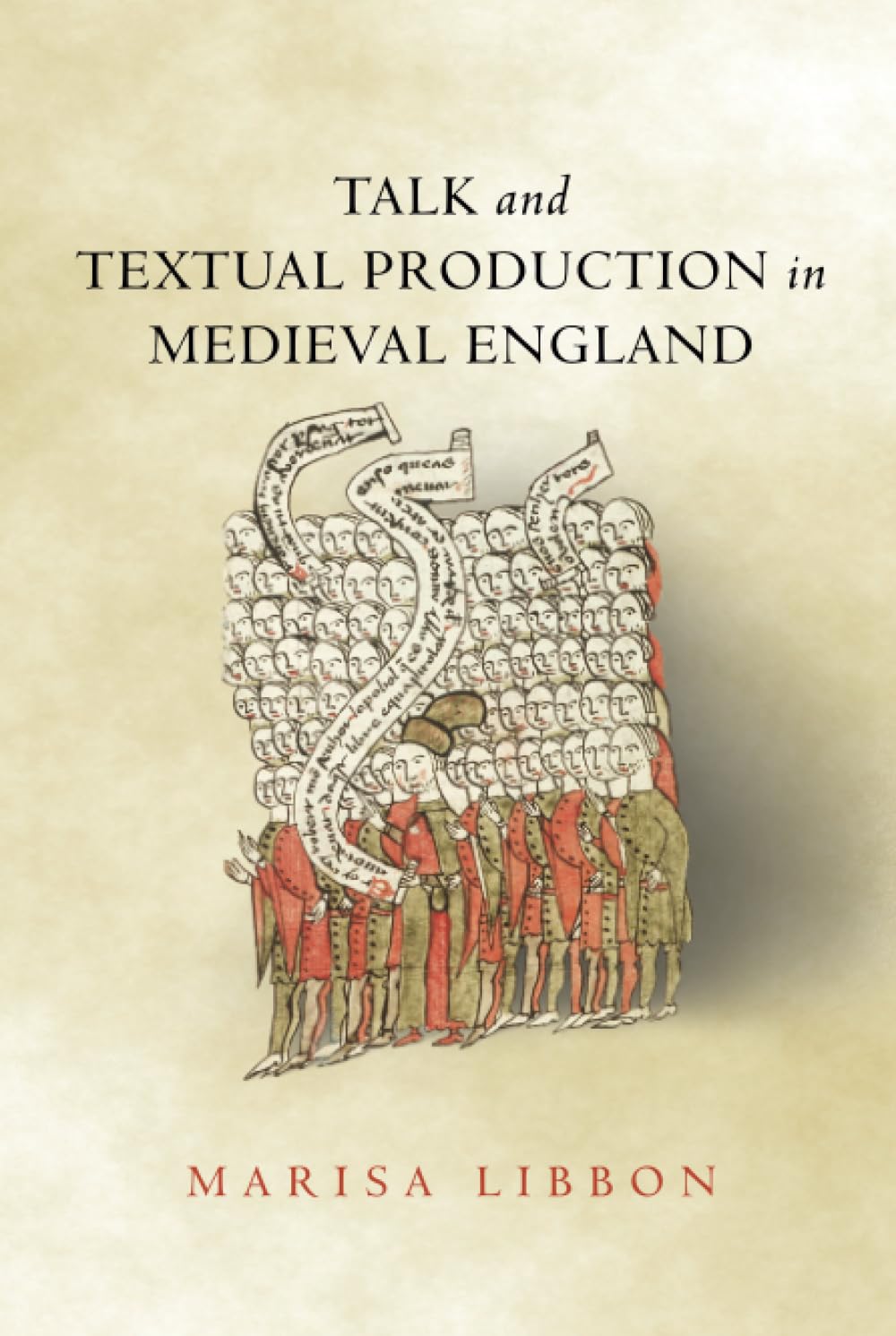
Title
Talk And Textual Production In Medieval England (Interventions: New Studies Medieval Cult),Used
Sold by Ergodebooks, an authorized reseller.
Returns accepted within 30 days | support@ergodebooks.com
Shipping Information
- Free Standard Shipping — United States only
- Processing Time: 3–5 business days
- Estimated Delivery: 6–10 business days after dispatch
- Double-boxed, fully insured & discreetly packaged
- Tracking number sent via email once dispatched
Returns & Refund
Returns accepted within 30 days of delivery.
Damaged or Defective Item
Free return shipping + replacement or full refund
Wrong Item Received
Free return shipping + replacement or full refund
Change of Mind
Return shipping at customer's expense · 25% restocking fee applies
Payment Option

People in medieval England talked, and yet we seldom talk or write about their talk. People conversed not within literary texts, but in the world in which those texts were composed and copied. The absence of such talk from our record of the medieval past is strange. Its absence from our formulation of medieval literary history is stranger still. In Talk and Textual Production in Medieval England, Marisa Libbon argues that talk among medieval Englands public, especially talk about history and identity, was essential to the production of texts and was a fundamental part of the transmission and reception of literature. Examining Richard Is life as an exemplary subject of medieval Englands classcrossing talk about the past, Libbon advances a theory of how talk circulates history, identity, and cultural memory over time. By identifying sites of local talk about England's past, from law courts to palace chambers, and tracing rumors about Richard that circulated during his life and long after his death, Libbon offers a literary history of Richard that accounts for the spaces between and around extant manuscript copies of Middle English romances like Richard Coeur de Lion, insular and Continental chronicles, and chansons de geste with figures such as Charlemagne and Roland. These spaces, usually dismissed as silent, tell us about the processes of writing and reading and illuminate the intangible daily life in which textual production occurred. In revealing the pressures that talk about the past exerted on textual production, this bookrelocates the power of making culture and collective memory to a wider, collaborative authorship in medieval England.
⚠️ WARNING (California Proposition 65):
This product may contain chemicals known to the State of California to cause cancer, birth defects, or other reproductive harm.
For more information, please visit www.P65Warnings.ca.gov.