
Title
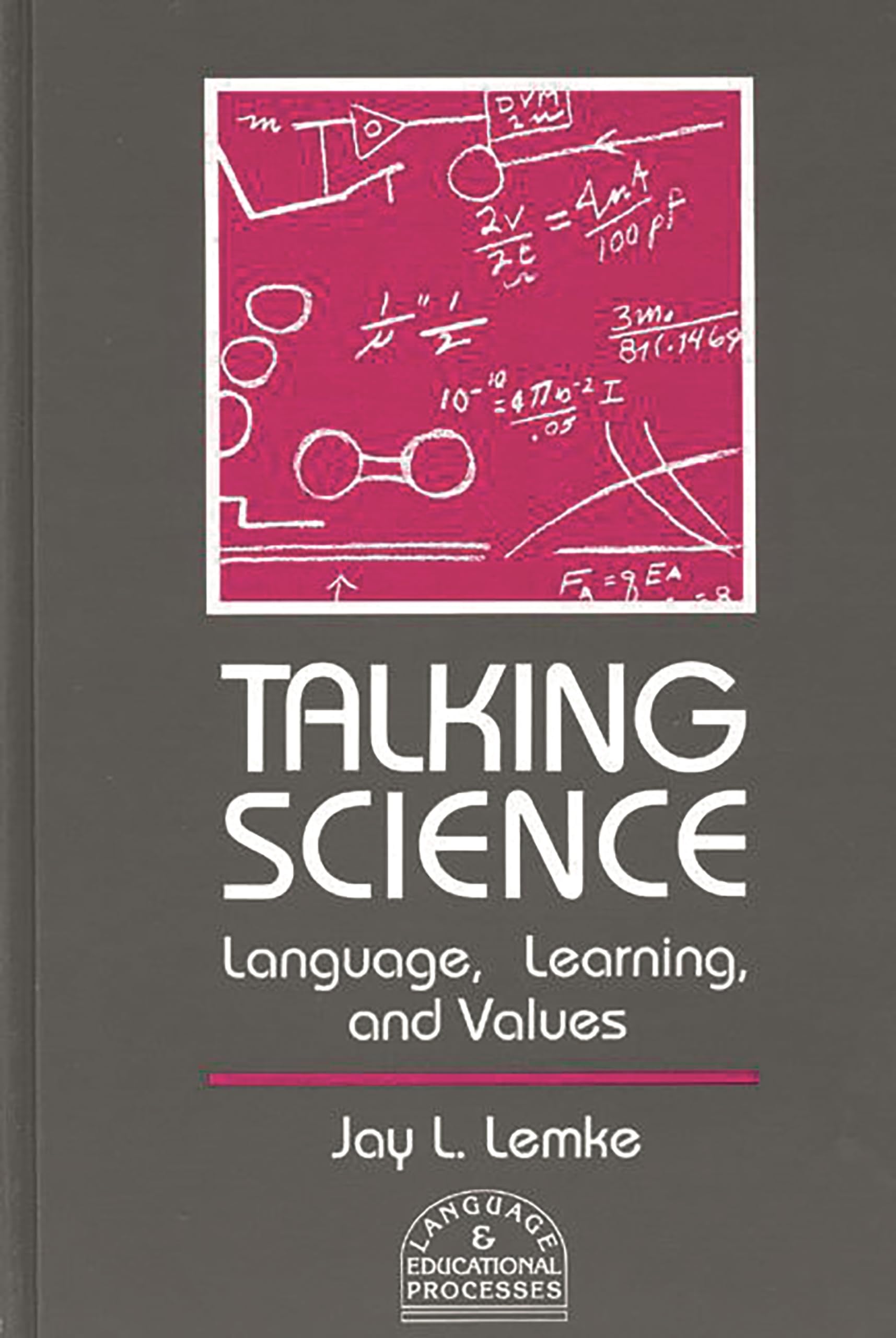
Talking Science: Language, Learning, And Values (Language And Educational Processes),New
Sold by Ergodebooks, an authorized reseller.
Returns accepted within 30 days | support@ergodebooks.com
Shipping Information
- Free Standard Shipping — United States only
- Processing Time: 3–5 business days
- Estimated Delivery: 6–10 business days after dispatch
- Double-boxed, fully insured & discreetly packaged
- Tracking number sent via email once dispatched
Returns & Refund
Returns accepted within 30 days of delivery.
Damaged or Defective Item
Free return shipping + replacement or full refund
Wrong Item Received
Free return shipping + replacement or full refund
Change of Mind
Return shipping at customer's expense · 25% restocking fee applies
Payment Option

Talking Science Discusses The Role Of Language In Teaching And In Communication Of Scientific And Technical Subjects. It Identifies And Analyzes The Many Strategies Teachers And Students Use To Communicate About Science And To Influence One Another'S Beliefs And Behavior. Special Emphasis Is Placed On Analyzing Patterns Of Social Interaction, The Role Of Language And Semantics In Communicating Scientific Concepts, And The Social Values And Interests Which Lie Behind These Patterns Of Communication. Working From Transcripts Of Recordings Made In Real Science Classrooms, This Volume Goes Beyond Previous Work On The Organization Of Classroom Discourse To Show How The Conceptual Content Of A Specialized Subject Is Actually Communicated Through The Semantic Patterns That Teachers And Students Weave With Language. Modern Techniques Of Discourse Analysis Are Used To Place The Communication Of Science In The Context Of Classroom Lessons, Debates, And Disruptions. Critical Analysis Further Shows How A Mystique Of Science Is Perpetuated In Classrooms And Identifies The Hidden Social Interests It Serves.
⚠️ WARNING (California Proposition 65):
This product may contain chemicals known to the State of California to cause cancer, birth defects, or other reproductive harm.
For more information, please visit www.P65Warnings.ca.gov.
- Q: What is the page count of this book? A: The book has two hundred seventy-six pages. This length allows for a comprehensive exploration of language in science education.
- Q: What are the dimensions of 'Talking Science'? A: The book measures six point fourteen inches in length, zero point seventy-one inches in width, and nine point twenty-one inches in height. These dimensions make it a conveniently sized hardcover.
- Q: What type of binding does this book have? A: This book is hardcover bound. A hardcover binding enhances durability and provides a professional presentation.
- Q: Who is the author of 'Talking Science'? A: The author is Jay L. Lemke. He focuses on communication strategies in the context of science education.
- Q: What is the main topic of this book? A: The book discusses the role of language in teaching science. It emphasizes communication strategies and social values in scientific discourse.
- Q: How can I apply the concepts from this book in teaching? A: You can integrate its strategies into your classroom discussions. Focus on analyzing language patterns and social interactions when presenting scientific concepts.
- Q: Is this book suitable for beginner educators? A: Yes, it is suitable for beginner educators. It provides foundational insights into effective communication in science education.
- Q: What age group is this book targeted towards? A: The book is primarily aimed at educators and students in higher education. It is designed for those interested in teaching or learning about language in science.
- Q: How should I care for this hardcover book? A: To care for this book, keep it in a dry and cool environment. Avoid direct sunlight to preserve the cover and pages.
- Q: Can this book be used in a classroom setting? A: Yes, it is ideal for classroom settings. It provides insights that can enhance discussions and understanding of scientific concepts.
- Q: Is there a return policy for this book? A: Yes, there is typically a return policy. Check the retailer's policy for specific details on returns and exchanges.
- Q: What should I do if my book arrives damaged? A: If your book arrives damaged, contact the retailer immediately. Most retailers will offer a replacement or refund for damaged items.
- Q: How does this book compare to other educational resources? A: This book offers a unique focus on language in science compared to other general educational resources. It specifically addresses communication strategies.
- Q: Is there any critical analysis included in the book? A: Yes, the book includes critical analysis of classroom discourse. It examines how the mystique of science is maintained in educational settings.
- Q: Does this book include real classroom examples? A: Yes, it includes examples from transcripts of real science classrooms. This approach provides practical insights into classroom interactions.
- Q: Is 'Talking Science' an academic text? A: Yes, it is considered an academic text. It is suited for educators, researchers, and advanced students interested in language and education.