
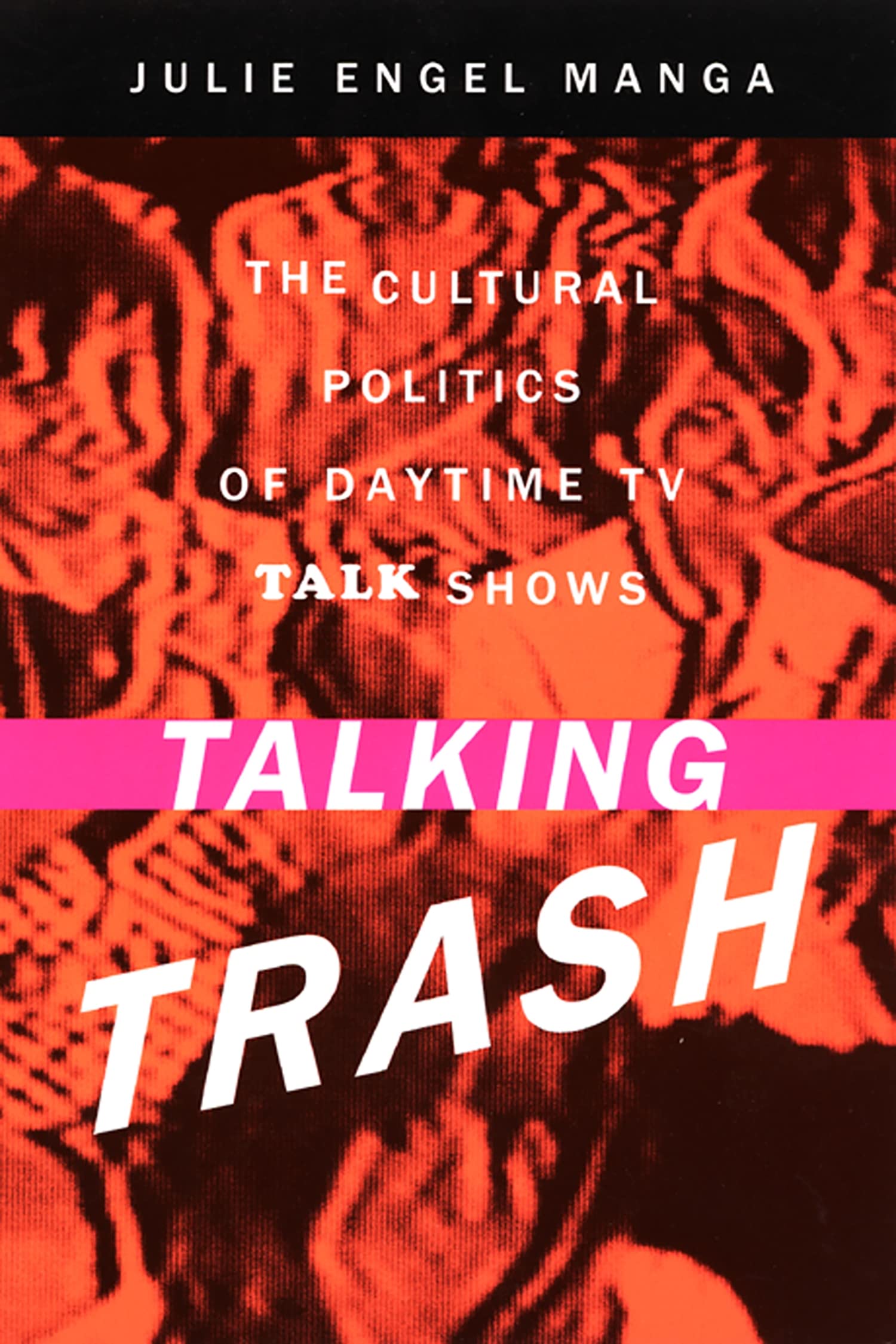
Title
Talking Trash: The Cultural Politics Of Daytime Tv Talk Shows,New
Sold by Ergodebooks, an authorized reseller.
Returns accepted within 30 days | support@ergodebooks.com
Shipping Information
- Free Standard Shipping — United States only
- Processing Time: 3–5 business days
- Estimated Delivery: 6–10 business days after dispatch
- Double-boxed, fully insured & discreetly packaged
- Tracking number sent via email once dispatched
Returns & Refund
Returns accepted within 30 days of delivery.
Damaged or Defective Item
Free return shipping + replacement or full refund
Wrong Item Received
Free return shipping + replacement or full refund
Change of Mind
Return shipping at customer's expense · 25% restocking fee applies
Payment Option

When The Phil Donahue Show topped the ratings in 1979, it ushered in a new era in daytime television. Mixing controversial social issues, light topics, and audience participation, it created a new genre, one that is still flourishing, despite being harshly criticized, over two decades later. Now, the daytime TV landscape is littered with talk shows. But why do people watch these shows? How do they make sense of them? And how do these shows affect their viewers' sense of what constitutes appropriate public debate?In Talking Trash, Julie Engel Manga offers a fascinating exploration of these questions and reveals the wide range of reasons viewers are drawn to trash talk. Focusing on such shows as Oprah!, Jerry Springer, Ricki Lake, Jenny Jones, and Maury Povitch, and drawing upon interviews with women who watch these shows, Talking Trash is the first examination of the talk show phenomenon from the viewers perspective. In taking this approach, Manga is able to understand what talk shows mean to the women who watch them. And by refusing to judge either the shows or their viewers as good or bad, she is able to grasp how viewers relate to these showsas escape, entertainment, uninhibited public discourse, or an accurate reflection of their own hardships and heartaches. Manga concludes that while the form of trashtalk shows may be relatively new, the sociocultural experience they embody has been with us for a long time.Absorbing, entertaining, and keenly perceptive, Talking Trash illuminates the complex viewer response to trash talk and examines the cultural politics surrounding this wildly controversial popular phenomenon.
⚠️ WARNING (California Proposition 65):
This product may contain chemicals known to the State of California to cause cancer, birth defects, or other reproductive harm.
For more information, please visit www.P65Warnings.ca.gov.