
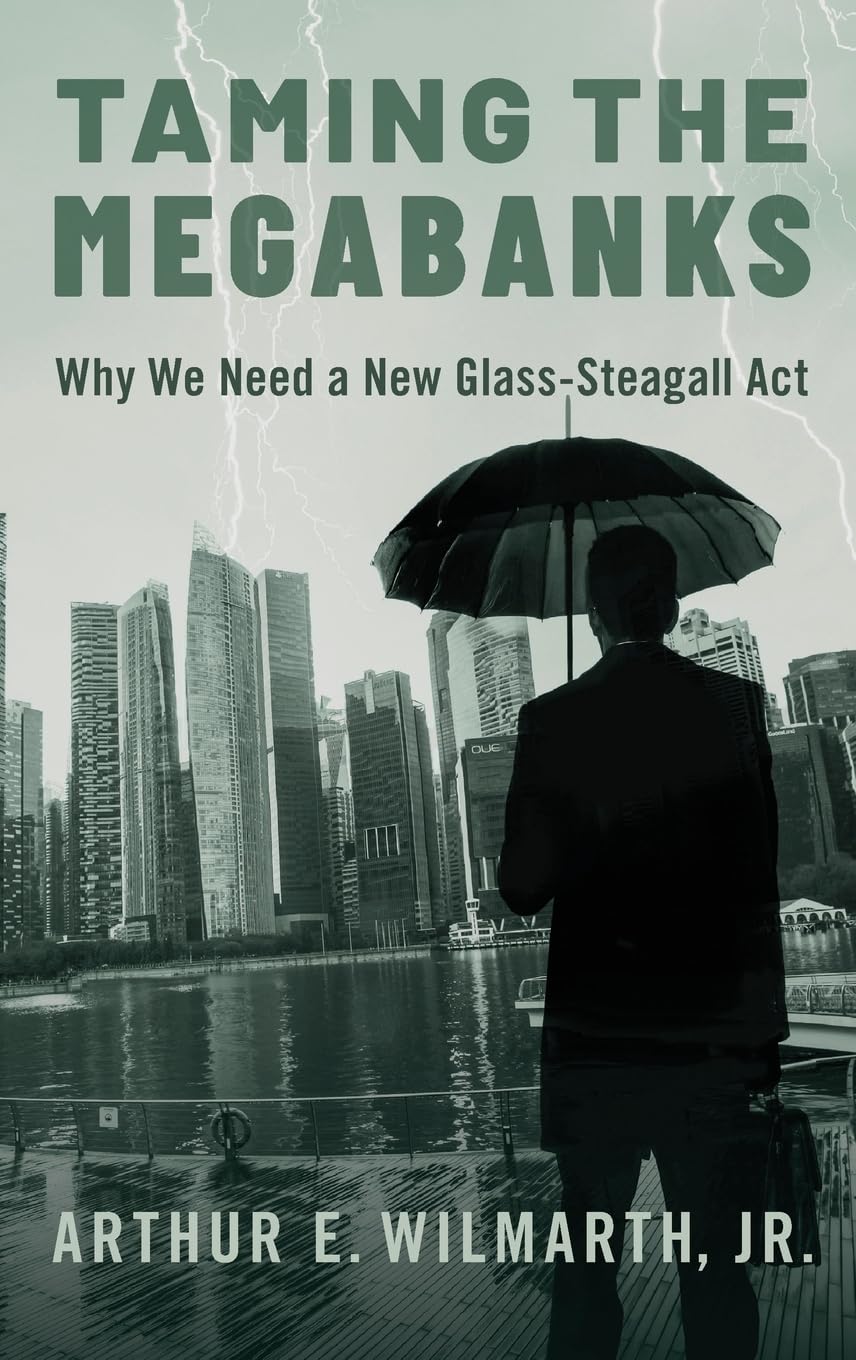
Title
Taming the Megabanks: Why We Need a New GlassSteagall Act,Used
Sold by Ergodebooks, an authorized reseller.
Returns accepted within 30 days | support@ergodebooks.com
Shipping Information
- Free Standard Shipping — United States only
- Processing Time: 3–5 business days
- Estimated Delivery: 6–10 business days after dispatch
- Double-boxed, fully insured & discreetly packaged
- Tracking number sent via email once dispatched
Returns & Refund
Returns accepted within 30 days of delivery.
Damaged or Defective Item
Free return shipping + replacement or full refund
Wrong Item Received
Free return shipping + replacement or full refund
Change of Mind
Return shipping at customer's expense · 25% restocking fee applies
Payment Option

Banks were allowed to enter securities markets and become universal banks during two periods in the past century the 1920s and the late 1990s. Both times, universal banks made highrisk loans and packaged them into securities that were sold as safe investments to poorlyinformed investors. Both times, universal banks promoted unsustainable booms that led to destructive busts the Great Depression of the early 1930s and the Global Financial Crisis of 200709. Both times, governments were forced to arrange costly bailouts of universal banks.Congress passed the GlassSteagall Act of 1933 in response to the Great Depression. The Act broke up universal banks and established a decentralized financial system composed of three separate and independent sectors: banking, securities, and insurance. That system was stable and successful for over four decades until the bigbank lobby persuaded regulators to open loopholes in GlassSteagall during the 1980s and convinced Congress to repeal it in 1999.Congress did not adopt a new GlassSteagall Act after the Global Financial Crisis. Instead, Congress passed the DoddFrank Act. DoddFrank's highly technical reforms tried to make banks safer but left in place a dangerous financial system dominated by universal banks. Universal banks continue to pose unacceptable risks to financial stability and economic and social welfare. They exert far too much influence over our political and regulatory systems because of their immense size and their undeniable "toobigtofail" status.In Taming the Megabanks, Arthur Wilmarth argues that we must again separate banks from securities markets to avoid another devastating financial crisis and ensure that our financial system serves Main Street business firms and consumers instead of Wall Street bankers and speculators. Wilmarth's comprehensive and detailed analysis demonstrates that a new GlassSteagall Act would make our financial system much more stable and less likely to produce boomandbust cycles. Giant universal banks would no longer dominate our financial system or receive enormous subsidies. A more decentralized and competitive financial system would encourage banks and securities firms to fulfill their proper roles as servants not masters of Main Street businesses and consumers.
⚠️ WARNING (California Proposition 65):
This product may contain chemicals known to the State of California to cause cancer, birth defects, or other reproductive harm.
For more information, please visit www.P65Warnings.ca.gov.