
Title


Tao Teh King,Used
Sold by Ergodebooks, an authorized reseller.
Returns accepted within 30 days | support@ergodebooks.com
Shipping Information
- Free Standard Shipping — United States only
- Processing Time: 3–5 business days
- Estimated Delivery: 6–10 business days after dispatch
- Double-boxed, fully insured & discreetly packaged
- Tracking number sent via email once dispatched
Returns & Refund
Returns accepted within 30 days of delivery.
Damaged or Defective Item
Free return shipping + replacement or full refund
Wrong Item Received
Free return shipping + replacement or full refund
Change of Mind
Return shipping at customer's expense · 25% restocking fee applies
Payment Option

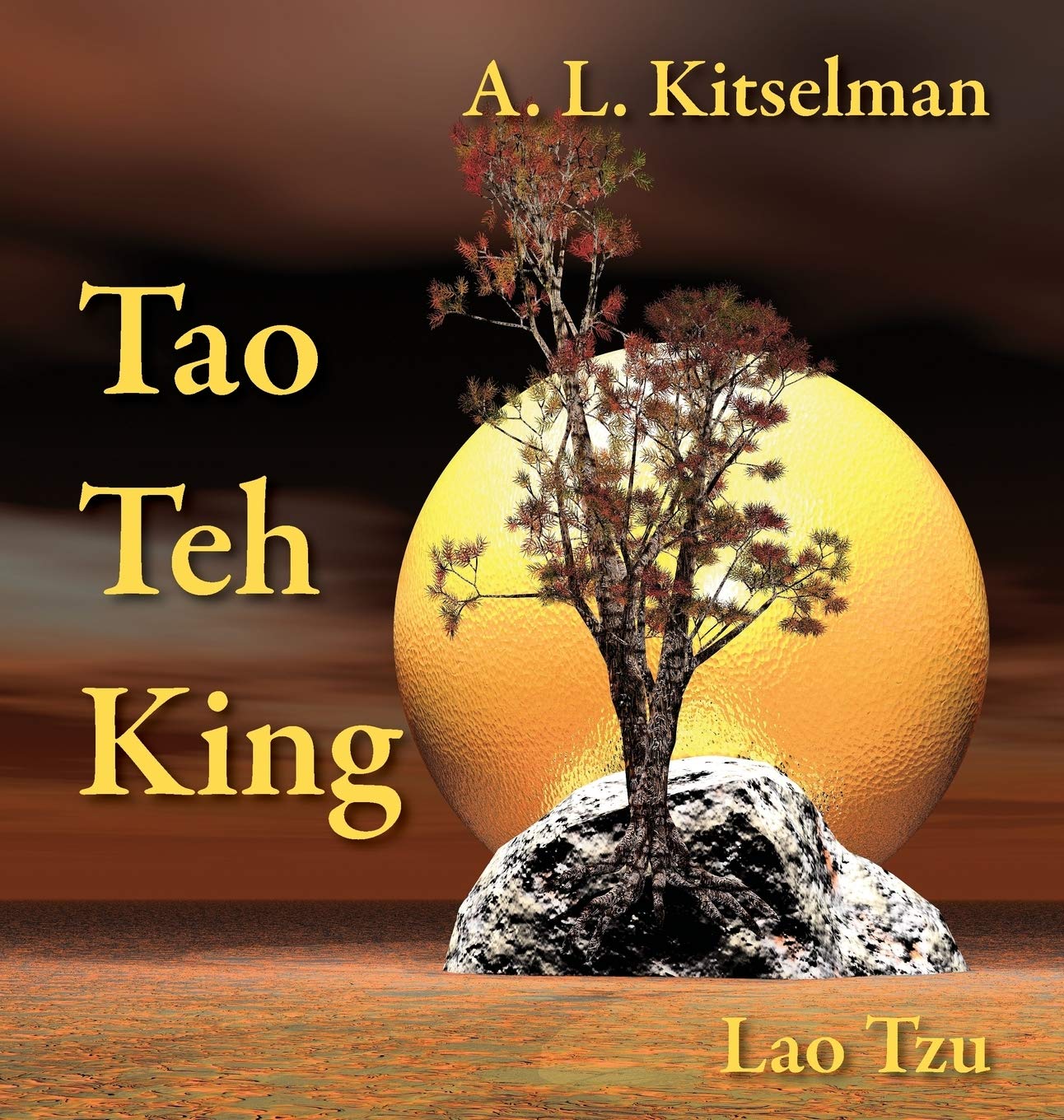
Since the 1970s, the influence of oriental philosophy, in particular the Buddhist tradition, in the field of psychotherapy has been quite profound. Taoism has not had the same impact on modern psychotherapeutic models. Yet, as early as 1936, Alva LaSalle Kitselman who was, at that time, studying oriental languages at Stanford University, with a particular emphasis on Sanskrit, created his own version of the classic text of the Taoist tradition the book of Lao Tzu entitled the Tao Teh King. His version of this classic was, as he said, a restatement rather than being a new translation from the ancient Chinese. After its publication, and through a chance encounter with one of the librarians at Stanford, he began to realise that Taoism and Taoist philosophy could be used as a form of therapy, specifically in the form he called 'nondirectiveness' or 'nondirective therapy.' In the 1950s Kitsleman published an audio lecture on his early experiences using the Tao Teh King entitled 'An Ancient Therapy'. In the lecture he compared and contrasted his application of Taoist philosophy in psychotherapy with the 'client centred therapy' approach of Carl R. Rogers. This new publication of Kitselman's version of the Tao Teh King and the story of his discovery will hopefully ignite a real interest in combining the wisdom of this classic Taoist text with modern psychotherapeutic methodologies. A. L. 'Beau' Kitselman was a remarkable man, a genius whose interests ranged from mathematics, science and computer programming to exploring the potential of the human mind.
⚠️ WARNING (California Proposition 65):
This product may contain chemicals known to the State of California to cause cancer, birth defects, or other reproductive harm.
For more information, please visit www.P65Warnings.ca.gov.