
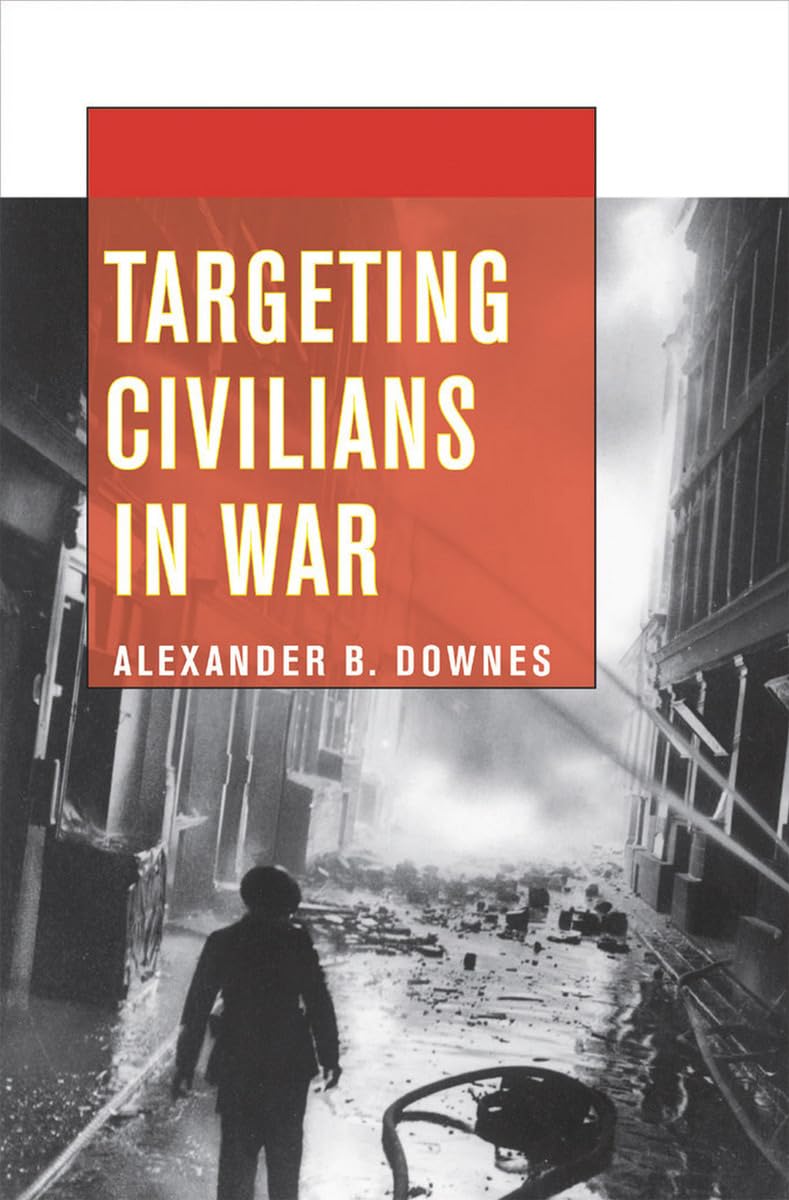
Title
Targeting Civilians In War (Cornell Studies In Security Affairs)
Sold by Ergodebooks, an authorized reseller.
Returns accepted within 30 days | support@ergodebooks.com
Shipping Information
- Free Standard Shipping — United States only
- Processing Time: 3–5 business days
- Estimated Delivery: 6–10 business days after dispatch
- Double-boxed, fully insured & discreetly packaged
- Tracking number sent via email once dispatched
Returns & Refund
Returns accepted within 30 days of delivery.
Damaged or Defective Item
Free return shipping + replacement or full refund
Wrong Item Received
Free return shipping + replacement or full refund
Change of Mind
Return shipping at customer's expense · 25% restocking fee applies
Payment Option

Accidental Harm To Civilians In Warfare Often Becomes An Occasion For Public Outrage, From Citizens Of Both The Victimized And The Victimizing Nation. In This Vitally Important Book On A Topic Of Acute Concern For Anyone Interested In Military Strategy, International Security, Or Human Rights, Alexander B. Downes Reminds Readers That Democratic And Authoritarian Governments Alike Will Sometimes Deliberately Kill Large Numbers Of Civilians As A Matter Of Military Strategy. What Leads Governments To Make Such A Choice?Downes Examines Several Historical Cases: British Counterinsurgency Tactics During The Boer War, The Starvation Blockade Used By The Allies Against Germany In World War I, Axis And Allied Bombing Campaigns In World War Ii, And Ethnic Cleansing In The Palestine War. He Concludes That Governments Decide To Target Civilian Populations For Two Main Reasonsdesperation To Reduce Their Own Military Casualties Or Avert Defeat, Or A Desire To Seize And Annex Enemy Territory. When A State'S Military Fortunes Take A Turn For The Worse, He Finds, Civilians Are More Likely To Be Declared Legitimate Targets To Coerce The Enemy State To Give Up. When Territorial Conquest And Annexation Are The Aims Of Warfare, The Population Of The Disputed Land Is Viewed As A Threat And The Aggressor State May Target Those Civilians To Remove Them. Democracies Historically Have Proven Especially Likely To Target Civilians In Desperate Circumstances.In Targeting Civilians In War, Downes Explores Several Major Recent Conflicts, Including The 1991 Persian Gulf War And The Americanled Invasion Of Iraq In 2003. Civilian Casualties Occurred In Each Campaign, But They Were Not The Aim Of Military Action. In These Cases, Downes Maintains, The Achievement Of Quick And Decisive Victories Against Overmatched Foes Allowed Democracies To Win Without Abandoning Their Normative Beliefs By Intentionally Targeting Civilians. Whether Such Restraint Can Be Guaranteed In Future Conflicts Against More Powerful Adversaries Is, However, Uncertain.During Times Of War, Democratic Societies Suffer Tension Between Norms Of Humane Conduct And Pressures To Win At The Lowest Possible Costs. The Painful Lesson Of Targeting Civilians In War Is That When These Two Concerns Clash, The Latter Usually Prevails.
⚠️ WARNING (California Proposition 65):
This product may contain chemicals known to the State of California to cause cancer, birth defects, or other reproductive harm.
For more information, please visit www.P65Warnings.ca.gov.
- Q: What is the page count of 'Targeting Civilians in War'? A: This book contains three hundred twenty-eight pages. It provides an in-depth exploration of military strategy and civilian casualties.
- Q: What are the dimensions of 'Targeting Civilians in War'? A: The book measures six point twelve inches in length, one inch in width, and nine point twenty-five inches in height. These dimensions make it a standard hardcover size.
- Q: Who is the author of 'Targeting Civilians in War'? A: The author is Alexander B. Downes. He is known for his expertise in military strategy and international security.
- Q: What type of binding does 'Targeting Civilians in War' have? A: The book is bound in hardcover. This type of binding is durable and suitable for frequent handling.
- Q: What category does 'Targeting Civilians in War' fall under? A: The book falls under the category of Strategy. It addresses significant themes related to military ethics and civilian safety.
- Q: How do I approach reading 'Targeting Civilians in War'? A: You can read this book at your own pace, focusing on the historical cases presented. It is suitable for anyone interested in military ethics or strategy.
- Q: Is 'Targeting Civilians in War' suitable for students? A: Yes, it's suitable for students studying military strategy or international relations. Its analytical approach makes it a valuable resource.
- Q: What themes are explored in 'Targeting Civilians in War'? A: The book explores themes of military strategy, civilian harm, and ethical dilemmas in warfare. It examines historical conflicts and their implications.
- Q: Can I use 'Targeting Civilians in War' for a research paper? A: Yes, it is an excellent resource for research. The book provides detailed historical analyses relevant to military strategy.
- Q: How should I store my copy of 'Targeting Civilians in War'? A: Store it in a cool, dry place to maintain its condition. Avoid direct sunlight to prevent fading of the cover.
- Q: Is 'Targeting Civilians in War' a safe read for sensitive topics? A: Yes, the book addresses sensitive topics with academic rigor. It's intended for mature readers interested in military ethics.
- Q: What if I find a defect in my copy of 'Targeting Civilians in War'? A: If there is a defect, you can contact the seller for a return or exchange. Ensure to keep the receipt for warranty purposes.
- Q: Does 'Targeting Civilians in War' contain graphic content? A: Yes, it discusses graphic instances of civilian casualties in war. Readers should be prepared for detailed accounts of historical events.
- Q: Is there a digital version of 'Targeting Civilians in War'? A: Currently, it is available in hardcover format. Check with retailers for potential eBook options in the future.
- Q: What makes 'Targeting Civilians in War' a unique book? A: Its unique perspective combines historical analysis with ethical discussions on military strategy. It challenges conventional views on warfare.