
Title
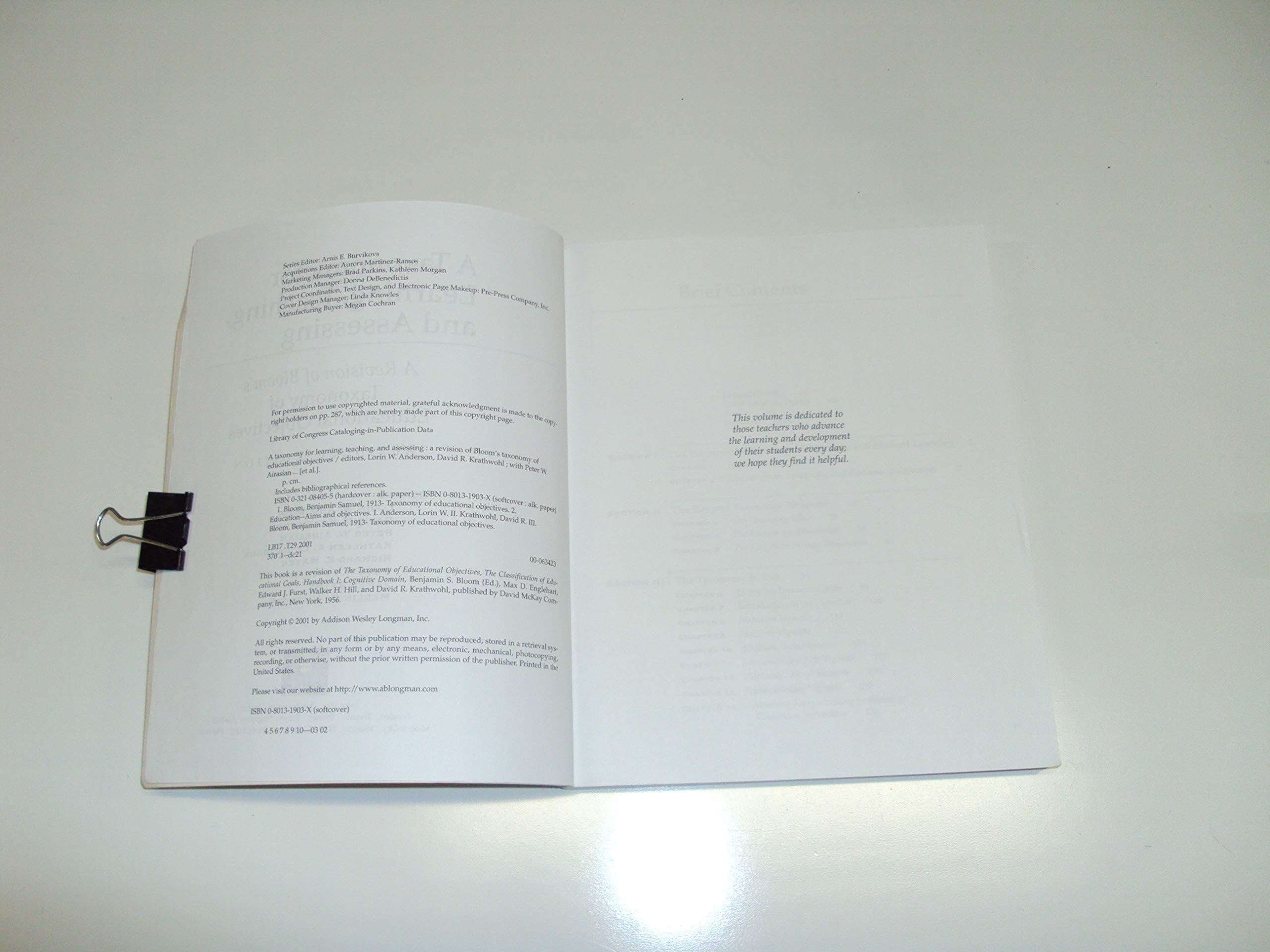
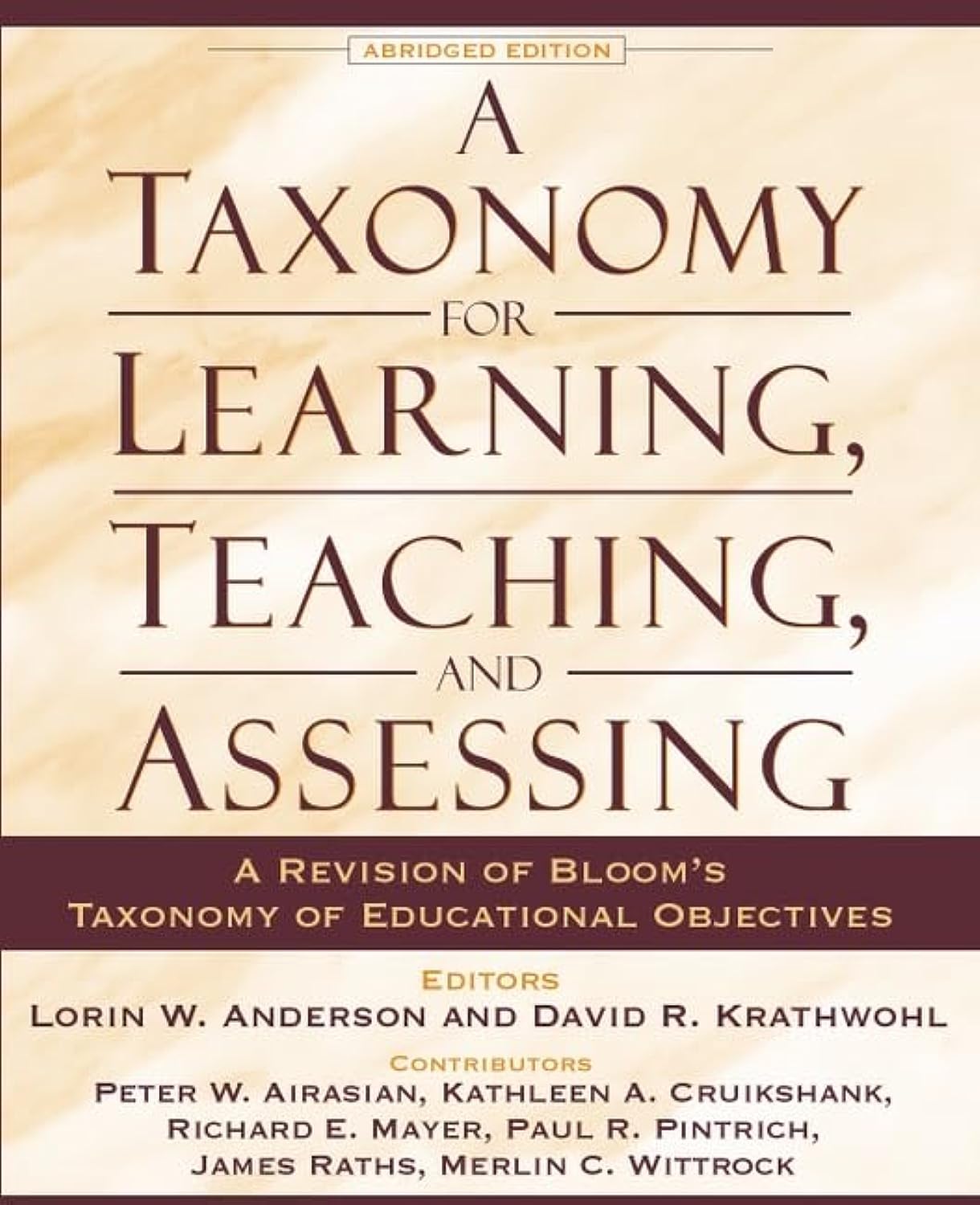
Taxonomy for Learning, Teaching, and Assessing, A: A Revision of Bloom's Taxonomy of Educational Objectives, Abridged Edition,New
Sold by Ergodebooks, an authorized reseller.
Returns accepted within 30 days | support@ergodebooks.com
Shipping Information
- Free Standard Shipping — United States only
- Processing Time: 3–5 business days
- Estimated Delivery: 6–10 business days after dispatch
- Double-boxed, fully insured & discreetly packaged
- Tracking number sent via email once dispatched
Returns & Refund
Returns accepted within 30 days of delivery.
Damaged or Defective Item
Free return shipping + replacement or full refund
Wrong Item Received
Free return shipping + replacement or full refund
Change of Mind
Return shipping at customer's expense · 25% restocking fee applies
Payment Option

Embodying advances in cognitive psychology since the publication of Bloom's taxonomy, this revision of that framework is designed to help teachers understand and implement standardsbased curriculums as well as facilitate constructing and analyzing their own. A revision only in the sense that it builds on the original framework, it is a completely new manuscript in both text and organization. Its twodimensional framework interrelates knowledge with the cognitive processes students use to gain and work with knowledge. Together, these define the goals, curriculum standards, and objectives students are expected to learn. The framework facilitates the exploration of curriculums from four perspectiveswhat is intended to be taught, how it is to be taught, how learning is to be assessed, and how well the intended aims, instruction and assessments are aligned for effective education. This 'revisited' framework allows you to connect learning from all these perspectives.
⚠️ WARNING (California Proposition 65):
This product may contain chemicals known to the State of California to cause cancer, birth defects, or other reproductive harm.
For more information, please visit www.P65Warnings.ca.gov.
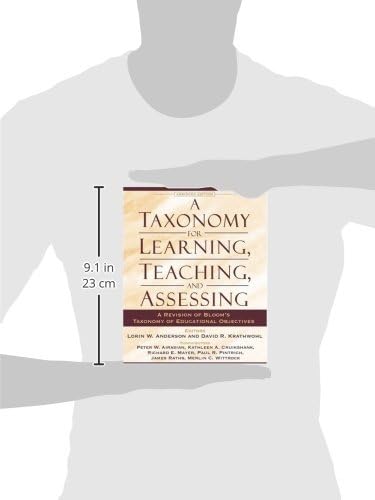
- Q: What are the dimensions of the book? A: The book measures seven point four inches by nine point one inches and is zero point nine one inches thick.
- Q: How many pages does this book have? A: This book contains three hundred thirty-six pages, providing comprehensive coverage of its subject matter.
- Q: What type of binding does this book have? A: The book is available in paperback binding, making it lightweight and easy to handle.
- Q: Who is the author of this book? A: The author of this book is Lorin Anderson, a prominent figure in educational psychology.
- Q: What is the main focus of the book? A: The main focus of the book is to provide a revised framework for understanding and implementing Bloom's Taxonomy in education.
- Q: How can teachers use this framework? A: Teachers can use this framework to align their curriculum standards and objectives, enhancing teaching effectiveness.
- Q: Is this book suitable for all grade levels? A: Yes, this book includes vignettes across various grade levels, making it applicable for teachers of all ages.
- Q: Can this book help with assessment strategies? A: Yes, it provides insights into assessing learning outcomes and aligning assessments with educational objectives.
- Q: What additional resources does the book offer? A: The book includes sample objectives, assessment tasks, and instructional activities integrated throughout its content.
- Q: Does the book cover alternative educational frameworks? A: Yes, it includes chapters discussing alternative frameworks that have emerged since the original Taxonomy was published.
- Q: How does the book address cognitive processes? A: The book describes six categories of cognitive processes, offering a detailed understanding of how students learn.
- Q: What are the key themes discussed in the book? A: Key themes include curriculum design, standards-based education, and the alignment of teaching and assessment.
- Q: Is there a meta-analysis included in the book? A: Yes, the book summarizes empirical data related to the hierarchy of the original Taxonomy in a dedicated chapter.
- Q: How does the book aid in educational communication? A: It facilitates communication across subject matters and grade levels, promoting collaboration among educators.
- Q: What can educators learn from the vignettes? A: Educators can learn practical applications of the framework through vignettes that illustrate its use in real classroom settings.