
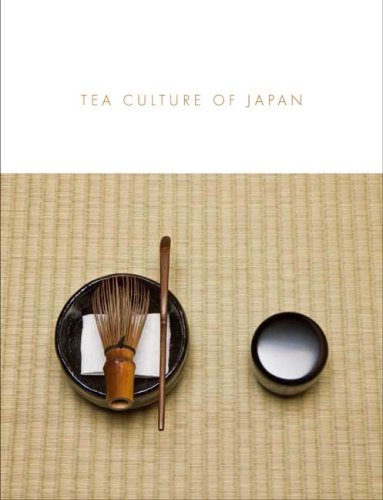
Title
Tea Culture of Japan,Used
Sold by Ergodebooks, an authorized reseller.
Returns accepted within 30 days | support@ergodebooks.com
Shipping Information
- Free Standard Shipping — United States only
- Processing Time: 3–5 business days
- Estimated Delivery: 6–10 business days after dispatch
- Double-boxed, fully insured & discreetly packaged
- Tracking number sent via email once dispatched
Returns & Refund
Returns accepted within 30 days of delivery.
Damaged or Defective Item
Free return shipping + replacement or full refund
Wrong Item Received
Free return shipping + replacement or full refund
Change of Mind
Return shipping at customer's expense · 25% restocking fee applies
Payment Option

Imported to Japan from China during the 9th century, the custom of serving tea did not become widespread until the 13th century. By the late 15th and 16th centuries, tea was ceremonially prepared by a skilled tea master and served to guests in a tranquil setting. This way of preparing tea became known as chanoyu, literally hot water for tea.This elegant book explores the aesthetics and history of the traditional Japanese tea ceremony, examining the nature of tea collections and the links between connoisseurship, politics, and international relations. It also surveys current practices and settings in light of the ongoing transformation of the tradition in contemporary tea houses. Among the precious objects discussed and pictured are ceramic tea bowls, wooden tea scoops, metal sake pourers, and lacquered incense containers, as well as folding screens that evoke the historical settings of serving tea.
⚠️ WARNING (California Proposition 65):
This product may contain chemicals known to the State of California to cause cancer, birth defects, or other reproductive harm.
For more information, please visit www.P65Warnings.ca.gov.
- Q: What are the dimensions of the book? A: The book measures eight point two seven inches in length, ten point five one inches in height, and zero point five one inches in width.
- Q: How many pages does the book have? A: The book contains one hundred twelve pages, providing a comprehensive exploration of Japanese tea culture.
- Q: What type of binding does this book have? A: This book is paperback bound, making it lightweight and easy to handle.
- Q: Who is the author of this book? A: The author of the book is Sadako Ohki, who delves into the aesthetics and history of tea culture.
- Q: What publisher released this book? A: The book is published by Yale University Press, known for its scholarly publications.
- Q: Is this book suitable for beginners interested in tea culture? A: Yes, this book is suitable for beginners, as it provides a foundational understanding of the Japanese tea ceremony.
- Q: Can I use this book for academic research? A: Yes, this book is ideal for academic research, offering insights into the historical and cultural significance of tea in Japan.
- Q: Is this book suitable for all ages? A: Yes, the book is suitable for readers of all ages, particularly those interested in culture and history.
- Q: How should I store this book to keep it in good condition? A: Store the book in a cool, dry place and avoid direct sunlight to prevent fading and wear.
- Q: What is the best way to clean this book? A: To clean the book, gently wipe the cover with a dry cloth to remove dust and avoid using liquids.
- Q: What if the book arrives damaged? A: If the book arrives damaged, contact customer service for a replacement or refund within the return period.
- Q: Can I return the book if I change my mind? A: Yes, you can return the book if you change your mind, provided it is within the specified return period.
- Q: Is there a warranty for this book? A: Typically, there is no warranty for books, but check with the retailer for their specific policies.
- Q: How does this book compare to other books on tea culture? A: This book stands out due to its focus on the aesthetics and historical context, unlike more general tea books.
- Q: Is this book part of a series? A: No, this book is a standalone publication and is not part of a series.
- Q: What topics does this book cover? A: The book covers the history, aesthetics, and contemporary practices of the Japanese tea ceremony.