
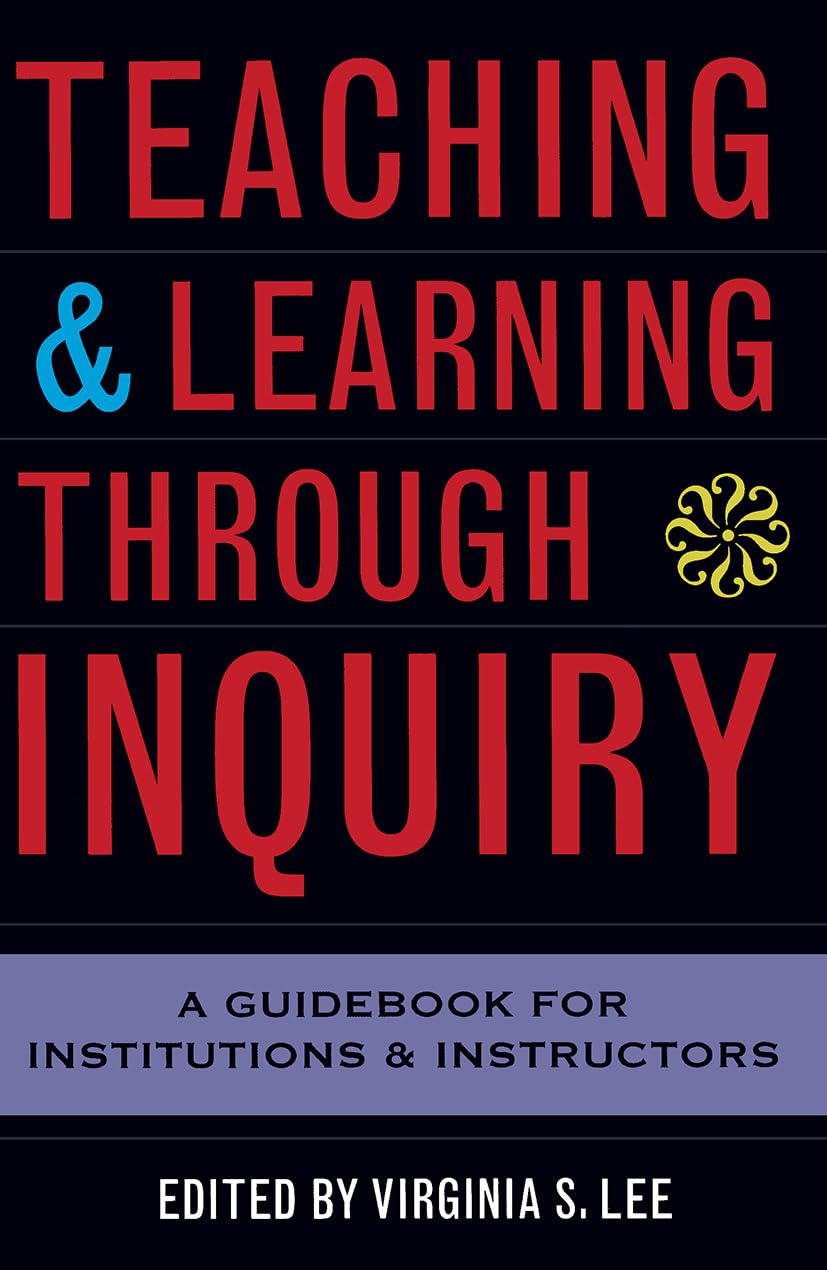
Title
Teaching and Learning Through Inquiry,Used
Sold by Ergodebooks, an authorized reseller.
Returns accepted within 30 days | support@ergodebooks.com
Shipping Information
- Free Standard Shipping — United States only
- Processing Time: 3–5 business days
- Estimated Delivery: 6–10 business days after dispatch
- Double-boxed, fully insured & discreetly packaged
- Tracking number sent via email once dispatched
Returns & Refund
Returns accepted within 30 days of delivery.
Damaged or Defective Item
Free return shipping + replacement or full refund
Wrong Item Received
Free return shipping + replacement or full refund
Change of Mind
Return shipping at customer's expense · 25% restocking fee applies
Payment Option

Inquiryguided learning (IGL) refers to an array of classroom practices that promote student learning through guided and, increasingly independent investigation of complex questions and problems. Rather than teaching the results of others investigations, which students learn passively, instructors assist students in mastering and learning through the process of active investigation itself. IGL develops critical thinking, independent inquiry, students responsibility for their own learning and intellectual growth and maturity.The 1999 Boyer Commission Report emphasized the importance of establishing 'a firm grounding in inquirybased learning and communication of information and ideas'. While this approach capitalizes on one of the key strengths of research universities, the expertise of its faculty in research, it is one that can be fruitfully adopted throughout higher education.North Carolina State University is at the forefront of the development and implementation of IGL both at the course level and as part of a successful facultyled process of reform of undergraduate education in a complex research institution.This book documents and explores NCSUs IGL initiative from a variety of perspectives: how faculty arrived at their current understanding of inquiryguided learning and how they have interpreted it at various levels the individual course, the major, the college, the universitywide program, and the undergraduate curriculum as a whole. The contributors show how IGL has been dovetailed with other complementary efforts and programs, and how they have assessed its impact. The book is divided into four parts, the first briefly summarizing the history of the initiative. Part Two, the largest section, describes how various instructors, departments, and colleges in a range of disciplines have interpreted inquiryguided learning. It provides examples from disciplines as varied as ecology, engineering, foreign language learning, history, music, microbiology, physics and psychology. It also outlines the potential for even broader dissemination of inquiryguided learning in the undergraduate curriculum as a whole. Part Three describes two inquiryguided learning programs for first year students and the interesting ways in which NCSUs universitywide writing and speaking program and growing service learning program support inquiryguided learning. Part Four documents how the institution has supported instructors (and how they have supported themselves) as well as the methods used to assess the impact of inquiryguided learning on students, faculty, and the institution as a whole.The book has been written with three audiences in mind: instructors who want to use inquiryguided learning in their classrooms, faculty developers considering supporting comparable efforts on their campuses, and administrators interested in managing similar undergraduate reform efforts. It will also appeal to instructors of courses in the administration of higher education who are looking for relevant case studies of reform. While this is a model successfully implemented at a research university, it is one that is relevant for all institutions of higher education.
⚠️ WARNING (California Proposition 65):
This product may contain chemicals known to the State of California to cause cancer, birth defects, or other reproductive harm.
For more information, please visit www.P65Warnings.ca.gov.