If you have any questions, you are always welcome to contact us. We'll get back to you as soon as possible, withing 24 hours on weekdays.
Customer service
All questions about your order, return and delivery must be sent to our customer service team by e-mail at yourstore@yourdomain.com
Sale & Press
If you are interested in selling our products, need more information about our brand or wish to make a collaboration, please contact us at press@yourdomain.com
Help
If you have any questions, you are always welcome to contact us. We'll get back to you as soon as possible, withing 24 hours on weekdays.
Customer service
All questions about your order, return and delivery must be sent to our customer service team by e-mail at yourstore@yourdomain.com
Sale & Press
If you are interested in selling our products, need more information about our brand or wish to make a collaboration, please contact us at press@yourdomain.com
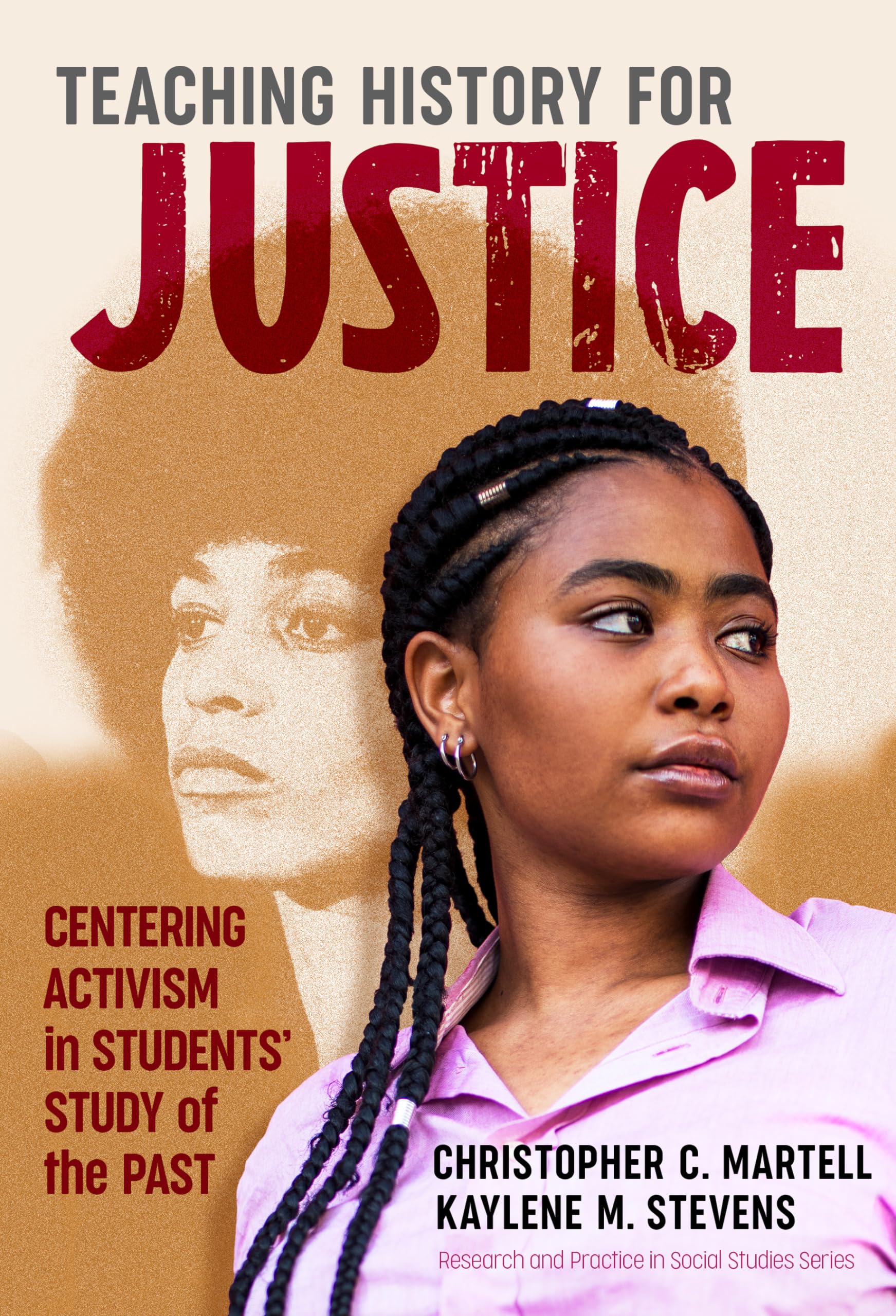
Learn how to enact justiceoriented pedagogy and foster students critical engagement in todays history classroom. Over the past 2 decades, various scholars have rightfully argued that we need to teach students to think like a historian or think like a democratic citizen. In this book, the authors advocate for cultivating activist thinking in the history classroom. Teachers can use Teaching History for Justice to show students how activism was used in the past to seek justice, how past social movements connect to the present, and how democratic tools can be used to change society. The first section examines the theoretical and research foundation for thinking like an activist and outlines three related pedagogical concepts: social inquiry, critical multiculturalism, and transformative democratic citizenship. The second section presents vignettes based on the authors studies of elementary, middle, and high school history teachers who engage in justiceoriented teaching practices.Book Features: Outlines key components of justiceoriented history pedagogy for the history and social studies K12 classroom. Advocates for students to develop thinking like an activist in their approach to studying the past. Contains researchbased vignettes of four imagined teachers, providing examples of what teaching history for justice can look like in practice. Includes descriptions of typical units of study in the discipline of history and how they can be reimagined to help students learn about movements and social change.
⚠️ WARNING (California Proposition 65):
This product may contain chemicals known to the State of California to cause cancer,
birth defects, or other reproductive harm.
For MAP (Minimum Advertised Price) violations and Intellectual Property (IP) or Trademark concerns, please contact:
support@ergodebooks.com
⚠️ California Proposition 65 Warning: Some products sold on this website may expose you to chemicals known to the State of California to cause cancer, birth defects, or other reproductive harm. For more information, visit www.P65Warnings.ca.gov.