
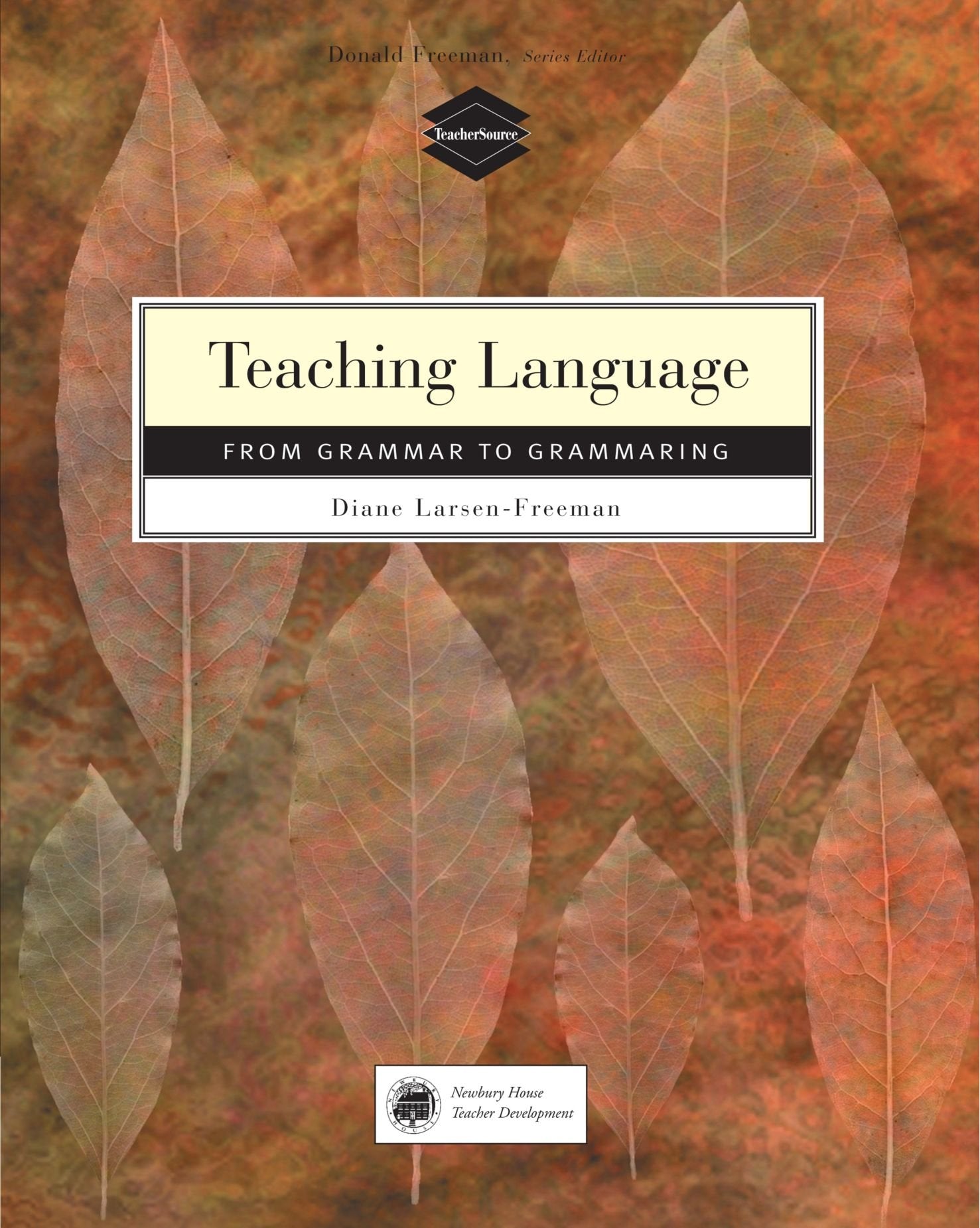
Title
Teaching Language: From Grammar To Grammaring,New
Sold by Ergodebooks, an authorized reseller.
Returns accepted within 30 days | support@ergodebooks.com
Shipping Information
- Free Standard Shipping — United States only
- Processing Time: 3–5 business days
- Estimated Delivery: 6–10 business days after dispatch
- Double-boxed, fully insured & discreetly packaged
- Tracking number sent via email once dispatched
Returns & Refund
Returns accepted within 30 days of delivery.
Damaged or Defective Item
Free return shipping + replacement or full refund
Wrong Item Received
Free return shipping + replacement or full refund
Change of Mind
Return shipping at customer's expense · 25% restocking fee applies
Payment Option

A Mustread For Every Language Teaching Professional, Teaching Language: From Grammar To Grammaring Explores The Regular, Predictable Elements Of Language As Well As The Potential Creativity Of Its Underlying System. By Combining A Wide Range Of View Points With Her Own Personal Experiences And Studies, Diane Larsenfreeman Challenges The Static Descriptive Ideas Of Grammar, Based On Rules, And Promotes The More Fluid And Dynamic Notions Of Reasondriven Grammaring, Which She Defines As 'The Ability To Use Grammar Structures Accurately, Meaningfully, And Appropriately.' The Reader Is Left Not With An Encyclopedic Set Of Definitions, But Rather With A Deeper Understanding Of The Organic Nature Of Language And Its Acquisition, And A Honed Set Of Tools With Which To Approach Language In Language Teaching.
⚠️ WARNING (California Proposition 65):
This product may contain chemicals known to the State of California to cause cancer, birth defects, or other reproductive harm.
For more information, please visit www.P65Warnings.ca.gov.
- Q: How many pages does the book have? A: The book has one hundred sixty pages. This length provides a comprehensive overview of language teaching methodologies.
- Q: What is the binding type of this book? A: This book is available in paperback binding. Paperback is lightweight and flexible, making it easy to carry and read.
- Q: What are the dimensions of the book? A: The book measures seven point thirty-eight inches in length, zero point forty-three inches in width, and nine point twenty-five inches in height. These dimensions make it a standard size for easy handling.
- Q: Who is the author of 'Teaching Language: From Grammar to Grammaring'? A: The author is Diane Larsen-Freeman. She is an established figure in the field of language education.
- Q: What is the main focus of this book? A: The book focuses on language teaching, particularly the transition from traditional grammar to a more dynamic understanding of language use. It emphasizes creativity in language acquisition.
- Q: Is this book suitable for beginners in language teaching? A: Yes, the book is suitable for beginners. It provides foundational insights that can help new educators understand the complexities of language teaching.
- Q: Can this book help improve my grammar teaching skills? A: Yes, this book can enhance your grammar teaching skills. It promotes a fluid understanding of grammar, which can improve your teaching methods.
- Q: Is this book appropriate for advanced language teachers? A: Yes, advanced language teachers can benefit from this book. It challenges conventional approaches and encourages a deeper exploration of grammar.
- Q: How should I care for this paperback book? A: To care for this paperback book, keep it in a dry place and avoid direct sunlight. This prevents damage to the cover and pages.
- Q: What if the book arrives damaged? A: If the book arrives damaged, you should contact customer service for a return or replacement. Most retailers have policies in place for such situations.
- Q: Are there any specific safety concerns with this book? A: No, there are no specific safety concerns with this book. It is intended for educational purposes and suitable for a general audience.
- Q: How can I store this book to keep it in good condition? A: Store this book vertically on a shelf or in a bookcase. Avoid stacking heavy items on top to prevent bending or damage.
- Q: What kind of audience is this book intended for? A: This book is intended for language teaching professionals and educators in training. It appeals to individuals looking to deepen their understanding of language acquisition.
- Q: Is this book part of a series? A: No, this book is not part of a series. It stands alone as a comprehensive guide on language teaching.
- Q: What makes this book unique compared to other language teaching books? A: This book is unique because it combines personal experiences with theoretical insights. It promotes a dynamic view of grammar over static rules.