
Title
Teaching Phonics In Context,Used
Sold by Ergodebooks, an authorized reseller.
Returns accepted within 30 days | support@ergodebooks.com
Shipping Information
- Free Standard Shipping — United States only
- Processing Time: 3–5 business days
- Estimated Delivery: 6–10 business days after dispatch
- Double-boxed, fully insured & discreetly packaged
- Tracking number sent via email once dispatched
Returns & Refund
Returns accepted within 30 days of delivery.
Damaged or Defective Item
Free return shipping + replacement or full refund
Wrong Item Received
Free return shipping + replacement or full refund
Change of Mind
Return shipping at customer's expense · 25% restocking fee applies
Payment Option

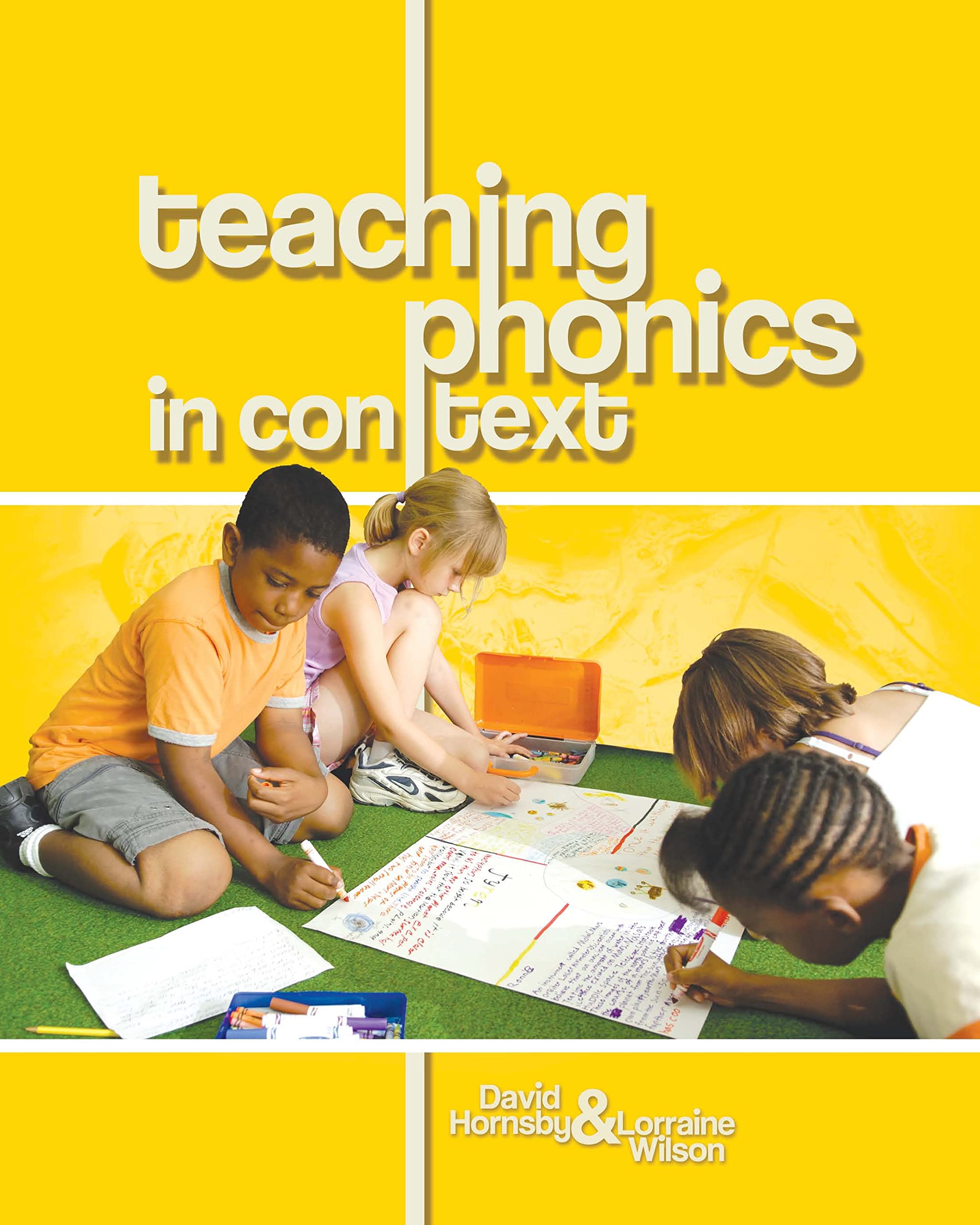
Through myriad classroom vignettes, experienced educators David Hornsby and Lorraine Wilson show just how phonics is taught and learned in literacyrich classrooms.Teaching Phonics in Context debunks the myth that whole language teachers do not teach phonics. Through myriad classroom vignettes, experienced educators David Hornsby and Lorraine Wilson show just how phonics is taught and learned in literacyrich classrooms. Although there is a need for the explicit teaching of phonics, the authors believe the reading and writing of connected text takes priority; the teaching and learning of phonics is always contained within, and subordinate to, genuine literacy events; and children spend much more time reading and writing (in which they learn to apply their phonic knowledge) than they do in the actual study of soundletter relationships. The authors describe classrooms that shimmer and shine with stories, readalouds, writing, science, language play, singing, rhyme, poetry, roleplay, and laughter. Samples of young childrens writing are discussed, showing what the young child knows about writing, and what the teacher might teach. Ideas are shared for reading, interpreting, and enjoying picture books, as well as which specific soundletter relationships might be studied as a result of interacting and engaging with particular titles. One of the chapters details ways of working with rhymes, which engage children in listening to and identifying rhyming words, identifying individual sounds, and discovering soundletter patterns. The authors outline the professional knowledge necessary for teachers to be able to make informed, independent decisions about teaching phonics in the context of authentic literacy events. Valuable advice also is offered to teachers who have ELL students in their classrooms.
⚠️ WARNING (California Proposition 65):
This product may contain chemicals known to the State of California to cause cancer, birth defects, or other reproductive harm.
For more information, please visit www.P65Warnings.ca.gov.