
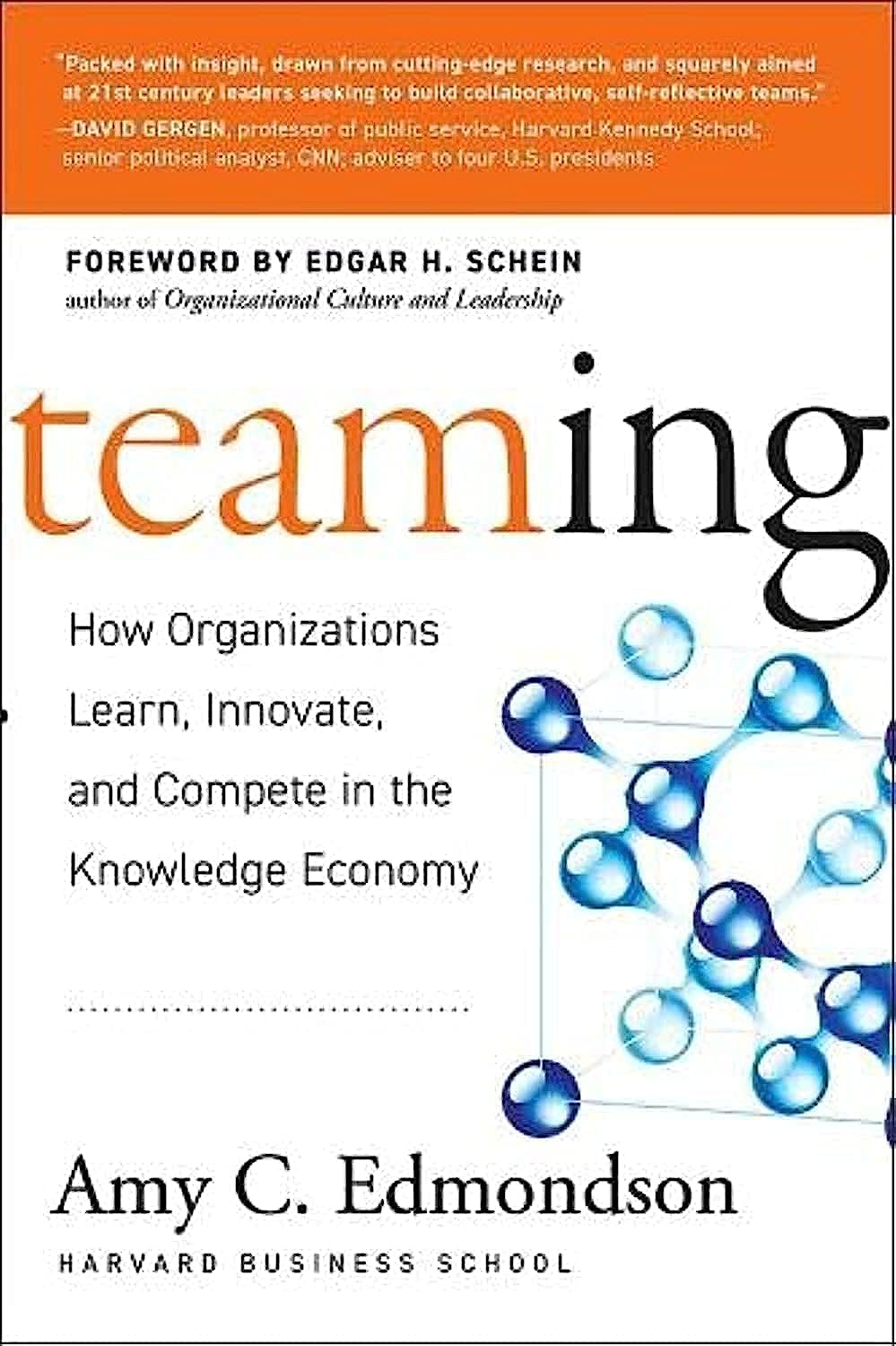
Title
Teaming: How Organizations Learn, Innovate, and Compete in the Knowledge Economy,New
Sold by Ergodebooks, an authorized reseller.
Returns accepted within 30 days | support@ergodebooks.com
Shipping Information
- Free Standard Shipping — United States only
- Processing Time: 3–5 business days
- Estimated Delivery: 6–10 business days after dispatch
- Double-boxed, fully insured & discreetly packaged
- Tracking number sent via email once dispatched
Returns & Refund
Returns accepted within 30 days of delivery.
Damaged or Defective Item
Free return shipping + replacement or full refund
Wrong Item Received
Free return shipping + replacement or full refund
Change of Mind
Return shipping at customer's expense · 25% restocking fee applies
Payment Option

New breakthrough thinking in organizational learning, leadership, and changeContinuous improvement, understanding complex systems, and promoting innovation are all part of the landscape of learning challenges today's companies face. Amy Edmondson shows that organizations thrive, or fail to thrive, based on how well the small groups within those organizations work. In most organizations, the work that produces value for customers is carried out by teams, and increasingly, by flexible teamlike entities. The pace of change and the fluidity of most work structures means that it's not really about creating effective teams anymore, but instead about leading effective teaming.Teaming shows that organizations learn when the flexible, fluid collaborations they encompass are able to learn. The problem is teams, and other dynamic groups, don't learn naturally. Edmondson outlines the factors that prevent them from doing so, such as interpersonal fear, irrational beliefs about failure, groupthink, problematic power dynamics, and information hoarding. With Teaming, leaders can shape these factors by encouraging reflection, creating psychological safety, and overcoming defensive interpersonal dynamics that inhibit the sharing of ideas. Further, they can use practical management strategies to help organizations realize the benefits inherent in both success and failure. Presents a clear explanation of practical management concepts for increasing learning capability for business results Introduces a framework that clarifies how learning processes must be altered for different kinds of work Explains how Collaborative Learning works, and gives tips for how to do it well Includes casestudy research on Intermountain healthcare, Prudential, GM, Toyota, IDEO, the IRS, and both Cincinnati and Minneapolis Children's Hospitals, among othersBased on years of research, this book shows how leaders can make organizational learning happen by building teams that learn.
⚠️ WARNING (California Proposition 65):
This product may contain chemicals known to the State of California to cause cancer, birth defects, or other reproductive harm.
For more information, please visit www.P65Warnings.ca.gov.
- Q: How many pages does the book 'Teaming' have? A: This book contains three hundred fifty-two pages. It provides a comprehensive look at organizational learning and teamwork.
- Q: What is the binding type of 'Teaming'? A: The binding type of this book is hardcover. This ensures durability and longevity for frequent reading.
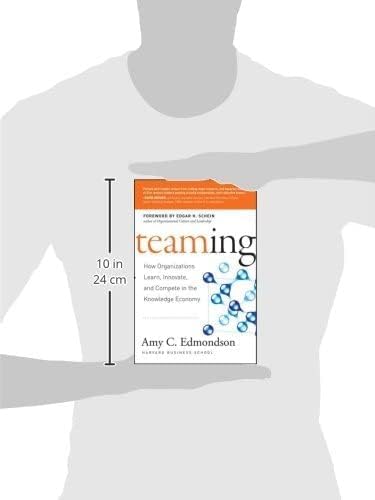
- Q: What are the dimensions of the book 'Teaming'? A: The book measures six point three inches in length, one point three inches in width, and nine point one inches in height. These dimensions make it easy to handle.
- Q: Who is the author of 'Teaming'? A: The author of this book is Amy C. Edmondson. She is known for her expertise in organizational learning and leadership.
- Q: What is the main topic of 'Teaming'? A: The main topic of this book is organizational learning and teamwork. It explores how effective teaming can drive innovation and improve performance.
- Q: How can I apply the concepts from 'Teaming'? A: You can apply the concepts by fostering a culture of collaboration and psychological safety in your organization. The book provides practical strategies for leaders.
- Q: Is 'Teaming' suitable for beginners in leadership? A: Yes, 'Teaming' is suitable for beginners in leadership. It offers clear explanations and frameworks that are easy to understand.
- Q: Can I use 'Teaming' for team-building activities? A: Yes, 'Teaming' can be used as a resource for team-building activities. It provides insights on how to enhance teamwork and learning within groups.
- Q: What age group is 'Teaming' appropriate for? A: This book is appropriate for adults and professionals interested in leadership and team dynamics. It is not specifically designed for children.
- Q: How should I store 'Teaming' to keep it in good condition? A: Store 'Teaming' in a dry, cool place away from direct sunlight. This will help maintain the integrity of the hardcover binding and pages.
- Q: Can I return 'Teaming' if I'm not satisfied? A: Yes, you can return 'Teaming' if you are not satisfied, depending on the seller's return policy. Check their terms for specifics.
- Q: What should I do if 'Teaming' arrives damaged? A: If 'Teaming' arrives damaged, contact the seller immediately for a replacement or refund. Most sellers have policies to address such issues.
- Q: Does 'Teaming' provide case studies? A: Yes, 'Teaming' includes several case studies from organizations like GM, Toyota, and the IRS. These examples illustrate the book's concepts in action.
- Q: Is there a focus on psychological safety in 'Teaming'? A: Yes, psychological safety is a key focus in 'Teaming.' Edmondson discusses how it impacts team learning and performance.
- Q: Does 'Teaming' cover innovation in organizations? A: Yes, 'Teaming' discusses how organizations can foster innovation through effective teamwork and learning practices. It emphasizes the importance of collaboration.