
Title
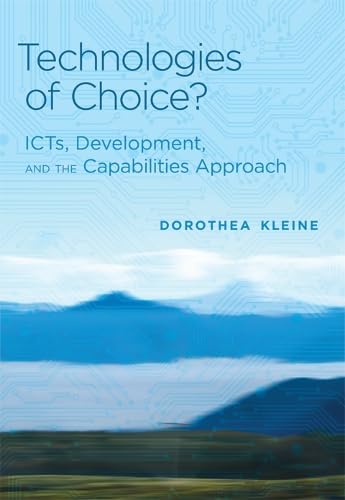
Technologies of Choice?: ICTs, Development, and the Capabilities Approach (Information Society),Used
Sold by Ergodebooks, an authorized reseller.
Returns accepted within 30 days | support@ergodebooks.com
Shipping Information
- Free Standard Shipping — United States only
- Processing Time: 3–5 business days
- Estimated Delivery: 6–10 business days after dispatch
- Double-boxed, fully insured & discreetly packaged
- Tracking number sent via email once dispatched
Returns & Refund
Returns accepted within 30 days of delivery.
Damaged or Defective Item
Free return shipping + replacement or full refund
Wrong Item Received
Free return shipping + replacement or full refund
Change of Mind
Return shipping at customer's expense · 25% restocking fee applies
Payment Option

A new framework for assessing the role of information and communication technologies in development that draws on Amartya Sen's capabilities approach.Information and communication technologies (ICTs)especially the Internet and the mobile phonehave changed the lives of people all over the world. These changes affect not just the affluent populations of incomerich countries but also disadvantaged people in both global North and South, who may use free Internet access in telecenters and public libraries, chat in cybercafes with distant family members, and receive information by text message or email on their mobile phones. Drawing on Amartya Sen's capabilities approach to developmentwhich shifts the focus from economic growth to a more holistic, freedombased idea of human developmentDorothea Kleine in Technologies of Choice? examines the relationship between ICTs, choice, and development.Kleine proposes a conceptual framework, the Choice Framework, that can be used to analyze the role of technologies in development processes. She applies the Choice Framework to a case study of microentrepreneurs in a rural community in Chile. Kleine combines ethnographic research at the local level with interviews with national policy makers, to contrast the high ambitions of Chile's pioneering ICT policies with the country's complex social and economic realities. She examines three key policies of Chile's groundbreaking Agenda Digital: public access, digital literacy, and an online procurement system. The policy lesson we can learn from Chile's experience, Kleine concludes, is the necessity of measuring ICT policies against a peoplecentered understanding of development that has individual and collective choice at its heart.
⚠️ WARNING (California Proposition 65):
This product may contain chemicals known to the State of California to cause cancer, birth defects, or other reproductive harm.
For more information, please visit www.P65Warnings.ca.gov.