
Title
Technology Choices: Why Occupations Differ in Their Embrace of New Technology (Acting with Technology),Used
Sold by Ergodebooks, an authorized reseller.
Returns accepted within 30 days | support@ergodebooks.com
Shipping Information
- Free Standard Shipping — United States only
- Processing Time: 3–5 business days
- Estimated Delivery: 6–10 business days after dispatch
- Double-boxed, fully insured & discreetly packaged
- Tracking number sent via email once dispatched
Returns & Refund
Returns accepted within 30 days of delivery.
Damaged or Defective Item
Free return shipping + replacement or full refund
Wrong Item Received
Free return shipping + replacement or full refund
Change of Mind
Return shipping at customer's expense · 25% restocking fee applies
Payment Option

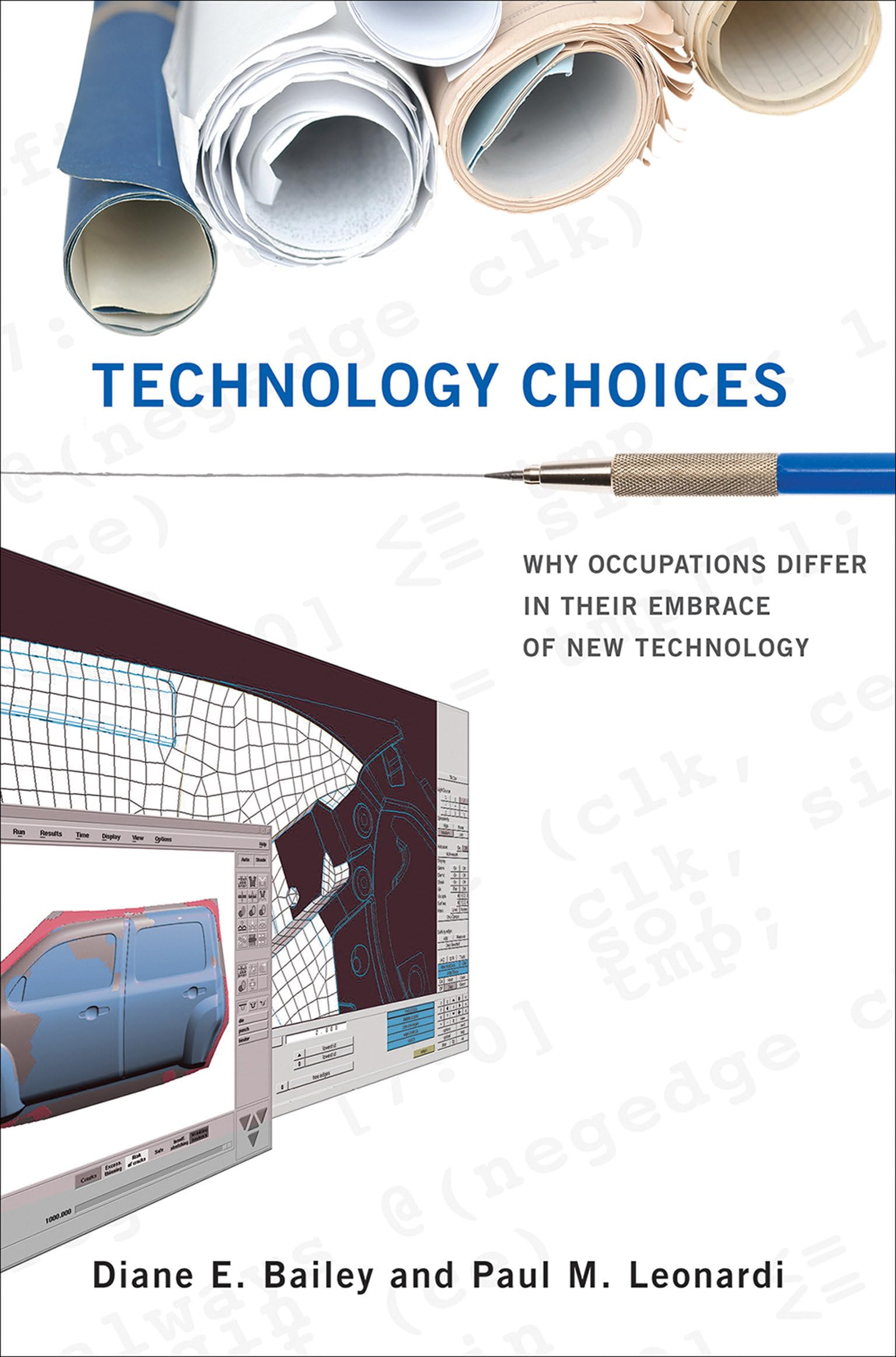
An analysis of the occupational factors that shape the technology choices made by people who perform the same type of work.Why do people who perform largely the same type of work make different technology choices in the workplace? An automotive design engineer working in India, for example, finds advanced information and communication technologies essential, allowing him to work with farflung colleagues; a structural engineer in California relies more on paperbased technologies for her everyday work; and a software engineer in Silicon Valley operates on multiple digital levels simultaneously all day, continuing after hours on a companysupplied home computer and network connection. In Technology Choices, Diane Bailey and Paul Leonardi argue that occupational factorsrather than personal preference or purely technological concernsstrongly shape workers' technology choices.Drawing on extensive field worka decade's worth of observations and interviews in seven engineering firms in eight countriesBailey and Leonardi challenge the traditional views of technology choices: technological determinism and social constructivism. Their innovative occupational perspective allows them to explore how external forces shape ideas, beliefs, and norms in ways that steer individuals to particular technology choicesalbeit in somewhat predictable and generalizable ways. They examine three relationships at the heart of technology choices: human to technology, technology to technology, and human to human. An occupational perspective, they argue, helps us not only to understand past technology choices, but also to predict future ones.
⚠️ WARNING (California Proposition 65):
This product may contain chemicals known to the State of California to cause cancer, birth defects, or other reproductive harm.
For more information, please visit www.P65Warnings.ca.gov.