
Title
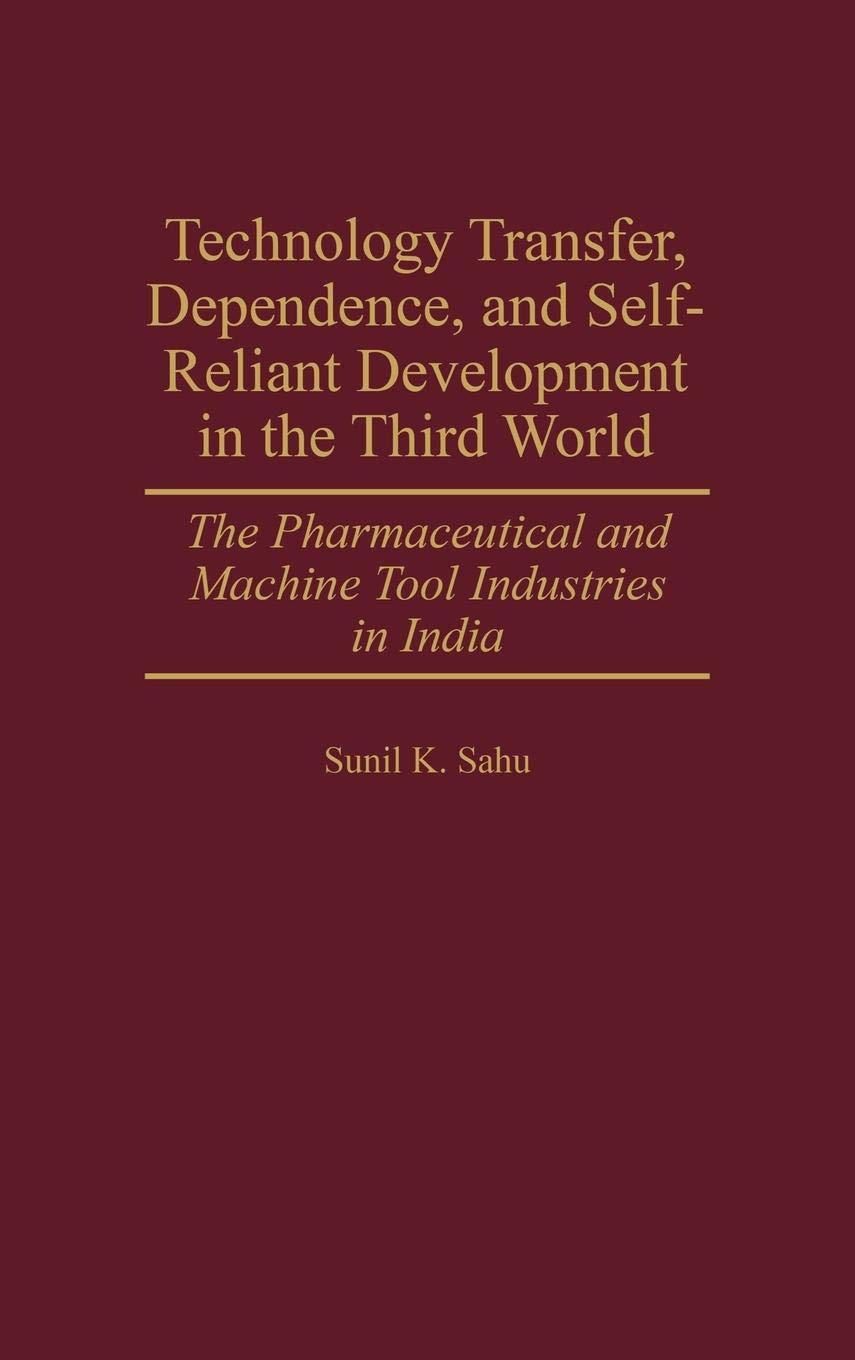
Technology Transfer, Dependence, and SelfReliant Development in the Third World: The Pharmaceutical and Machine Tool Industries,New
Sold by Ergodebooks, an authorized reseller.
Returns accepted within 30 days | support@ergodebooks.com
Shipping Information
- Free Standard Shipping — United States only
- Processing Time: 3–5 business days
- Estimated Delivery: 6–10 business days after dispatch
- Double-boxed, fully insured & discreetly packaged
- Tracking number sent via email once dispatched
Returns & Refund
Returns accepted within 30 days of delivery.
Damaged or Defective Item
Free return shipping + replacement or full refund
Wrong Item Received
Free return shipping + replacement or full refund
Change of Mind
Return shipping at customer's expense · 25% restocking fee applies
Payment Option

To understand technological dependence and selfreliance in the manufacturing industries of the Third World, Sahu tests the main propositions of the two theories on technology transfer. He focuses particularly on understanding the shifting bargaining power of the multinationals, the state and private national capital; the process of acquisition, assimilation, adaptation, and generation of technology at the firm level; the role of the public sector and state regulations and control in the development of technological capability and selfreliant development; the conditionsdomestic and internationalthat allow a developing country to move from a situation of dependency to selfreliance; and the phenomenon of reverse flow of technology from the Third World.According to Sahu, dependency theory is inadequate because of its structural mode of analysis, which portrays dependency as a determinant international structure rather than as a set of shifting constraints within which states seek to maneuver. Though its singlecause explanation of technological dependence in the Third World is helpful in explaining the phenomenon of the technological gap between India and its technology suppliers, it does not explain the growing bargaining power of the state and the national capital visavis multinationals in the last two decades. But according to Professor Sahu, the more sophisticated and dynamic bargaining framework, which considers dependency to be one of the many possible outcomes of technology transfer, helps researchers better understand the changing situations of developing countries, particularly the Indian situation since the early 1970s. An important study for researchers and policy makers dealing with economic development in emerging markets, particularly India.
⚠️ WARNING (California Proposition 65):
This product may contain chemicals known to the State of California to cause cancer, birth defects, or other reproductive harm.
For more information, please visit www.P65Warnings.ca.gov.