If you have any questions, you are always welcome to contact us. We'll get back to you as soon as possible, withing 24 hours on weekdays.
Customer service
All questions about your order, return and delivery must be sent to our customer service team by e-mail at yourstore@yourdomain.com
Sale & Press
If you are interested in selling our products, need more information about our brand or wish to make a collaboration, please contact us at press@yourdomain.com
Help
If you have any questions, you are always welcome to contact us. We'll get back to you as soon as possible, withing 24 hours on weekdays.
Customer service
All questions about your order, return and delivery must be sent to our customer service team by e-mail at yourstore@yourdomain.com
Sale & Press
If you are interested in selling our products, need more information about our brand or wish to make a collaboration, please contact us at press@yourdomain.com
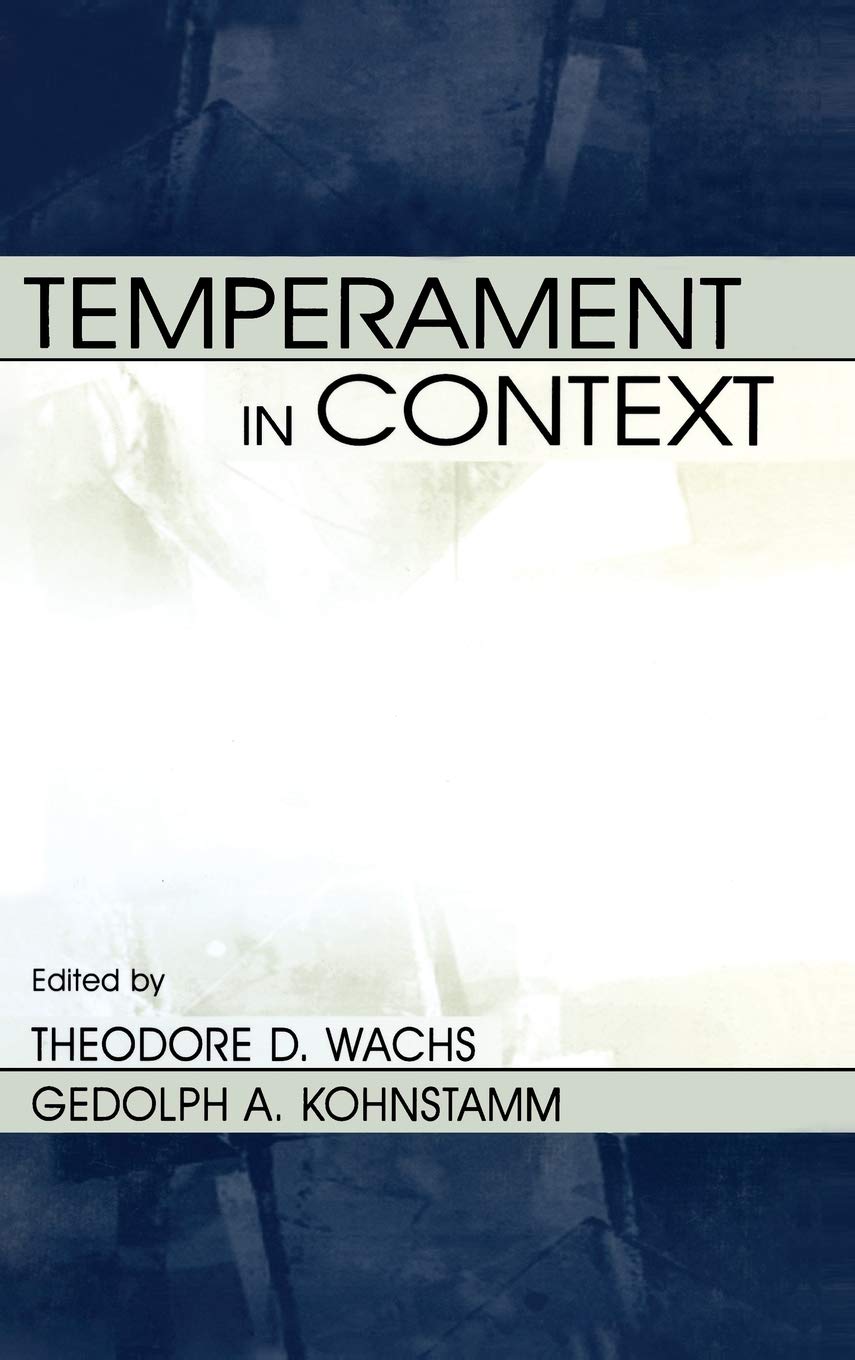
Although the importance of context has been emphasized by temperament researchers, until now there has been remarkably little systematic research on the unique role specific aspects of context play in the development and impact of temperament. The goal of this volume is to systematize current knowledge and theory on the role played by specific aspects of context in the etiology, expression, and influence of temperament, particularly for those aspects of temperament that are most likely to relate to later personality traits.Reflecting the editors' view that the interface between temperament and context is a bidirectional phenomenon, this volume focuses on two broad issues:1) How does context moderate the expression, continuity, or consequences of individual differences in introversionextraversion, sociability, emotionality, and inhibition (the IESEI family of traits)?2) How do individual differences in the IESEI family of traits moderate the nature of characteristics of the individual's context?By bringing together outstanding international researchers who present their current research and theories, the editors systematize research contributions in the domain of contextual contributions to the IESIA family of traits and set the agenda for future research directions.Appropriate for use by scholars and practitioners in developmental science and family studies.
⚠️ WARNING (California Proposition 65):
This product may contain chemicals known to the State of California to cause cancer,
birth defects, or other reproductive harm.
For MAP (Minimum Advertised Price) violations and Intellectual Property (IP) or Trademark concerns, please contact:
support@ergodebooks.com
⚠️ California Proposition 65 Warning: Some products sold on this website may expose you to chemicals known to the State of California to cause cancer, birth defects, or other reproductive harm. For more information, visit www.P65Warnings.ca.gov.