
Title
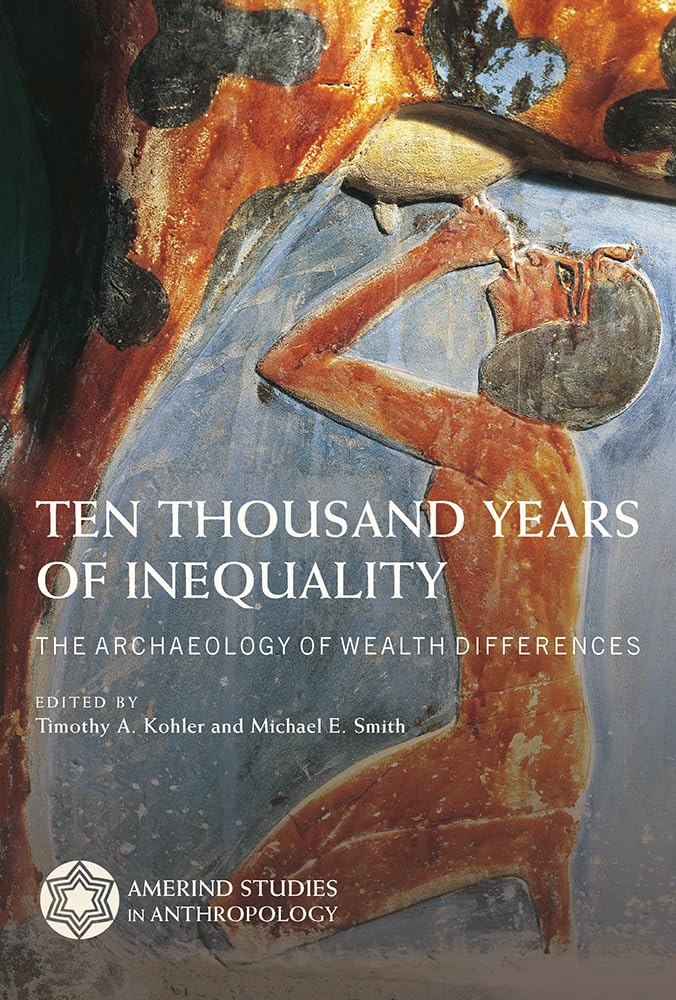
Ten Thousand Years Of Inequality: The Archaeology Of Wealth Differences (Amerind Studies In Archaeology),Used
Sold by Ergodebooks, an authorized reseller.
Returns accepted within 30 days | support@ergodebooks.com
Shipping Information
- Free Standard Shipping — United States only
- Processing Time: 3–5 business days
- Estimated Delivery: 6–10 business days after dispatch
- Double-boxed, fully insured & discreetly packaged
- Tracking number sent via email once dispatched
Returns & Refund
Returns accepted within 30 days of delivery.
Damaged or Defective Item
Free return shipping + replacement or full refund
Wrong Item Received
Free return shipping + replacement or full refund
Change of Mind
Return shipping at customer's expense · 25% restocking fee applies
Payment Option

Is wealth inequality a universal feature of human societies, or did early peoples live an egalitarian existence? How did inequality develop before the modern era? Did inequalities in wealth increase as people settled into a way of life dominated by farming and herding? Why in general do such disparities increase, and how recent are the high levels of wealth inequality now experienced in many developed nations? How can archaeologists tell?Ten Thousand Years of Inequality addresses these and other questions by presenting the first set of consistent quantitative measurements of ancient wealth inequality. The authors are archaeologists who have adapted the Gini index, a statistical measure of wealth distribution often used by economists to measure contemporary inequality, and applied it to housesize distributions over time and around the world. Clear descriptions of methods and assumptions serve as a model for other archaeologists and historians who want to document past patterns of wealth disparity.The chapters cover a variety of ancient cases, including early huntergatherers, farmer villages, and agrarian states and empires. The final chapter synthesizes and compares the results. Among the new and notable outcomes, the authors report a systematic difference between higher levels of inequality in ancient Old World societies and lower levels in their New World counterparts.For the first time, archaeology allows humanitys deep past to provide an account of the early manifestations of wealth inequality around the world.ContributorsNicholas AmesAlleen BetzenhauserAmy BogaardSamuel BowlesMeredith S. ChessonAbhijit DandekarTimothy J. DennehyRobert D. DrennanLaura J. EllysonDeniz EnverovaRonald K. FaulseitGary M. FeinmanMattia FochesatoThomas A. FoorVishwas D. GogteTimothy A. KohlerIan KuijtChapurukha M. KusimbaMaryMargaret MurphyLinda M. NicholasRahul C. OkaMatthew PailesChristian E. PetersonAnna Marie PrentissMichael E. SmithElizabeth C. StoneAmy StyringJade Whitlam
⚠️ WARNING (California Proposition 65):
This product may contain chemicals known to the State of California to cause cancer, birth defects, or other reproductive harm.
For more information, please visit www.P65Warnings.ca.gov.