
Title
Tenement Cities: From 19Th Century Berlin To 21St Century Nairobi,Used
Sold by Ergodebooks, an authorized reseller.
Returns accepted within 30 days | support@ergodebooks.com
Shipping Information
- Free Standard Shipping — United States only
- Processing Time: 3–5 business days
- Estimated Delivery: 6–10 business days after dispatch
- Double-boxed, fully insured & discreetly packaged
- Tracking number sent via email once dispatched
Returns & Refund
Returns accepted within 30 days of delivery.
Damaged or Defective Item
Free return shipping + replacement or full refund
Wrong Item Received
Free return shipping + replacement or full refund
Change of Mind
Return shipping at customer's expense · 25% restocking fee applies
Payment Option

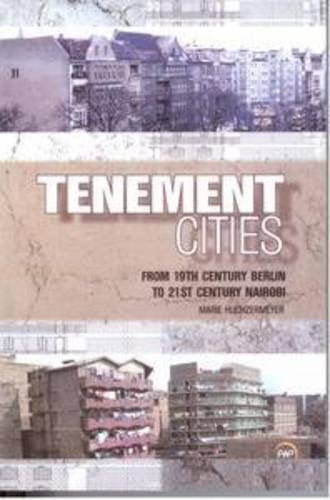
Nairobi today has over 10 000 multistory tenement buildings, many of them offering single rooms and up to eight stories high. Privately owned and exploiting urban space to the maximum, these bear similarities to housing in rapidly industrializing 19th century tenement cities New York, Glasgow, Berlin and others. This book explores the emergence of tenement markets across time and space. It focuses on two contrasting cities: Berlin, the largest and densest concentration of tenements in the late 19th century; and Nairobi, a city today increasingly shaped by tenement investment that exploits urban space to the maximum, displaying pockets of what may well be the highest residential densities on the African continent. In examining similar themes in the history of Berlin and Nairobi, Huchzermeyer asks what legitimizes and delegitimizes tenement markets over time. She interrogates the role of the late 19th and early 20th century housing discourse in Berlin, within its turbulent context. There is no explicit discourse on Nairobi s presentday tenements. The city s modern urban plans, housing policy and cityregion strategy wish tenements away. However, Huchzermeyer finds traces of a pragmatic argument for Nairobi s tenement typology in the approaches that some municipal officials have adopted. This recognizes the convenience and economic buzz of tenement districts and their absorption of unrelenting housing demand. In relation to Nairobi s tenementdominated context, which is shaped by pragmatism and entrepreneurialism, but also regulatory breakdown, corruption, growing vigilantism and ethnic division amid renewed hope for democratization, Huchzermeyer raises important questions for a right to the city. The very interesting issue which this book raises is whether the emergence of this form of living is a regression or an improvement in an African city. It does seem to be an economic step up from squatter settlements of the familiar type even in Nairobi. Yet these flats seem harsh living still. Does the answer lie in regulating and tireless efforts to improve these tenements? Bill Freund, Professor Emeritus of Economic History, Univ. of KwazuluNatal, Durban This is a new stage in the physical development and morphology of African cities, and needs to be taken into account in research andpolicy. Richard Stren, Cities Centre, University of Toronto
⚠️ WARNING (California Proposition 65):
This product may contain chemicals known to the State of California to cause cancer, birth defects, or other reproductive harm.
For more information, please visit www.P65Warnings.ca.gov.