
Title
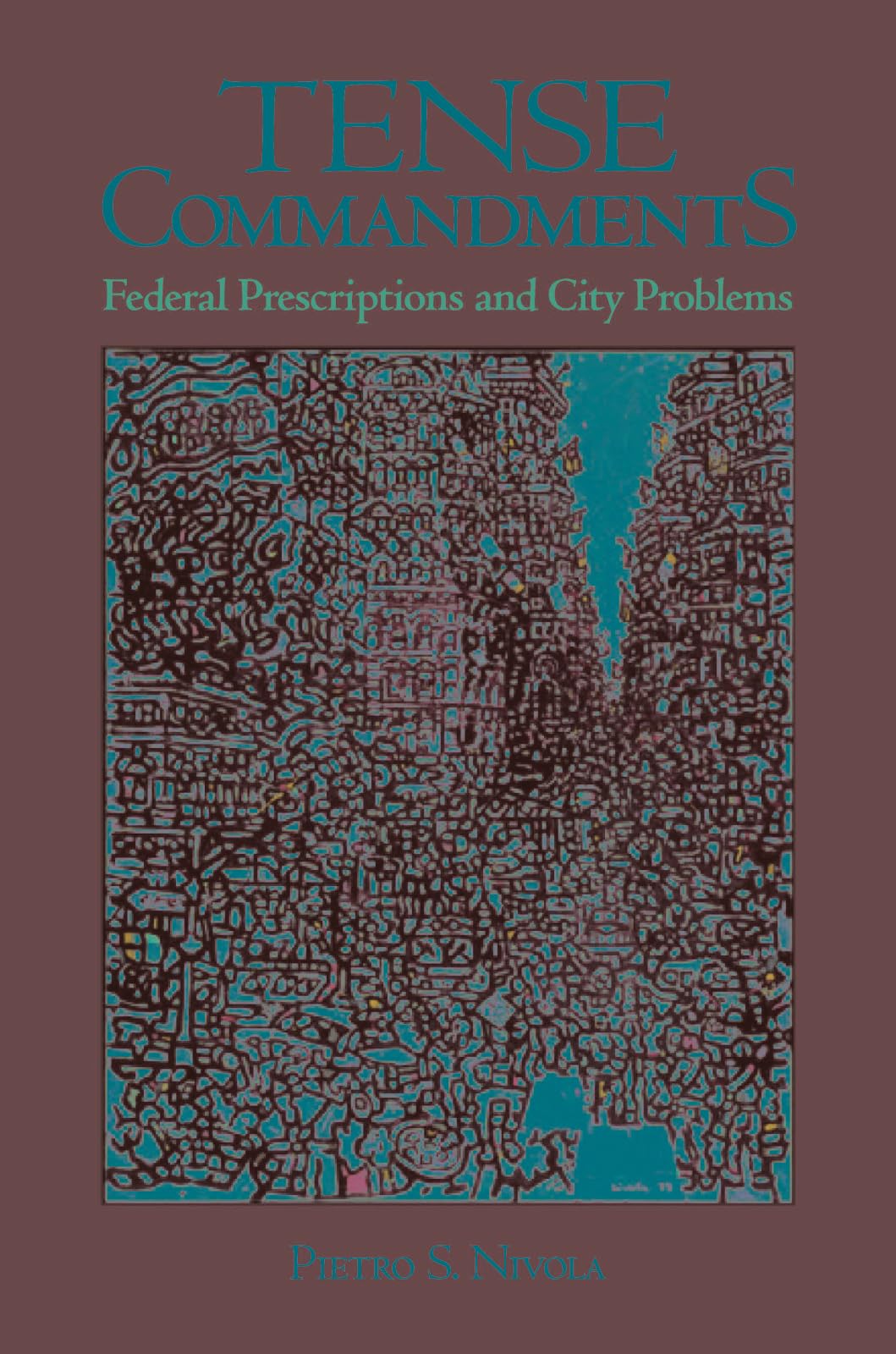
Tense Commandments: Federal Prescriptions And City Problems,New
Sold by Ergodebooks, an authorized reseller.
Returns accepted within 30 days | support@ergodebooks.com
Shipping Information
- Free Standard Shipping — United States only
- Processing Time: 3–5 business days
- Estimated Delivery: 6–10 business days after dispatch
- Double-boxed, fully insured & discreetly packaged
- Tracking number sent via email once dispatched
Returns & Refund
Returns accepted within 30 days of delivery.
Damaged or Defective Item
Free return shipping + replacement or full refund
Wrong Item Received
Free return shipping + replacement or full refund
Change of Mind
Return shipping at customer's expense · 25% restocking fee applies
Payment Option

During the past decade, dozens of large cities lost population as jobs and people kept moving to the suburbs. Despite widespread urban revitalization and renewal, one fact remains unmistakable: when choosing where to live and work, Americans prefer the suburbs to the cities. Many underlying causes of the urban predicament are familiar: disproportionate poverty, stiff city tax rates, and certain unsatisfactory municipal services (most notably, public schools). Less recognized is the distinct possibility that sometimes the regulatory policies of the federal governmentthe rules and rulings imposed by its judges, bureaucrats, and lawmakersfurther disadvantage the cities, ultimately burdening their ability to attract residents and businesses. In Tense Commandments, Pietro S. Nivola encourages renewed reflection on the suitable balance between national and local domains. He examines an array of directive or supervisory methods by which federal policymakers narrow local autonomy and complicate the work urban governments are supposed to do. Urban taxpayers finance many costly projects that are prescribed by federal law. A handful of national rules bore down on local governments before 1965. Today these governments labor under hundreds of socalled unfunded mandates. Federal aid to large cities has lagged behind a profusion of mandated expenditures, at times straining municipal budgets. Apart from their fiscal impacts, Nivola argues, various federal prescriptions impinge on local administration of routine services, tying the hands of managers and complicating city improvements. Nivola includes case studies of six cities: Baltimore, Philadelphia, New York, Chicago, San Francisco, and Los Angeles. He describes the ''politics of paternalism,'' the political pressures that federal regulations place on governance. Then he offers comparisons with various political systems abroad, including Germany, the U.K., France, and Italy. As the nation and its cities brace for a long and arduous effort to combat terrorism, Nivola recommends that federal mandates be evaluated with a standard question: are they socially beneficial, or do they deprive localities of discretion, distort legitimate local priorities, and perhaps misallocate resources? In today's intricate federal system, the unencumbered capacity of governments at all levels to define their roles and concentrate on their core functions and responsibilities seems urgent.'
⚠️ WARNING (California Proposition 65):
This product may contain chemicals known to the State of California to cause cancer, birth defects, or other reproductive harm.
For more information, please visit www.P65Warnings.ca.gov.