If you have any questions, you are always welcome to contact us. We'll get back to you as soon as possible, withing 24 hours on weekdays.
Customer service
All questions about your order, return and delivery must be sent to our customer service team by e-mail at yourstore@yourdomain.com
Sale & Press
If you are interested in selling our products, need more information about our brand or wish to make a collaboration, please contact us at press@yourdomain.com
Help
If you have any questions, you are always welcome to contact us. We'll get back to you as soon as possible, withing 24 hours on weekdays.
Customer service
All questions about your order, return and delivery must be sent to our customer service team by e-mail at yourstore@yourdomain.com
Sale & Press
If you are interested in selling our products, need more information about our brand or wish to make a collaboration, please contact us at press@yourdomain.com
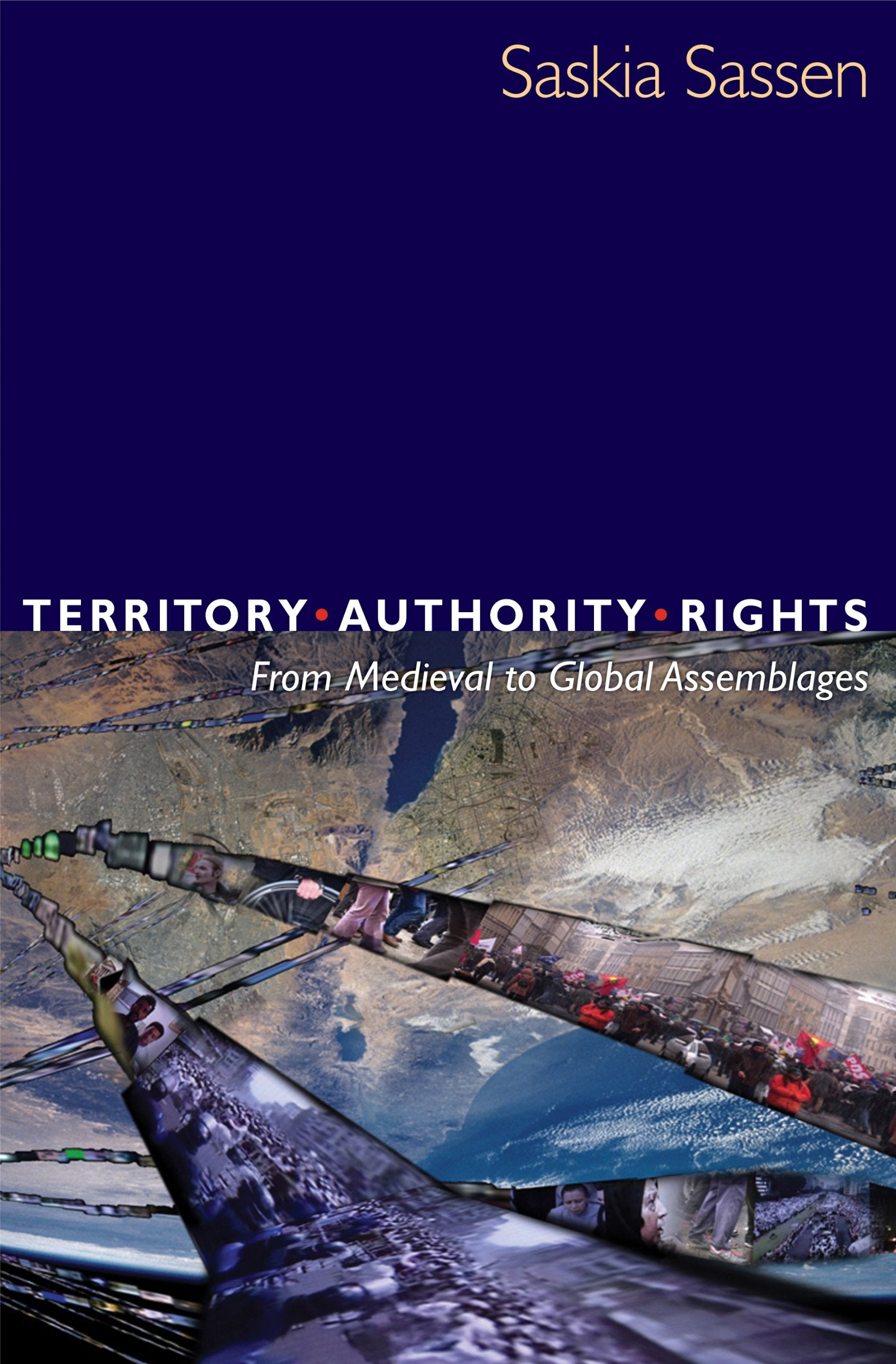
Where Does The Nationstate End And Globalization Begin? In Territory, Authority, Rights, One Of The World'S Leading Authorities On Globalization Shows How The National State Made Today'S Global Era Possible. Saskia Sassen Argues That Even While Globalization Is Best Understood As 'Denationalization,' It Continues To Be Shaped, Channeled, And Enabled By Institutions And Networks Originally Developed With Nations In Mind, Such As The Rule Of Law And Respect For Private Authority. This Process Of State Making Produced Some Of The Capabilities Enabling The Global Era. The Difference Is That These Capabilities Have Become Part Of New Organizing Logics: Actors Other Than Nationstates Deploy Them For New Purposes. Sassen Builds Her Case By Examining How Three Components Of Any Society In Any Ageterritory, Authority, And Rightshave Changed In Themselves And In Their Interrelationships Across Three Major Historical 'Assemblages': The Medieval, The National, And The Global.The Book Consists Of Three Parts. The First, 'Assembling The National,' Traces The Emergence Of Territoriality In The Middle Ages And Considers Monarchical Divinity As A Precursor To Sovereign Secular Authority. The Second Part, 'Disassembling The National,' Analyzes Economic, Legal, Technological, And Political Conditions And Projects That Are Shaping New Organizing Logics. The Third Part, 'Assemblages Of A Global Digital Age,' Examines Particular Intersections Of The New Digital Technologies With Territory, Authority, And Rights.Sweeping In Scope, Rich In Detail, And Highly Readable, Territory, Authority, Rights Is A Definitive New Statement On Globalization That Will Resonate Throughout The Social Sciences.
⚠️ WARNING (California Proposition 65):
This product may contain chemicals known to the State of California to cause cancer,
birth defects, or other reproductive harm.
Q: What is the page count of the book?A: The book has five hundred twelve pages. This makes it a comprehensive read on globalization and its historical contexts.
Q: What is the binding type of the book?A: The book is hardcover. This durable binding ensures longevity and protection for the content.
Q: What are the dimensions of the book?A: The book measures six and a half inches in length, one point twenty-six inches in width, and nine and a quarter inches in height. These dimensions make it easy to handle and store.
Q: Who is the author of the book?A: The author is Saskia Sassen. She is a renowned authority on globalization and social sciences.
Q: What category does this book fall under?A: This book falls under the Economics category. It explores complex themes related to globalization and authority.
Q: What is the main theme of the book?A: The main theme revolves around the relationship between territory, authority, and rights in the context of globalization. It delves into historical changes and their implications.
Q: How do I approach reading this book?A: You can read this book at your own pace, as it is suitable for both casual and serious readers interested in globalization. It is structured in three parts for easier comprehension.
Q: Is this book suitable for beginners in economics?A: Yes, it is suitable for beginners. The book is written in a highly readable style, making it accessible to those new to the subject.
Q: What areas does the book cover?A: The book covers medieval, national, and global contexts. It examines how institutions have evolved over time.
Q: How should I store this book?A: Store this book in a cool, dry place, away from direct sunlight. This will help preserve its condition and readability.
Q: Is there any special care needed for this hardcover book?A: No special care is needed, but keeping it on a sturdy shelf will help maintain its shape and condition.
Q: What if the book arrives damaged?A: If the book arrives damaged, you should contact the seller for a replacement or return. Most retailers have policies in place for such situations.
Q: Can I return the book if I change my mind?A: Yes, you can typically return the book if you change your mind, following the retailer's return policy. Make sure to keep the receipt.
Q: Are there any illustrations in the book?A: No, the book primarily contains text. It focuses on in-depth analysis and discussions rather than visual elements.
Q: Is this book part of a series?A: No, this book is not part of a series. It stands alone as a comprehensive examination of its themes.
For MAP (Minimum Advertised Price) violations and Intellectual Property (IP) or Trademark concerns, please contact:
support@ergodebooks.com
⚠️ California Proposition 65 Warning: Some products sold on this website may expose you to chemicals known to the State of California to cause cancer, birth defects, or other reproductive harm. For more information, visit www.P65Warnings.ca.gov.