
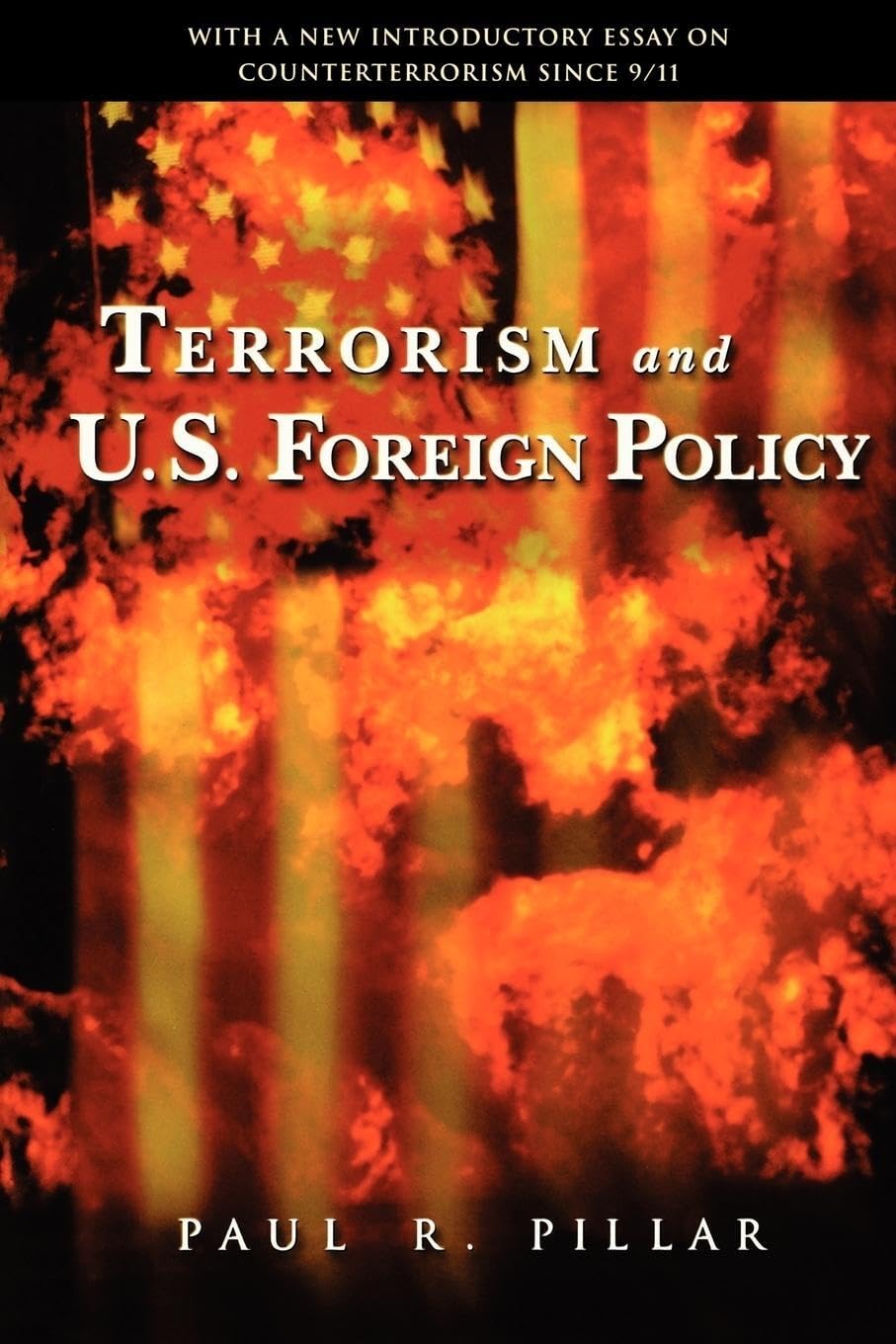
Title
Terrorism And U.S. Foreign Policy,New
Sold by Ergodebooks, an authorized reseller.
Returns accepted within 30 days | support@ergodebooks.com
Shipping Information
- Free Standard Shipping — United States only
- Processing Time: 3–5 business days
- Estimated Delivery: 6–10 business days after dispatch
- Double-boxed, fully insured & discreetly packaged
- Tracking number sent via email once dispatched
Returns & Refund
Returns accepted within 30 days of delivery.
Damaged or Defective Item
Free return shipping + replacement or full refund
Wrong Item Received
Free return shipping + replacement or full refund
Change of Mind
Return shipping at customer's expense · 25% restocking fee applies
Payment Option

The United States Governmentbacked By The Overwhelming Support Of The American Publictakes A Hard Line Against International Terrorism. The Tenets Of Official U.S. Counterterrorist Policy Are: Make No Concessions Or Deals With Terrorists; Bring Them To Justice For Their Crimes; Isolate And Apply Pressure On States That Sponsor Terrorism; And Bolster The Counterterrorist Capabilities Of Countries Willing To Work With The United States. While These Tenets Are Sound Principles, Their Application, Specifically Overseas, Raises Difficult Questions. Does The ''No Deal'' Policy Actually Deter Terrorists Acts? Are There Cases Where Agreements Might Reduce Terrorism, While Advancing Other U.S. Interests? Do Isolation And Pressure Really Force Offending States To Alter Their Support For Terrorists? What Factors Affect The Willingness, Not Just The Capability, Of Foreign Governments To Help The United States In Counterterrorism? In This Critical Study, A Career Cia Officer Provides A Guide To Constructing And Executing Counterterrorist Policy, Urging That It Be Formulated As An Integral Part Of Broader U.S. Foreign Policy. In The First Four Chapters, Paul R. Pillar Identifies The Necessary Elements Of Counterterrorist Policy, He Examines Why The United States Is A Prime Terrorist Target, And He Reveals Why The Counterterrorist Policies That Seem Strongest Are Not Always The Most Effective. Chapter 5 Examines The Widely Varying Nature Of Terrorist Groups And The Policy Tools Most Appropriately Applied To Them. Chapter 6 Focuses On States That Sponsor Terrorism (Including Iran, Libya, North Korea, And Cuba), Along With Those That Enable It To Occur (Particularly Greece And Pakistan). Pillar Examines Ways In Which The American Public'S Perspective Toward Terrorism Can Actually Constrain Counterterrorist Policy, And He Concludes That Terrorism Cannot Be ''Defeated'' Only Reduced, Attenuated, And To Some Degree, Controlled. The Final Chapter Summarizes His Recommendations For Amending U.S. Policy.'
⚠️ WARNING (California Proposition 65):
This product may contain chemicals known to the State of California to cause cancer, birth defects, or other reproductive harm.
For more information, please visit www.P65Warnings.ca.gov.