
Title
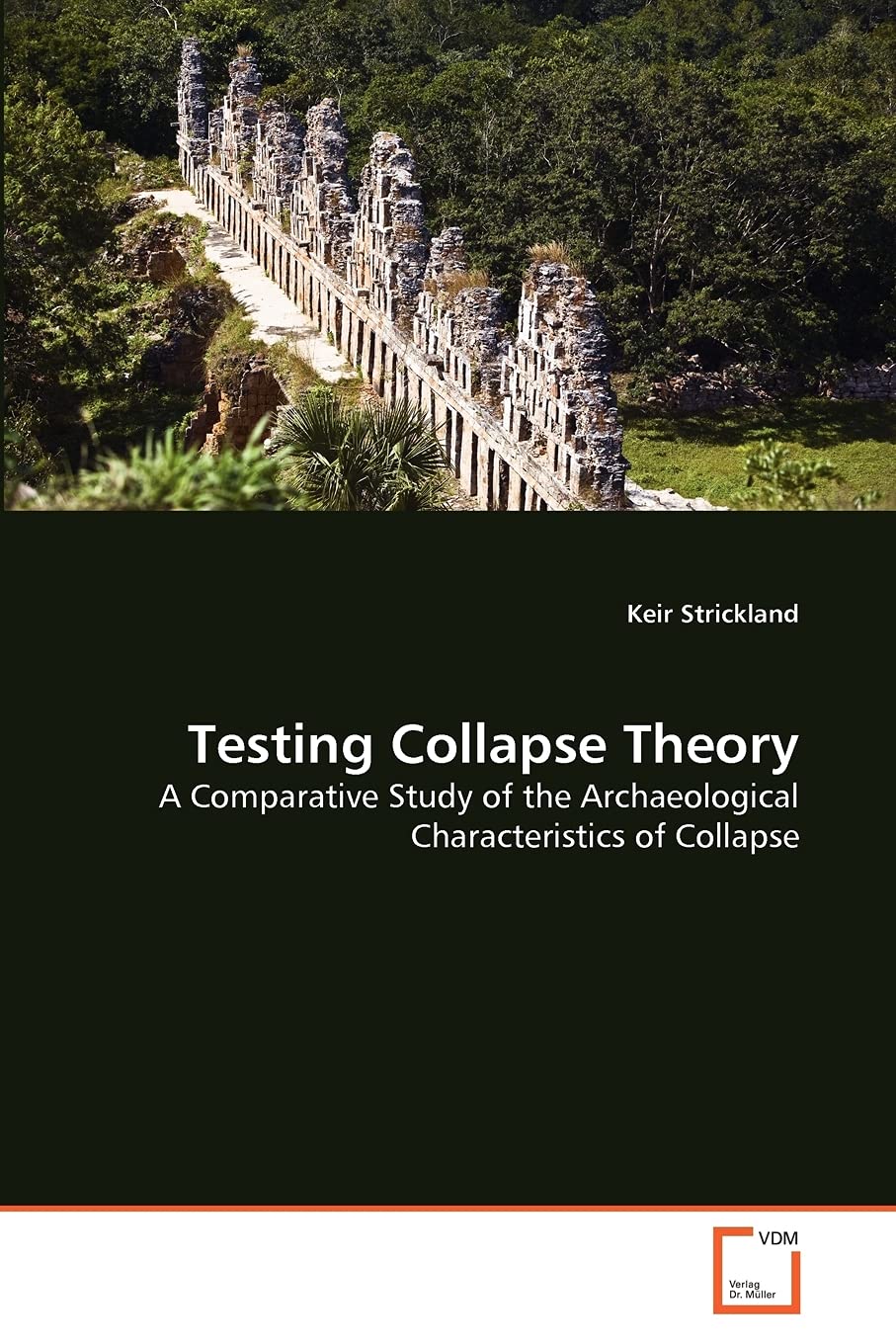
Testing Collapse Theory: A Comparative Study of the Archaeological Characteristics of Collapse,Used
Sold by Ergodebooks, an authorized reseller.
Returns accepted within 30 days | support@ergodebooks.com
Shipping Information
- Free Standard Shipping — United States only
- Processing Time: 3–5 business days
- Estimated Delivery: 6–10 business days after dispatch
- Double-boxed, fully insured & discreetly packaged
- Tracking number sent via email once dispatched
Returns & Refund
Returns accepted within 30 days of delivery.
Damaged or Defective Item
Free return shipping + replacement or full refund
Wrong Item Received
Free return shipping + replacement or full refund
Change of Mind
Return shipping at customer's expense · 25% restocking fee applies
Payment Option

We have been fascinated by societal collapse since civilisation began; as soon as the first monumental stone structures were erected they began to crack, crumble, and decay, and people became aware of their society's mortality. From the writings of Plato and Aristotle to the silver screen of Hollywood; the very idea that a civilisation can flourish and burn so brightly, and then fall so far, to ruin, fills us with an almost morbid fascination, ?the possibility that an entire civilisation could die doubles our own mortality? (Mazzarino 1966: 171). However, despite popular interest, collapse has long been sidelined in archaeology, leaving the field dominated by highend universal collapse theories. This book attempts to test such theories through by grounding them in the physical archaeological record of three examples of such societal collapse from across the world; those of the Maya (Mesoamerica), the Indus (South Asia) and the Turanian Basin (the Near East).
⚠️ WARNING (California Proposition 65):
This product may contain chemicals known to the State of California to cause cancer, birth defects, or other reproductive harm.
For more information, please visit www.P65Warnings.ca.gov.