If you have any questions, you are always welcome to contact us. We'll get back to you as soon as possible, withing 24 hours on weekdays.
Customer service
All questions about your order, return and delivery must be sent to our customer service team by e-mail at yourstore@yourdomain.com
Sale & Press
If you are interested in selling our products, need more information about our brand or wish to make a collaboration, please contact us at press@yourdomain.com
Help
If you have any questions, you are always welcome to contact us. We'll get back to you as soon as possible, withing 24 hours on weekdays.
Customer service
All questions about your order, return and delivery must be sent to our customer service team by e-mail at yourstore@yourdomain.com
Sale & Press
If you are interested in selling our products, need more information about our brand or wish to make a collaboration, please contact us at press@yourdomain.com
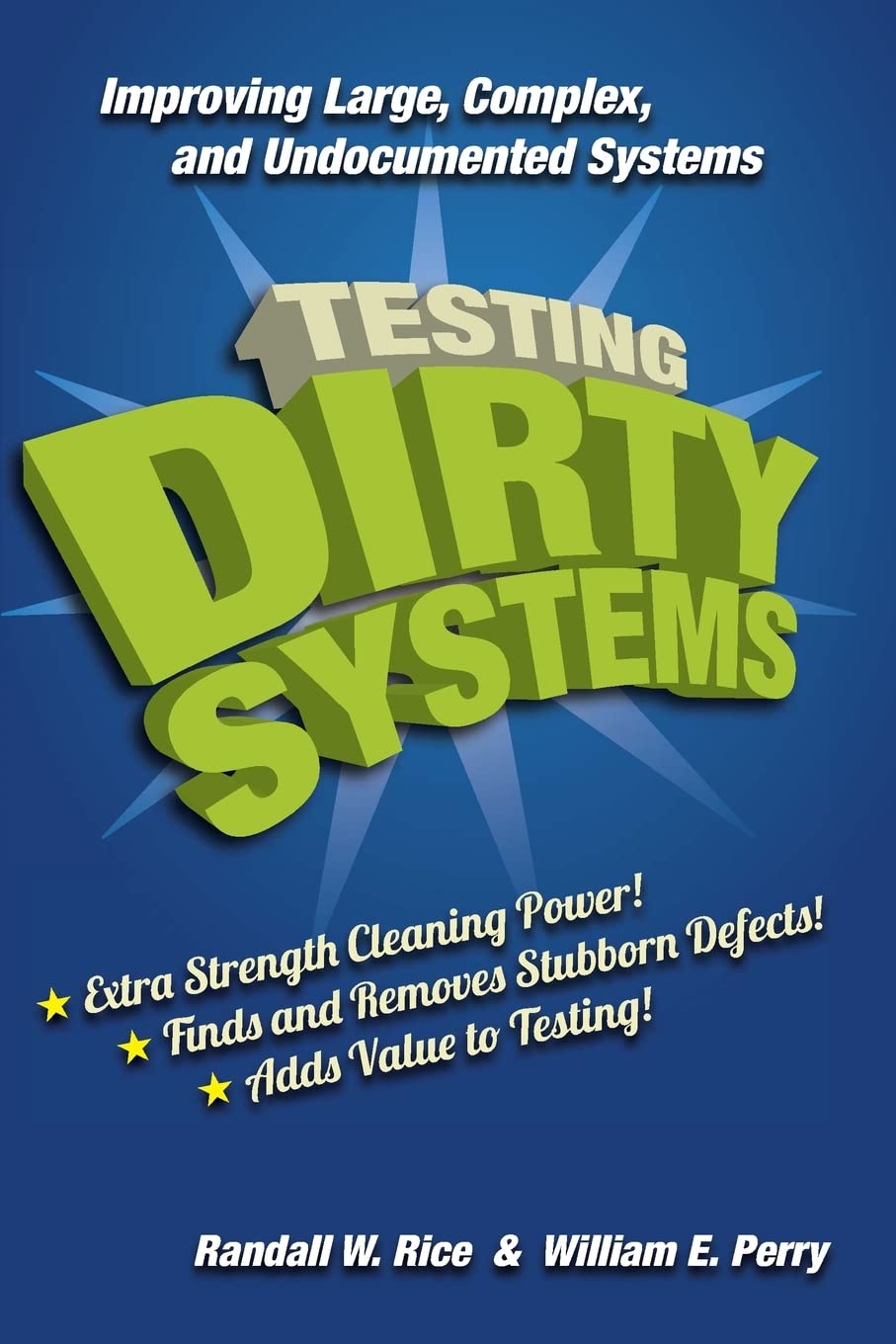
Dirty systems are systems which lack documentation, have few or no defined requirements, have no standardized design or architecture, and have unknown levels of defects. These systems are very difficult to maintain and test due to high complexity and low understanding. People are often afraid to make any changes to this type of software because of the high risk of breaking things that currently work correctly. In many cases, these systems are legacy systems and were never tested well originally. After years of maintenance, these systems often are in disarray due to the lack of control. The object of this book is to assist software testers in how to approach testing a system, which in many instances appears as a blackbox to them. The testing process is heavily focused on a diagnostic step, which scopes the test problem, and assists the tester in building an effective test plan. The process proposed in this book should significantly improve the effectiveness and efficiency of the software testing. There are two main objectives for the reader: 1) learn how to test these complex and large legacy systems, and 2) use the information gained from testing to clean the system and improve maintenance and testing processes.
⚠️ WARNING (California Proposition 65):
This product may contain chemicals known to the State of California to cause cancer,
birth defects, or other reproductive harm.
For MAP (Minimum Advertised Price) violations and Intellectual Property (IP) or Trademark concerns, please contact:
support@ergodebooks.com
⚠️ California Proposition 65 Warning: Some products sold on this website may expose you to chemicals known to the State of California to cause cancer, birth defects, or other reproductive harm. For more information, visit www.P65Warnings.ca.gov.