If you have any questions, you are always welcome to contact us. We'll get back to you as soon as possible, withing 24 hours on weekdays.
Customer service
All questions about your order, return and delivery must be sent to our customer service team by e-mail at yourstore@yourdomain.com
Sale & Press
If you are interested in selling our products, need more information about our brand or wish to make a collaboration, please contact us at press@yourdomain.com
Help
If you have any questions, you are always welcome to contact us. We'll get back to you as soon as possible, withing 24 hours on weekdays.
Customer service
All questions about your order, return and delivery must be sent to our customer service team by e-mail at yourstore@yourdomain.com
Sale & Press
If you are interested in selling our products, need more information about our brand or wish to make a collaboration, please contact us at press@yourdomain.com
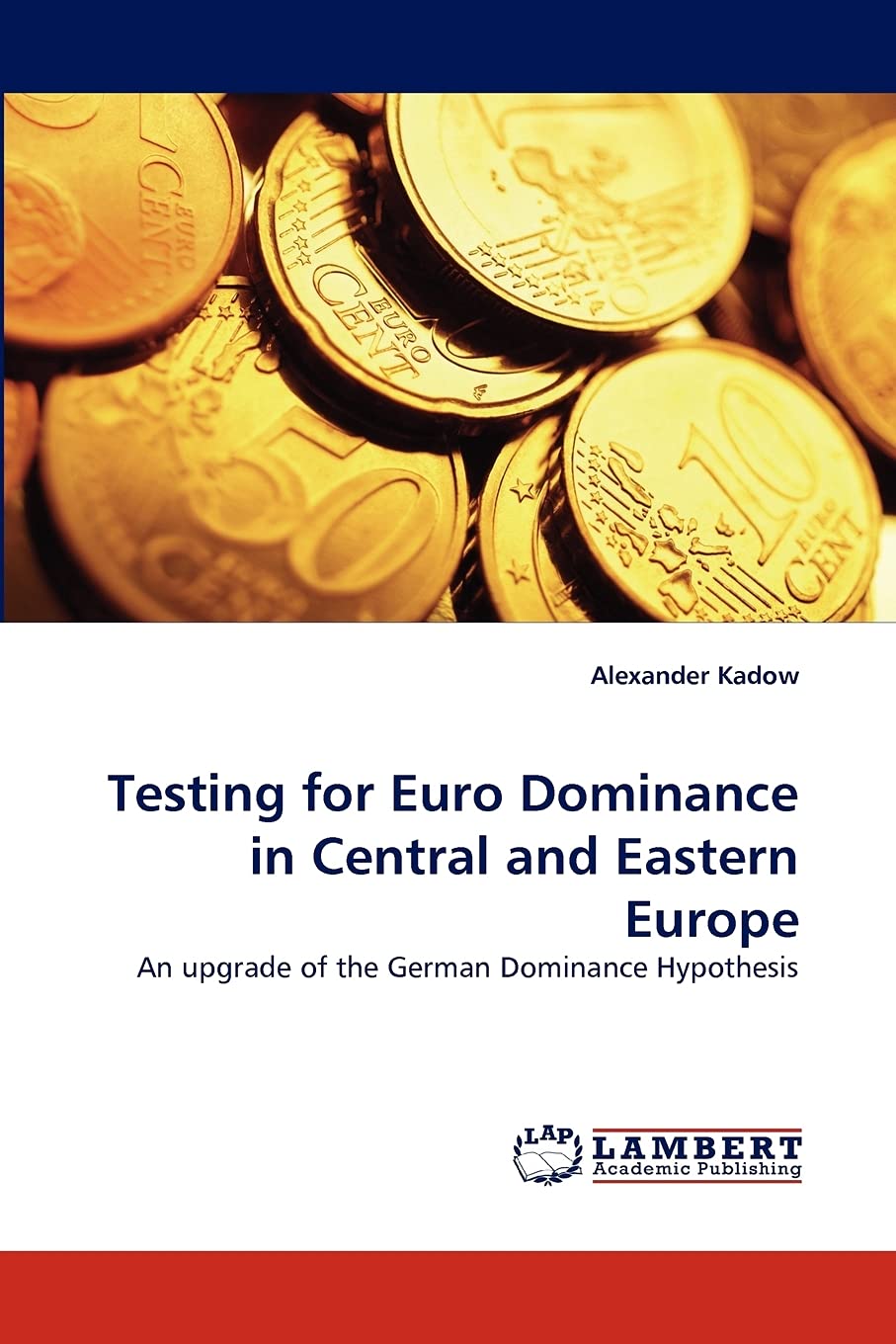
The Eastern enlargement of the European Union has provided a fresh stimulus to the process of European integration. Ten new member states from Central and Eastern Europe (CEE) will eventually be part of the euro area: Bulgaria, the Czech Republic, Estonia, Hungary, Latvia, Lithuania, Poland, Romania, the Slovak Republic and Slovenia which already adopted the euro. In contrast to previous studies, this monograph treats all transition economies en bloc. Alluding to the wellestablished German Dominance Hypothesis, I formulate the Euro Dominance Hypothesis in a vector error correction model. This framework permits a coherent testing for the presence of monetary integration in Europe and its transmission through financial markets. The findings indicate that the European Central Bank (ECB) influences shortterm interest rates outside the euro area. However, there are crucial feedback relations across the new member states as well as between the transition economies and the ECB. Monetary integration seems to be particularly driven by the emerging banking sectors in CEE.
⚠️ WARNING (California Proposition 65):
This product may contain chemicals known to the State of California to cause cancer,
birth defects, or other reproductive harm.
For MAP (Minimum Advertised Price) violations and Intellectual Property (IP) or Trademark concerns, please contact:
support@ergodebooks.com
⚠️ California Proposition 65 Warning: Some products sold on this website may expose you to chemicals known to the State of California to cause cancer, birth defects, or other reproductive harm. For more information, visit www.P65Warnings.ca.gov.