
Title
Testing The Limit: Derrida, Henry, Levinas, And The Phenomenological Tradition (Cultural Memory In The Present),Used
Sold by Ergodebooks, an authorized reseller.
Returns accepted within 30 days | support@ergodebooks.com
Shipping Information
- Free Standard Shipping — United States only
- Processing Time: 3–5 business days
- Estimated Delivery: 6–10 business days after dispatch
- Double-boxed, fully insured & discreetly packaged
- Tracking number sent via email once dispatched
Returns & Refund
Returns accepted within 30 days of delivery.
Damaged or Defective Item
Free return shipping + replacement or full refund
Wrong Item Received
Free return shipping + replacement or full refund
Change of Mind
Return shipping at customer's expense · 25% restocking fee applies
Payment Option

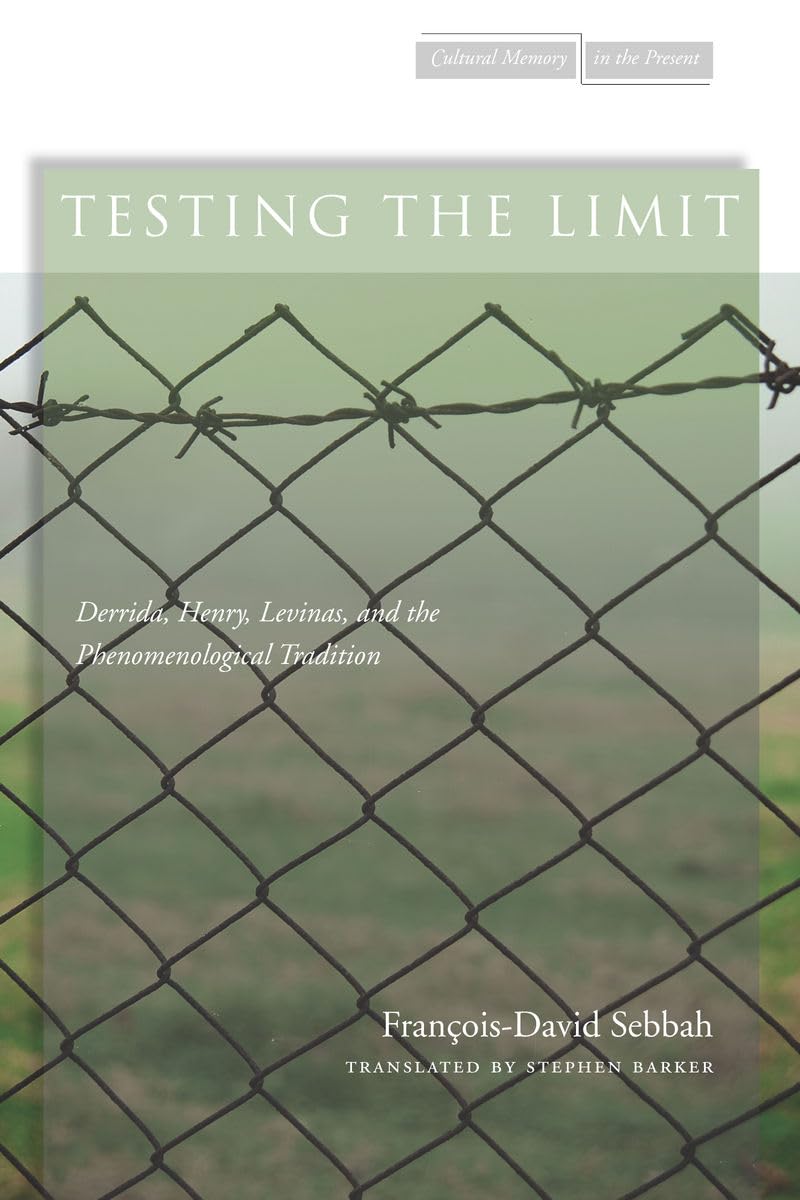
In exploring the nature of excess relative to a phenomenology of the limit, Testing the Limit claims that phenomenology itself is an exploration of excess. What does it mean that 'the self' is 'given'? Should we see it as originary; or rather, in what way is the self engendered from textual practices that transgressor hover around and therefore withinthe threshold of phenomenologial discourse? This is the first book to include Michel Henry in a triangulation with Derrida and Levinas and the first to critique Levinas on the basis of his interpolation of philosophy and religion. Sebbah claims that the textual origins of phenomenology determine, in their temporal rhythms, the nature of the subjectivation on which they focus. He situates these considerations within the broader picture of the state of contemporary French phenomenology (chiefly the legacy of MerleauPonty), in order to show that these three thinkers share a certain 'family resemblance,' the identification of which reveals something about the traces of other phenomenological families. It is by testing the limit within the context of traditional phenomenological concerns about the appearance of subjectivity and ipseity that Derrida, Henry, and Levinas radically reconsider phenomenology and that French phenomenology assumes its present form.
⚠️ WARNING (California Proposition 65):
This product may contain chemicals known to the State of California to cause cancer, birth defects, or other reproductive harm.
For more information, please visit www.P65Warnings.ca.gov.