
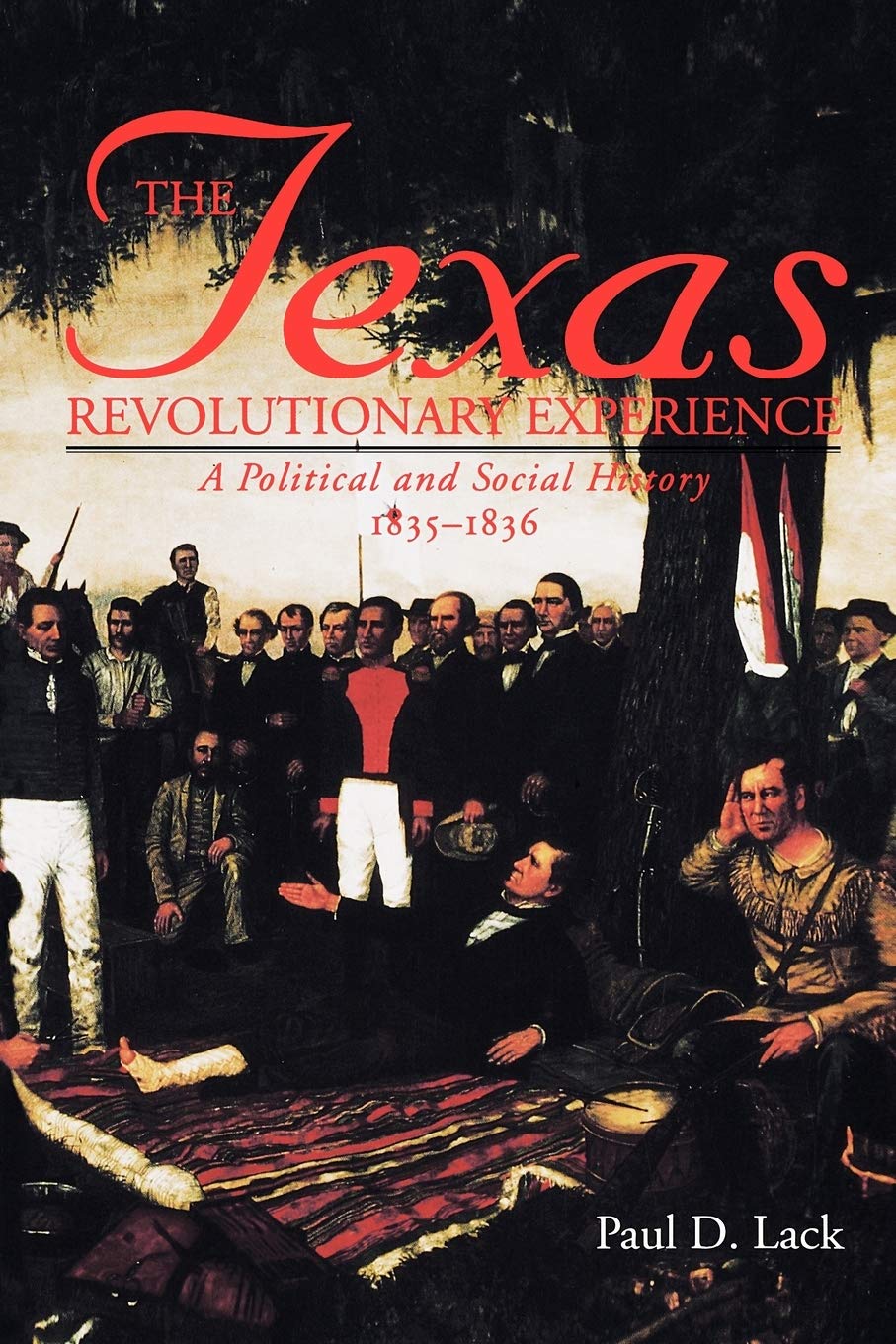
Title
Texas Revolutionary Experience: A Political and Social History, 18351836 (Texas A&m Southwestern Studies, 10),Used
Sold by Ergodebooks, an authorized reseller.
Returns accepted within 30 days | support@ergodebooks.com
Shipping Information
- Free Standard Shipping — United States only
- Processing Time: 3–5 business days
- Estimated Delivery: 6–10 business days after dispatch
- Double-boxed, fully insured & discreetly packaged
- Tracking number sent via email once dispatched
Returns & Refund
Returns accepted within 30 days of delivery.
Damaged or Defective Item
Free return shipping + replacement or full refund
Wrong Item Received
Free return shipping + replacement or full refund
Change of Mind
Return shipping at customer's expense · 25% restocking fee applies
Payment Option

In honoring the heroic legend of the Texas Revolution, generations of scholars and Texans themselves have cleansed the revolution of its messierand perhaps more truly revolutionarydimensions. Focusing on the preexisting causes of the conflict of 183536 and the military execution of the war, they have neglected the political turbulence, regional disharmonies, conflicts of interest, social upheaval, and racial and ethnic strife that characterized the period. This groundbreaking work on the Texas Revolution offers the first systematic analysis of the event as political and social history.This fresh perspective, drawn from exhaustive examination of primary documents (claims records and land documents as well as traditional manuscript collections), portrays the Texans entering their quarrel with Mexico as a fragmented peopleindividualistic, divided from one community to another by ethnic and racial tensions, and lacking a consensus about the meaning of political changes in Mexico. Paul D. Lack examines, one at a time, the various groups that participated in the Texas Revolution. He concludes that the army was highly politicized, overly democratic and individualistic, and lacking in discipline and respect for property. With the statistical profile of the army he has compiled, Lack puts to rest forever the idea that the Anglo community gave an overwhelming response to the call to arms. He details instead the tensions between army volunteers and the majority of Texans who refused military service. Lack provides the most satisfactory account of Texas Tories yet written and, in a particularly sensitive treatment of Tejanos, shows the dilemma Texas Mexicans faced in the conflict. He traces the role of black Texans, the panic within Texas over slave rebellion, and the problem of runaway slaves in the Revolution.For the masses of Texans, Lack convincingly demonstrates, the Revolution was a time of dislocation and grief that even the eventual outcome of battle did not heal. This scholarly epic, sure to become a classic and a model for future research on the Revolution, shows clearly how the experiences of the years 183536 left a new nation burdened by political upheaval, social disorder, ethnic bitterness, and other consequences of a failed revolution, all of which helped to define the Texas identity for the future. In honoring the heroic legend of the Texas Revolution, generations of scholars and Texans themselves have cleansed the revolution of its messierand perhaps more truly revolutionarydimensions. Focusing on the preexisting causes of the conflict of 183536 and the military execution of the war, they have neglected the political turbulence, regional disharmonies, conflicts of interest, social upheaval, and racial and ethnic strife that characterized the period. This groundbreaking work on the Texas Revolution offers the first systematic analysis of the event as political and social history.This fresh perspective, drawn from exhaustive examination of primary documents (claims records and land documents as well as traditional manuscript collections), portrays the Texans entering their quarrel with Mexico as a fragmented peopleindividualistic, divided from one community to another by ethnic and racial tensions, and lacking a consensus about the meaning of political changes in Mexico. Paul D. Lack examines, one at a time, the various groups that participated in the Texas Revolution. He concludes that the army was highly politicized, overly democratic and individualistic, and lacking in discipline and respect for property. With the statistical profile of the army he has compiled, Lack puts to rest forever the idea that the Anglo community gave an overwhelming response to the call to arms. He details instead the tensions between army volunteers and the majority of Texans who refused military service. Lack provides the most satisfactory account of Texas Tories yet written and, in a particularly sensitive treatment of Tejano
⚠️ WARNING (California Proposition 65):
This product may contain chemicals known to the State of California to cause cancer, birth defects, or other reproductive harm.
For more information, please visit www.P65Warnings.ca.gov.
- Q: What is the main focus of 'Texas Revolutionary Experience: A Political and Social History, 1835-1836'? A: This book provides a systematic analysis of the Texas Revolution, highlighting the political and social history of the period, including the various causes of the conflict and the experiences of different groups involved.
- Q: Who is the author of the book, and what is his background? A: The author is Paul D. Lack, a scholar who examines the complexities of the Texas Revolution through extensive research of primary documents and offers insights into the fragmented nature of Texas society during this time.
- Q: What unique perspectives does this book offer about the Texas Revolution? A: The book challenges traditional narratives by focusing on the political turbulence, social upheaval, and ethnic strife of the era, presenting a more nuanced view of the revolution and the diverse experiences of those involved.
- Q: Is this book suitable for academic research? A: Yes, 'Texas Revolutionary Experience' is a scholarly work that provides in-depth analysis and extensive references to primary sources, making it an excellent resource for academic research on the Texas Revolution.
- Q: What type of readers would benefit from this book? A: The book is ideal for historians, students, and anyone interested in Texas history, as well as those seeking a deeper understanding of the political and social dynamics of the Texas Revolution.
- Q: How does the author address the role of different ethnic groups in the Texas Revolution? A: Paul D. Lack examines the contributions and challenges faced by various groups, including Tejanos and black Texans, providing a comprehensive view of their experiences during the conflict.
- Q: What are the key themes explored in this book? A: Key themes include political discord, social division, ethnic tensions, and the consequences of the revolution on Texas identity, highlighting how these factors shaped the outcome of the conflict.
- Q: Does the book include statistical analysis related to the Texas Revolution? A: Yes, the author includes a statistical profile of the army, which challenges the idea that there was a strong consensus among Texans regarding the call to arms.
- Q: What is the publication date and edition of this book? A: The book was published on June 1, 1995. It is available in paperback format and is categorized as a new book.
- Q: How many pages does 'Texas Revolutionary Experience' have? A: The book consists of 360 pages, providing a thorough exploration of the Texas Revolution.