If you have any questions, you are always welcome to contact us. We'll get back to you as soon as possible, withing 24 hours on weekdays.
Customer service
All questions about your order, return and delivery must be sent to our customer service team by e-mail at yourstore@yourdomain.com
Sale & Press
If you are interested in selling our products, need more information about our brand or wish to make a collaboration, please contact us at press@yourdomain.com
Help
If you have any questions, you are always welcome to contact us. We'll get back to you as soon as possible, withing 24 hours on weekdays.
Customer service
All questions about your order, return and delivery must be sent to our customer service team by e-mail at yourstore@yourdomain.com
Sale & Press
If you are interested in selling our products, need more information about our brand or wish to make a collaboration, please contact us at press@yourdomain.com
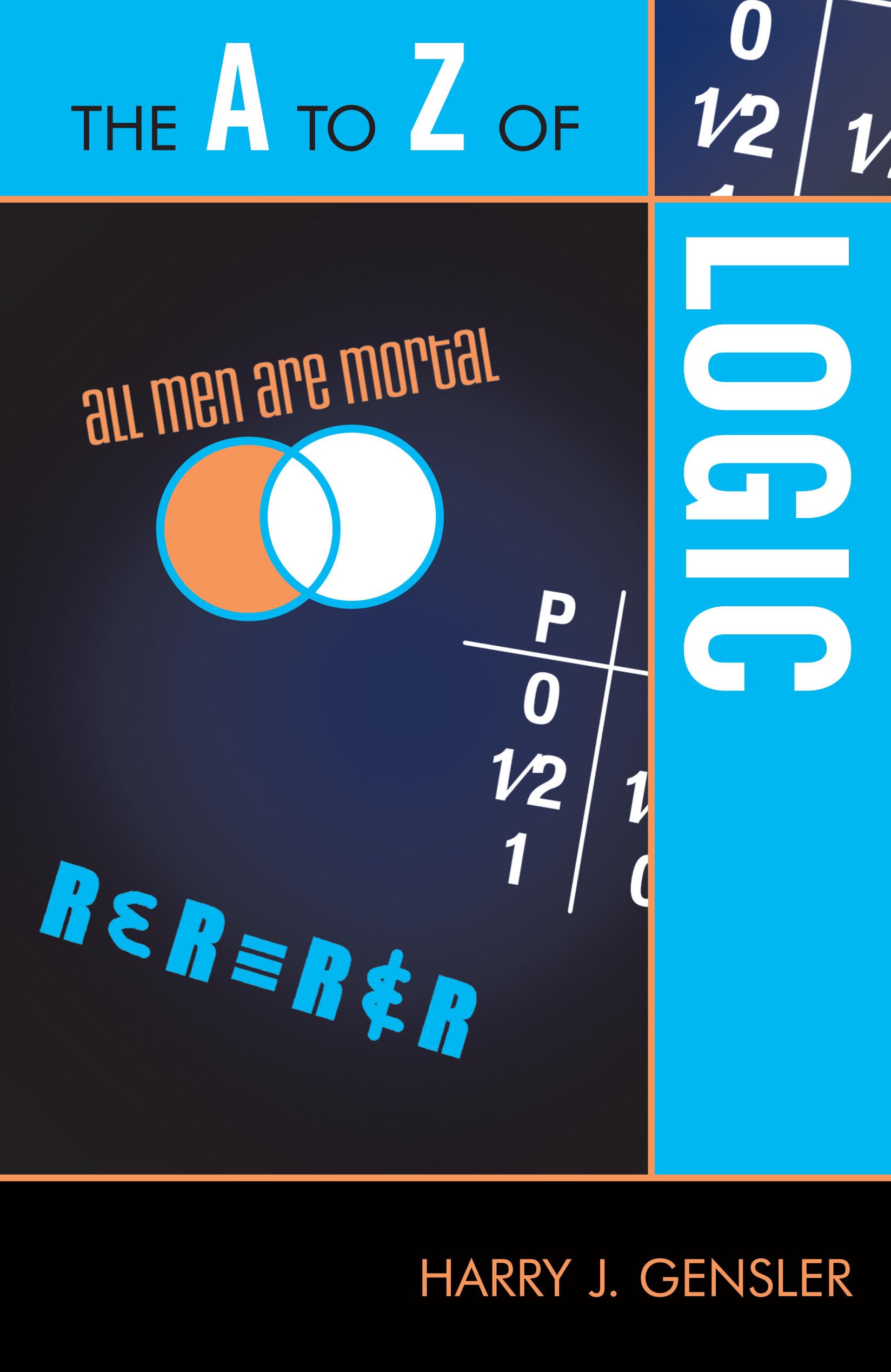
The A to Z of Logic introduces the central concepts of the field in a series of brief, nontechnical, crossreferenced dictionary entries. The 352 alphabetically arranged entries give a clear, basic introduction to a very broad range of logical topics. Entries can be found on deductive systems, such as propositional logic, modal logic, deontic logic, temporal logic, set theory, manyvalued logic, mereology, and paraconsistent logic. Similarly, there are entries on topics relating to those previously mentioned such as negation, conditionals, truth tables, and proofs. Historical periods and figures are also covered, including ancient logic, medieval logic, Buddhist logic, Aristotle, Ockham, Boole, Frege, Russell, Gdel, and Quine. There are even entries relating logic to other areas and topics, like biology, computers, ethics, gender, God, psychology, metaphysics, abstract entities, algorithms, the ad hominem fallacy, inductive logic, informal logic, the liar paradox, metalogic, philosophy of logic, and software for learning logic.In addition to the dictionary, there is a substantial chronology listing the main events in the history of logic, an introduction that sketches the central ideas of logic and how it has evolved into what it is today, and an extensive bibliography of related readings. This book is not only useful for specialists but also understandable to students and other beginners in the field.
⚠️ WARNING (California Proposition 65):
This product may contain chemicals known to the State of California to cause cancer,
birth defects, or other reproductive harm.
For MAP (Minimum Advertised Price) violations and Intellectual Property (IP) or Trademark concerns, please contact:
support@ergodebooks.com
⚠️ California Proposition 65 Warning: Some products sold on this website may expose you to chemicals known to the State of California to cause cancer, birth defects, or other reproductive harm. For more information, visit www.P65Warnings.ca.gov.