
Title
The Abolition of Antitrust,Used
Sold by Ergodebooks, an authorized reseller.
Returns accepted within 30 days | support@ergodebooks.com
Shipping Information
- Free Standard Shipping — United States only
- Processing Time: 3–5 business days
- Estimated Delivery: 6–10 business days after dispatch
- Double-boxed, fully insured & discreetly packaged
- Tracking number sent via email once dispatched
Returns & Refund
Returns accepted within 30 days of delivery.
Damaged or Defective Item
Free return shipping + replacement or full refund
Wrong Item Received
Free return shipping + replacement or full refund
Change of Mind
Return shipping at customer's expense · 25% restocking fee applies
Payment Option

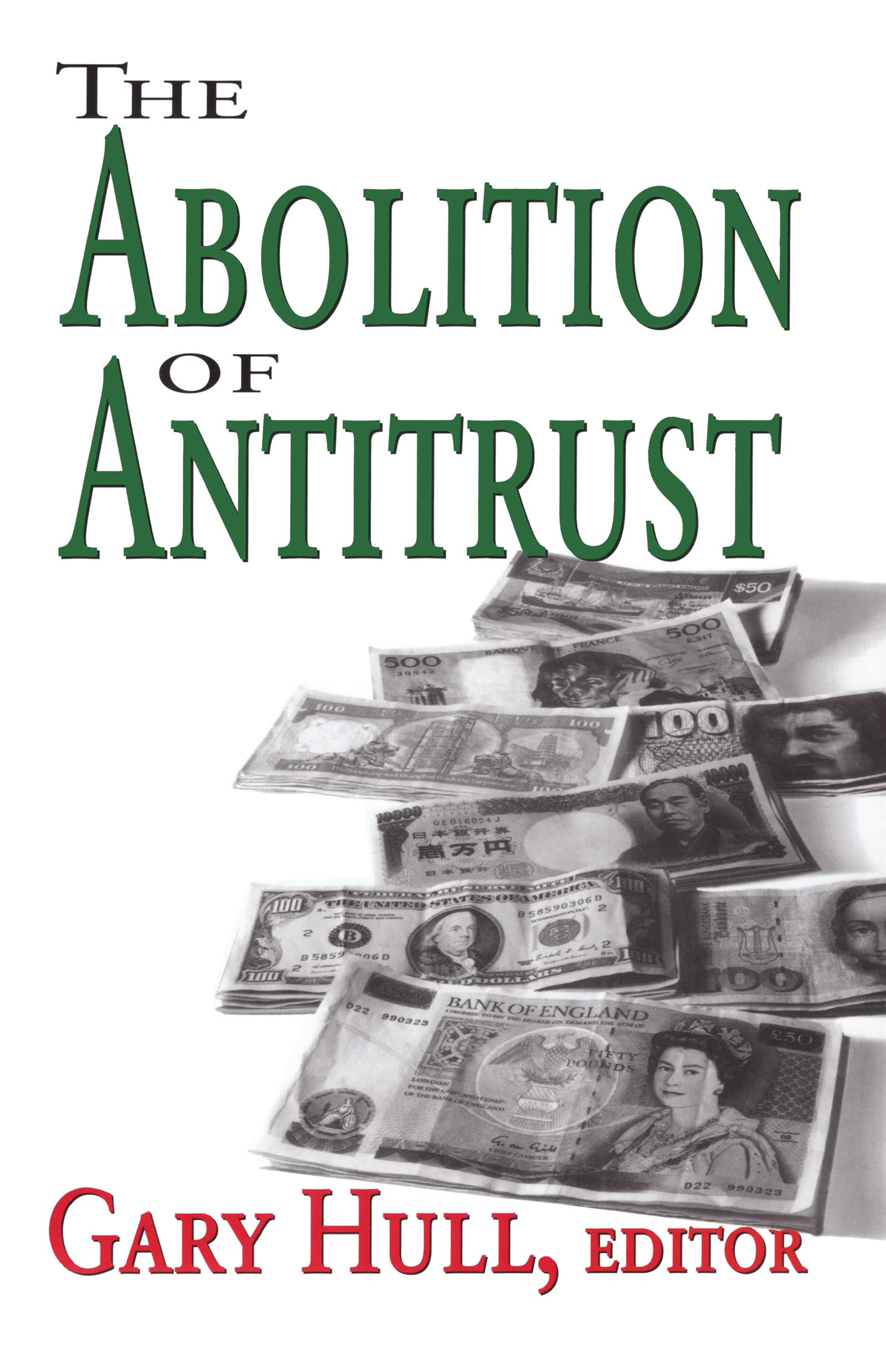
The Abolition of Antitrust asserts that antitrust lawson economic, legal, and moral groundsare bad, and provides convincing evidence supporting arguments for their total abolition. Every year, new antitrust prosecutions arise in the U.S. courts, as in the cases against 3M and Visa/MasterCard, as well as a number of ongoing antitrust cases, such as those involving Microsoft and college football's use of the Bowl Championship Series (BCS). Gary Hull and the contributing authors show that these casesas well as the Sherman AntiTrust Act itselfare based on an erroneous interpretation of the history of American business, premised on bad economics. They equivocate between economic and political powerthe power to produce versus the power to use physical force. For Hull, antitrust prosecutions are based on a horrible moral inversion: that it is acceptable to sacrifice America's best producers.The contributors explain how key antitrust ideas, for instance, "monopoly," "restraint of trade," and "anticompetitive behavior," have been used to justify prosecution, and then make clear why those ideas are false. They sketch the historical, legal, economic, and moral reasoning that gave rise to the passage and growth of antitrust legislation. All of the theoretical points in this volume are woven around a number of fascinating cases, both historical and currentincluding the Charles River Bridge, Alcoa, General Electric, and Kellogg/General Mills. This is a dynamic and accessible work that is not simply a polemical argument for a particular policy position.Designed for the uninformed but educated layman, The Abolition of Antitrust also makes positive arguments in defense of wealth creation, business, and profit, explains the proper role of government, and offers a rational view of the meaning of contract and economic freedom.
⚠️ WARNING (California Proposition 65):
This product may contain chemicals known to the State of California to cause cancer, birth defects, or other reproductive harm.
For more information, please visit www.P65Warnings.ca.gov.