
Title
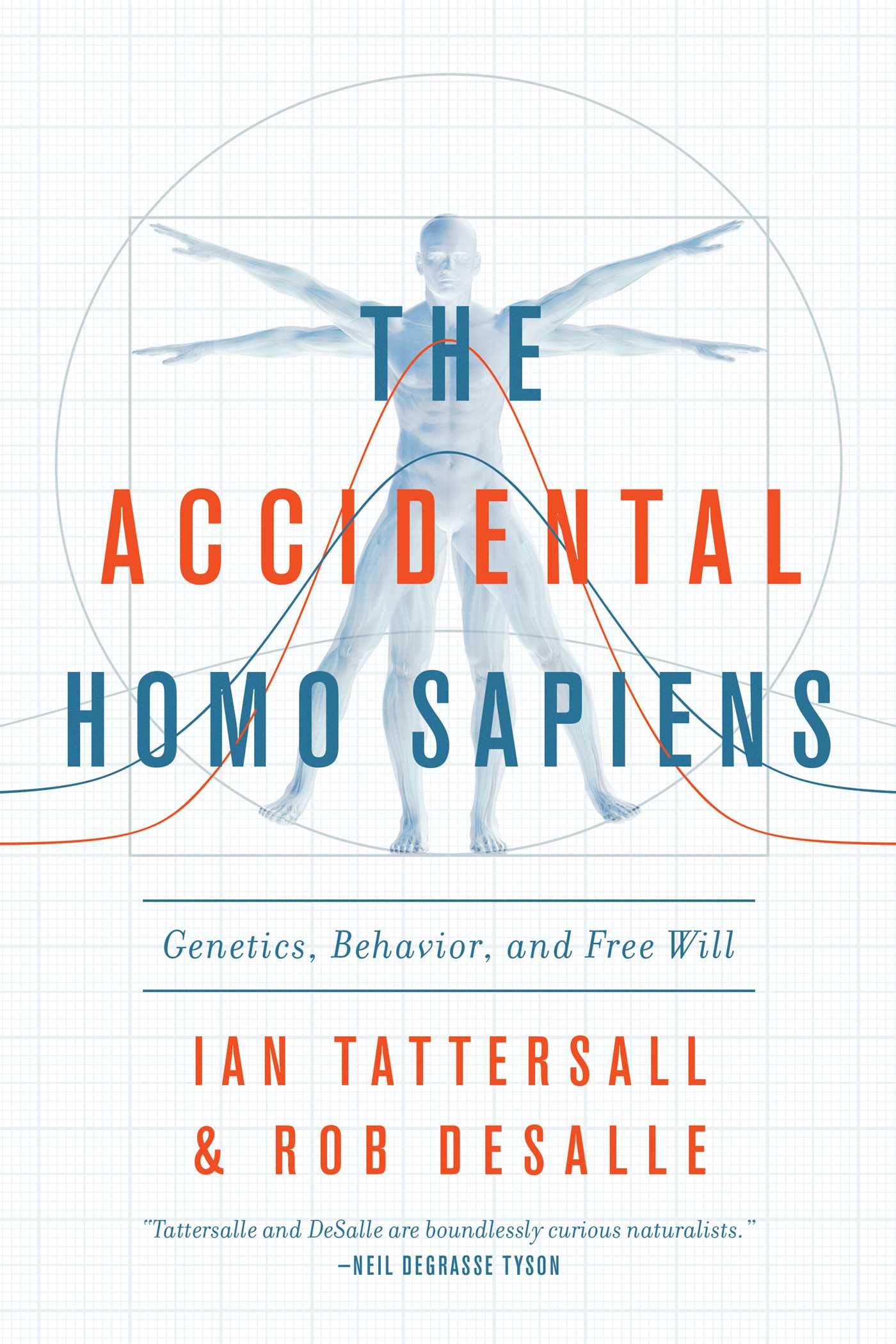
The Accidental Homo Sapiens: Genetics, Behavior, and Free Will,Used
Sold by Ergodebooks, an authorized reseller.
Returns accepted within 30 days | support@ergodebooks.com
Shipping Information
- Free Standard Shipping — United States only
- Processing Time: 3–5 business days
- Estimated Delivery: 6–10 business days after dispatch
- Double-boxed, fully insured & discreetly packaged
- Tracking number sent via email once dispatched
Returns & Refund
Returns accepted within 30 days of delivery.
Damaged or Defective Item
Free return shipping + replacement or full refund
Wrong Item Received
Free return shipping + replacement or full refund
Change of Mind
Return shipping at customer's expense · 25% restocking fee applies
Payment Option

What happens now that human population has outpaced biological natural selection? Two leading scientists reveal how we became who we areand what we might become.When we think of evolution, the image that likely comes to mind is the iconic, straightforward image of a primate morphing into a human being. Yet random events have played huge roles in determining the evolutionary histories of everything from lobsters to humans. However, random genetic novelties are most likely to "stick" in small populations. It is mathematically unlikely to happen in large ones.With our enormous and seemingly inexorably expanding population, humanity has fallen under the influence of the famous (or infamous) bell curve. This revelatory new book explores what the future of our species could hold, while simultaneously revealing what we didnt becomeand what we wont become.A cognitively unique species, our actions fall on a bell curve as well. Individuals may be saintly or evil, narrowminded or visionary. But it is possible not just for the species, but for a person to be all of these thingseven in a single day. We all fall somewhere within the giant hyperspace of the human condition that these curves describe.The Accidental Homo Sapiens shows readers that though humanity now exists on this bell curve, we are far from a stagnant species. Tattersall and DeSalle reveal how biological evolution in modern humans has given way to a cultural dynamic that is unlike anything else the Earth has ever witnessed, and that will keep life interestingperhaps sometimes too interestingfor as long as we exist on this planet.
⚠️ WARNING (California Proposition 65):
This product may contain chemicals known to the State of California to cause cancer, birth defects, or other reproductive harm.
For more information, please visit www.P65Warnings.ca.gov.