
Title
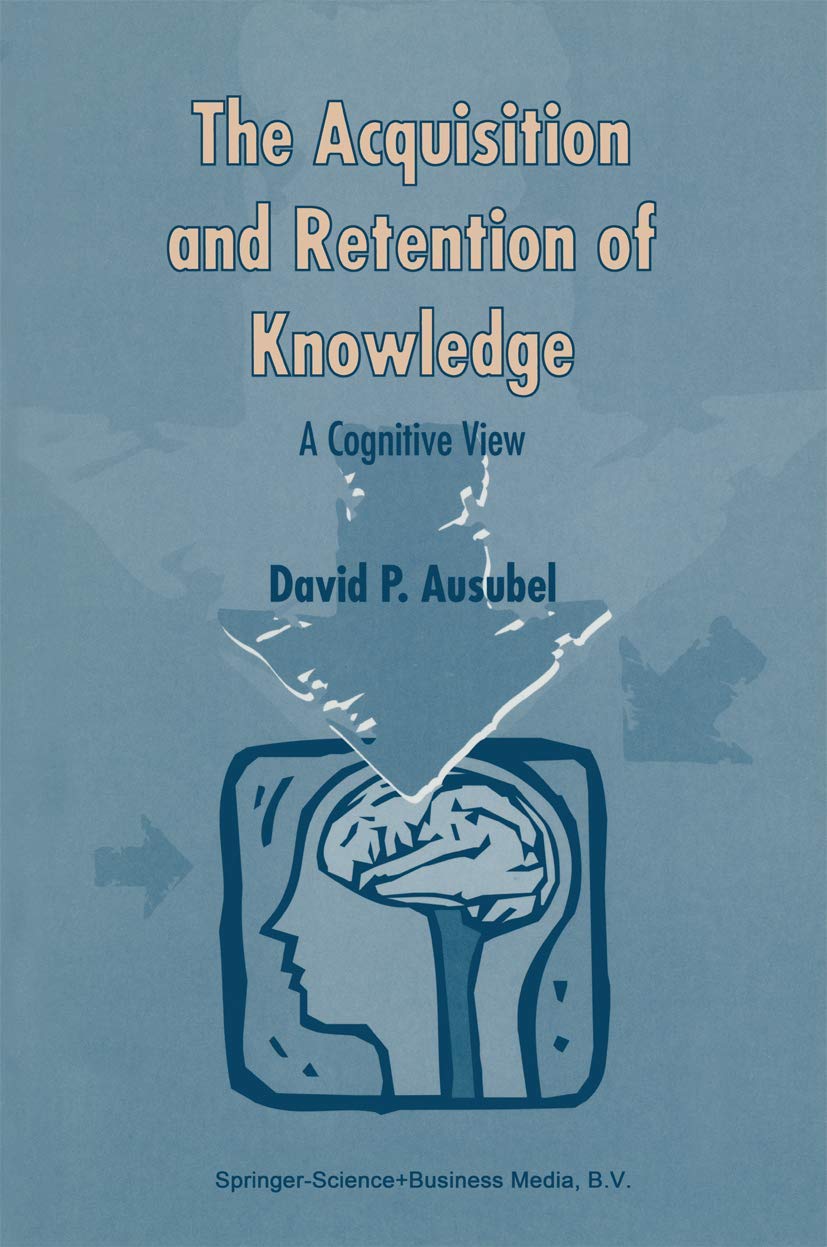
The Acquisition and Retention of Knowledge: A Cognitive View,Used
Sold by Ergodebooks, an authorized reseller.
Returns accepted within 30 days | support@ergodebooks.com
Shipping Information
- Free Standard Shipping — United States only
- Processing Time: 3–5 business days
- Estimated Delivery: 6–10 business days after dispatch
- Double-boxed, fully insured & discreetly packaged
- Tracking number sent via email once dispatched
Returns & Refund
Returns accepted within 30 days of delivery.
Damaged or Defective Item
Free return shipping + replacement or full refund
Wrong Item Received
Free return shipping + replacement or full refund
Change of Mind
Return shipping at customer's expense · 25% restocking fee applies
Payment Option

In 1963 an initial attempt was made in my The Psychology of Meaningful Verbal Learning to present a cognitive theory of meaningful as opposed to rote verbal learning. It was based on the proposition that the acquisition and retention of knowl edge (particularly of verbal knowledge as, for example, in school, or subjectmatter learning) is the product of an active, integrative, interactional process between instructional material (subject matter) and relevant ideas in the leamer's cognitive structure to which the new ideas are relatable in particular ways. This book is a fullscale revision of my 1963 monograph, The Psychology of Meaningful Verbal Learning, in the sense that it addresses the major aforementioned and hitherto unmet goals by providing for an expansion, clarification, differentiation, and sharper focusing of the principal psychological variables and processes involved in meaningful learning and retention, i.e., for their interrelationships and interactions leading to the generation of new meanings in the individual learner. The preparation of this new monograph was largely necessitated by the virtual collapse of the neobe havioristic theoretical orientation to learning during the previous forty years; and by the meteoric rise in the seventies and beyond of constructivist approaches to learning theory.
⚠️ WARNING (California Proposition 65):
This product may contain chemicals known to the State of California to cause cancer, birth defects, or other reproductive harm.
For more information, please visit www.P65Warnings.ca.gov.