If you have any questions, you are always welcome to contact us. We'll get back to you as soon as possible, withing 24 hours on weekdays.
Customer service
All questions about your order, return and delivery must be sent to our customer service team by e-mail at yourstore@yourdomain.com
Sale & Press
If you are interested in selling our products, need more information about our brand or wish to make a collaboration, please contact us at press@yourdomain.com
Help
If you have any questions, you are always welcome to contact us. We'll get back to you as soon as possible, withing 24 hours on weekdays.
Customer service
All questions about your order, return and delivery must be sent to our customer service team by e-mail at yourstore@yourdomain.com
Sale & Press
If you are interested in selling our products, need more information about our brand or wish to make a collaboration, please contact us at press@yourdomain.com
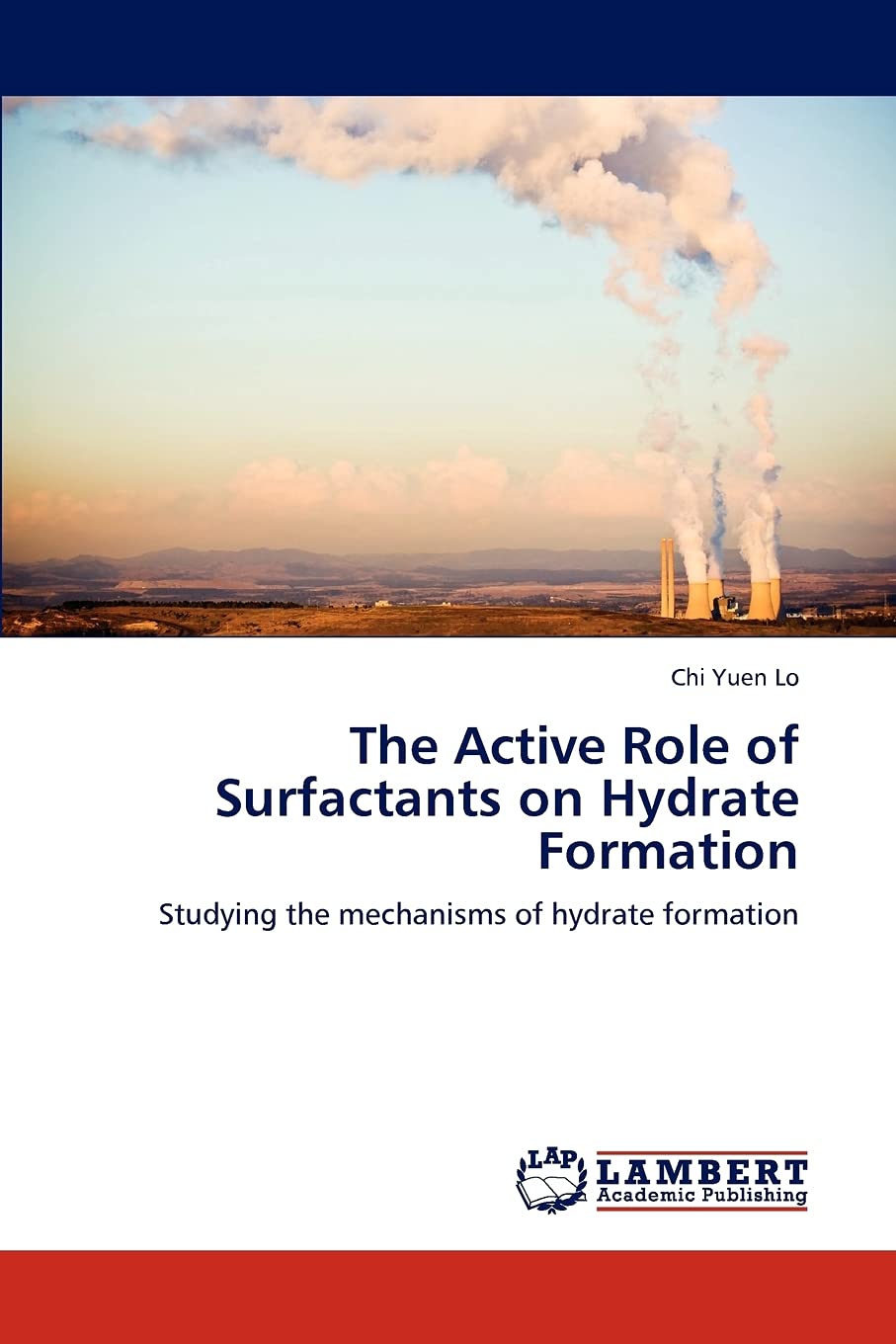
The goal of this study is to probe the mechanism for improving gas hydrate formation. Fast hydrate formation for gas storage requires the understanding of hydrate formation mechanism. However the formation kinetics is slow due to the low mass transfer rate of gas to hydrate growth regions. Past hydrate formation studies did not incorporate surface studies to investigate the formation mechanism. Our approach to solving this unknown mechanism is to use surface science techniques to probe the interface of hydrate and water. From ?potential measurements, hydrate surface charge is negative due to bicarbonate ion adsorption. An ion exchange occurs upon adding SDS and DS monomers replace the bicarbonate ions and a further negative charge confirms DS adsorption. Pyrene fluorescence measures the micropolarity of the hydrate interface. Upon adding 50ppm SDS the hydrate interfaces micropolarity decreases and indicates an admicelle formation. Induction time measurements are correlated to the ?potential and Pyrene fluorescence measurements to show that reduced induction periods are due to a formation of an admicelle layer.
⚠️ WARNING (California Proposition 65):
This product may contain chemicals known to the State of California to cause cancer,
birth defects, or other reproductive harm.
For MAP (Minimum Advertised Price) violations and Intellectual Property (IP) or Trademark concerns, please contact:
support@ergodebooks.com
⚠️ California Proposition 65 Warning: Some products sold on this website may expose you to chemicals known to the State of California to cause cancer, birth defects, or other reproductive harm. For more information, visit www.P65Warnings.ca.gov.