
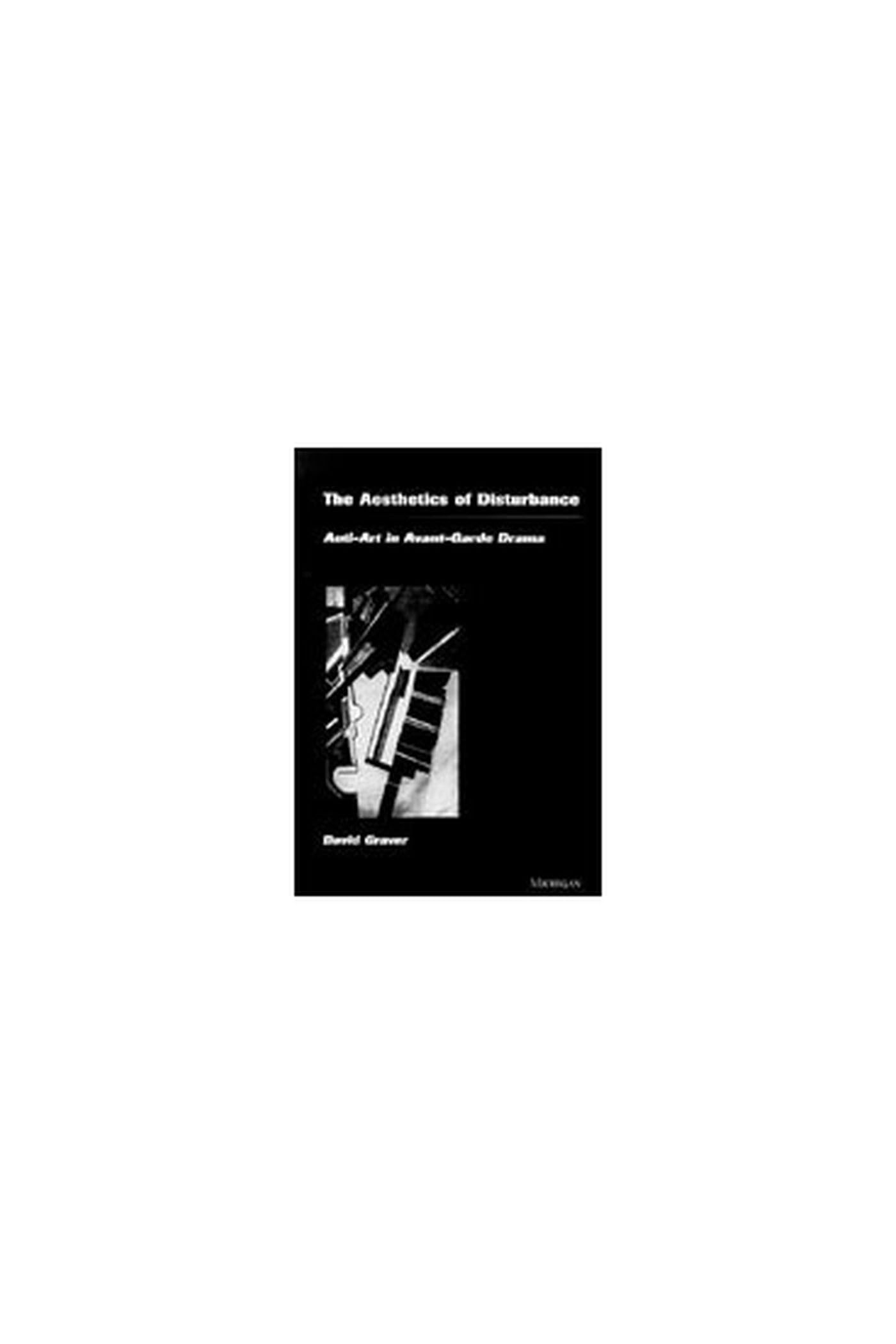
Title
The Aesthetics of Disturbance: AntiArt in AvantGarde Drama (Theater: Theory/Text/Performance),Used
Sold by Ergodebooks, an authorized reseller.
Returns accepted within 30 days | support@ergodebooks.com
Shipping Information
- Free Standard Shipping — United States only
- Processing Time: 3–5 business days
- Estimated Delivery: 6–10 business days after dispatch
- Double-boxed, fully insured & discreetly packaged
- Tracking number sent via email once dispatched
Returns & Refund
Returns accepted within 30 days of delivery.
Damaged or Defective Item
Free return shipping + replacement or full refund
Wrong Item Received
Free return shipping + replacement or full refund
Change of Mind
Return shipping at customer's expense · 25% restocking fee applies
Payment Option

The wild innovations of the early twentiethcentury avantgarde have been widely celebrated for their influence on the course of experimental drama but rarely examined closely and systematically. Through an exploration of the plays from Germany, France, and England, The Aesthetics of Disturbance discusses modernism and the avantgarde, the relationship of drama to art movements such as expressionism, dada, and surrealism, and the interactions of visual, literary, and performance art.Beginning with a survey of the history and theory of avant garde art, David Graver critically juxtaposes important competing interpretations of the avantgarde, establishes basic distinctions between forms of avantgarde art, compares the aesthetic interests of the avant garde to those of modernism, and discusses the relationship between the avantgarde and drama. Then, through close readings of the works of five preeminent avantgarde playwrights and visual artists Oskar Kokoschka, Gottfried Benn, Raymond Roussel, Roger Vitrac, and Wyndham Lewis he examines the innovations in dramatic literature carried out by these visionaries and finally relates them to the innovations in theater articulated by Brecht and Artaud. Graver argues that antiart principles, most noticeable in the confrontational tactics of dada performance, can also be found within literary dramatic texts, where they create an "aesthetics of disturbance" that destabilizes the integrity of the work without allowing it to selfdestruct."A corrective to the oftrepeated, oversimple idea that antiart consists of the same destructive gesture repeated in different forms. This is a useful book that fills a gap, both conceptually and in terms of the figures discussed." Philip Auslander, Georgia Institute of Technology"Original, important, well done."Anthony Kubiak, Harvard UniversityDavid Graver is Assistant Professor of English and Comparative Literature, Columbia University.
⚠️ WARNING (California Proposition 65):
This product may contain chemicals known to the State of California to cause cancer, birth defects, or other reproductive harm.
For more information, please visit www.P65Warnings.ca.gov.