If you have any questions, you are always welcome to contact us. We'll get back to you as soon as possible, withing 24 hours on weekdays.
Customer service
All questions about your order, return and delivery must be sent to our customer service team by e-mail at yourstore@yourdomain.com
Sale & Press
If you are interested in selling our products, need more information about our brand or wish to make a collaboration, please contact us at press@yourdomain.com
Help
If you have any questions, you are always welcome to contact us. We'll get back to you as soon as possible, withing 24 hours on weekdays.
Customer service
All questions about your order, return and delivery must be sent to our customer service team by e-mail at yourstore@yourdomain.com
Sale & Press
If you are interested in selling our products, need more information about our brand or wish to make a collaboration, please contact us at press@yourdomain.com
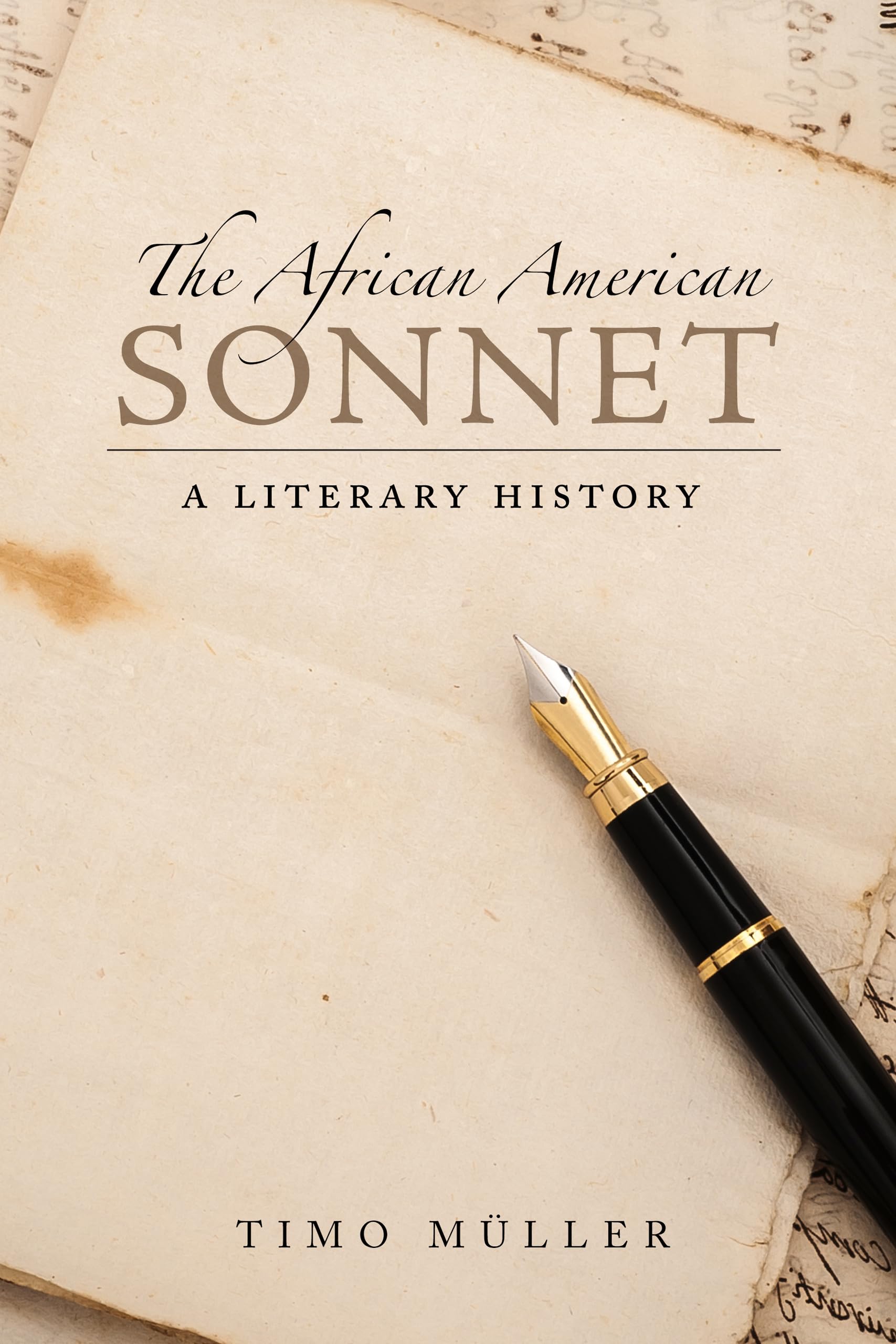
Some of the best known African American poems are sonnets: Claude McKay's 'If We Must Die,' Countee Cullen's 'Yet Do I Marvel,' Gwendolyn Brooks's 'First fight. Then fiddle.' Yet few readers realize that these poems are part of a rich tradition that formed after the Civil War and comprises more than a thousand sonnets by African American poets. Paul Laurence Dunbar, Jean Toomer, Langston Hughes, Margaret Walker, and Rita Dove all wrote sonnets.Based on extensive archival research, The African American Sonnet: A Literary History traces this forgotten tradition from the nineteenth century to the present. Timo Mller uses sonnets to open up fresh perspectives on African American literary history. He examines the struggle over the legacy of the Civil War, the trajectories of Harlem Renaissance protest, the tensions between folk art and transnational perspectives in the thirties, the vernacular modernism of the postwar period, the cultural nationalism of the Black Arts movement, and disruptive strategies of recent experimental poetry.In this book, Mller examines the inventive strategies African American poets devised to occupy and reshape a form overwhelmingly associated with Europe. In the tightly circumscribed space of sonnets, these poets mounted evocative challenges to the discursive and material boundaries they confronted.
⚠️ WARNING (California Proposition 65):
This product may contain chemicals known to the State of California to cause cancer,
birth defects, or other reproductive harm.
For MAP (Minimum Advertised Price) violations and Intellectual Property (IP) or Trademark concerns, please contact:
support@ergodebooks.com
⚠️ California Proposition 65 Warning: Some products sold on this website may expose you to chemicals known to the State of California to cause cancer, birth defects, or other reproductive harm. For more information, visit www.P65Warnings.ca.gov.