If you have any questions, you are always welcome to contact us. We'll get back to you as soon as possible, withing 24 hours on weekdays.
Customer service
All questions about your order, return and delivery must be sent to our customer service team by e-mail at yourstore@yourdomain.com
Sale & Press
If you are interested in selling our products, need more information about our brand or wish to make a collaboration, please contact us at press@yourdomain.com
Help
If you have any questions, you are always welcome to contact us. We'll get back to you as soon as possible, withing 24 hours on weekdays.
Customer service
All questions about your order, return and delivery must be sent to our customer service team by e-mail at yourstore@yourdomain.com
Sale & Press
If you are interested in selling our products, need more information about our brand or wish to make a collaboration, please contact us at press@yourdomain.com
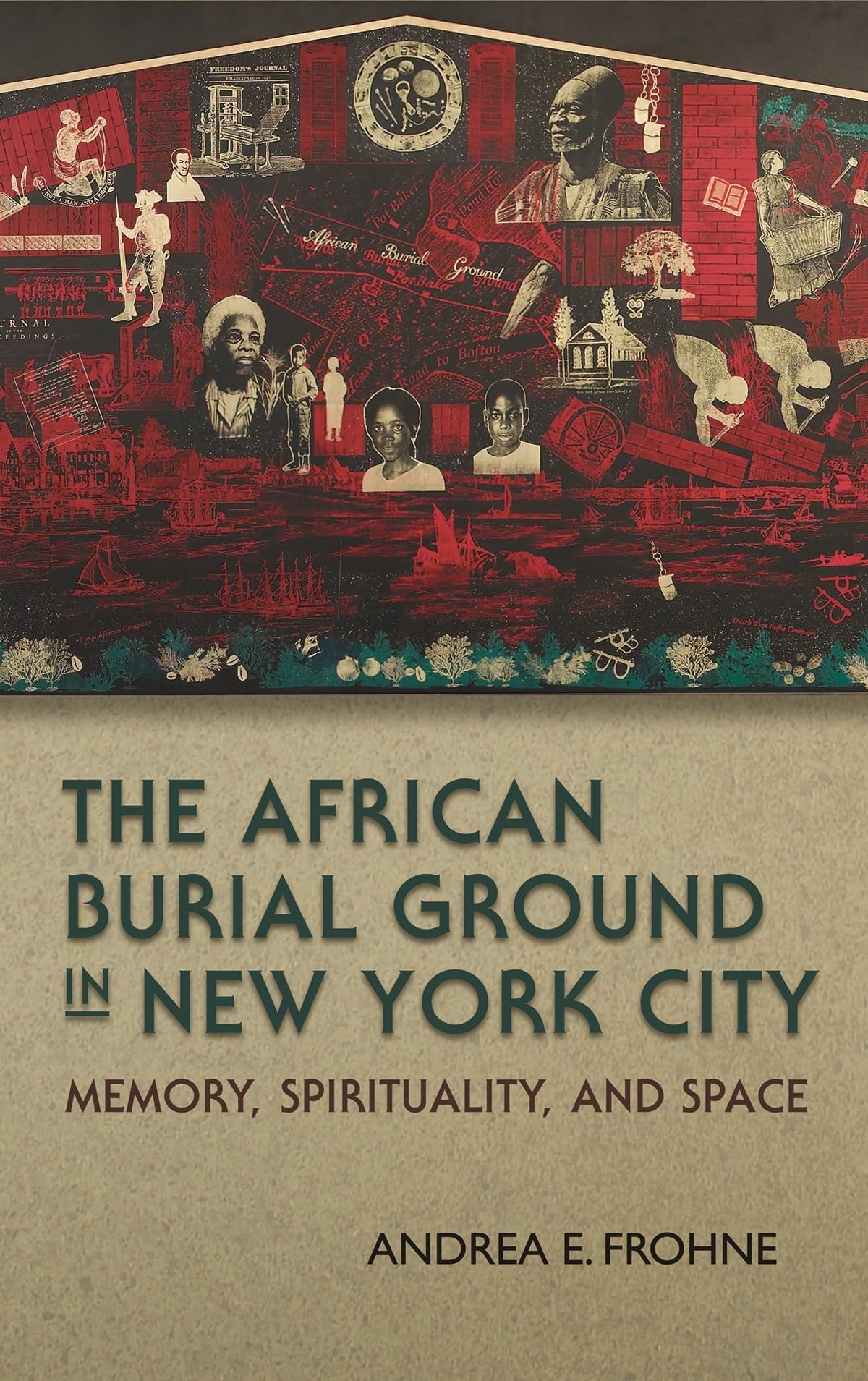
In 1991, archaeologists in lower Manhattan unearthed a stunning discovery. Buried for more than 200 years was a communal cemetery containing the remains of up to 20,000 people. At roughly 6.6 acres, the African Burial Ground is the largest and earliest known burial space of African descendants in North America. In the years that followed its discovery, citizens and activists fought tirelessly to demand respectful treatment of eighteenthcentury funerary remains and sacred ancestors. After more than a decade of political battleon local and national levelsand scientific research at Howard University, the remains were eventually reburied on the site in 2003. Capturing the varied perspectives and the emotional tenor of the time, Frohne narrates the story of the African Burial Ground and the controversies surrounding urban commemoration. She analyzes both its colonial and contemporary representations, drawing on colonial era maps, prints, and land surveys to illuminate the forgotten and hidden visual histories of a mostly enslaved population buried in the African Burial Ground. Tracing the history and identity of the area from a forgotten site to a contested and negotiated space, Frohne situates the burial ground within the context of late twentieth and early twentyfirstcentury race relations in New York City to reveal its enduring presence as a spiritual place.
⚠️ WARNING (California Proposition 65):
This product may contain chemicals known to the State of California to cause cancer,
birth defects, or other reproductive harm.
For MAP (Minimum Advertised Price) violations and Intellectual Property (IP) or Trademark concerns, please contact:
support@ergodebooks.com
⚠️ California Proposition 65 Warning: Some products sold on this website may expose you to chemicals known to the State of California to cause cancer, birth defects, or other reproductive harm. For more information, visit www.P65Warnings.ca.gov.