
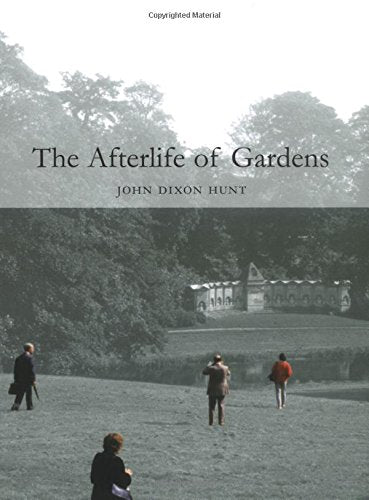
Title
The Afterlife of Gardens (Penn Studies in Landscape Architecture),Used
Sold by Ergodebooks, an authorized reseller.
Returns accepted within 30 days | support@ergodebooks.com
Shipping Information
- Free Standard Shipping — United States only
- Processing Time: 3–5 business days
- Estimated Delivery: 6–10 business days after dispatch
- Double-boxed, fully insured & discreetly packaged
- Tracking number sent via email once dispatched
Returns & Refund
Returns accepted within 30 days of delivery.
Damaged or Defective Item
Free return shipping + replacement or full refund
Wrong Item Received
Free return shipping + replacement or full refund
Change of Mind
Return shipping at customer's expense · 25% restocking fee applies
Payment Option

Most historical and critical discussions of gardens focus on their design. What happens after the completion of the design, however, is largely ignored, which neglects a much larger part of the site's interest and potential. For gardens, John Dixon Hunt contends, are experienced, often by a succession of visitors at different times and often from different cultures; this experience, though determined by the original design and its subsequent modifications, also augments the site's potentialities, and this 'afterlife' of gardens comes to enhance the original moment of creation.One way of exploring the experience of designed landscapes is to adapt literary reception theory to the study of gardens. Hunt argues that such an approach via the reception or experience of gardens enlarges how we should understand their significance and meanings.It is generally assumed that the experience of gardens became a prime ingredient of late eighteenthcentury landscapespicturesque literature especially highlighted how visitors responded to their surroundings, reading inscriptions and recognizing the significance of carefully placed architectural items or fabriqus. But there is considerable evidence for a much earlier interest in how experience came to constitute an essential aspect of a site beyond the intentions of the original designer or patron. Among other early examples, Hunt examines the book Hypnerotomachia Polifili (1499) to show how its protagonist is shown exploring and negotiating a series of strange and baffling landscapes. Through other inquiriesparticularly into the role of movement in such different situations as Versailles, and Chiswick or along modern highwaysThe Afterlife of Gardens provides a fresh approach to the study of designed landscapes that goes beyond their production and into how they exist and are understood by their users.In this ambitious new book the author shows how the complete history of a garden must extend beyond the moment of its design and the aims of the designer to record its subsequent reception. He raises questions about the preservation of historical sites, and provides lessons for the contemporary designer, who may perhaps be more attentive to the life of a work after its design and implementation. This book will interest all who have a professional interest in gardens, as well as the wide general audience for gardens and landscapes of past and present.
⚠️ WARNING (California Proposition 65):
This product may contain chemicals known to the State of California to cause cancer, birth defects, or other reproductive harm.
For more information, please visit www.P65Warnings.ca.gov.