
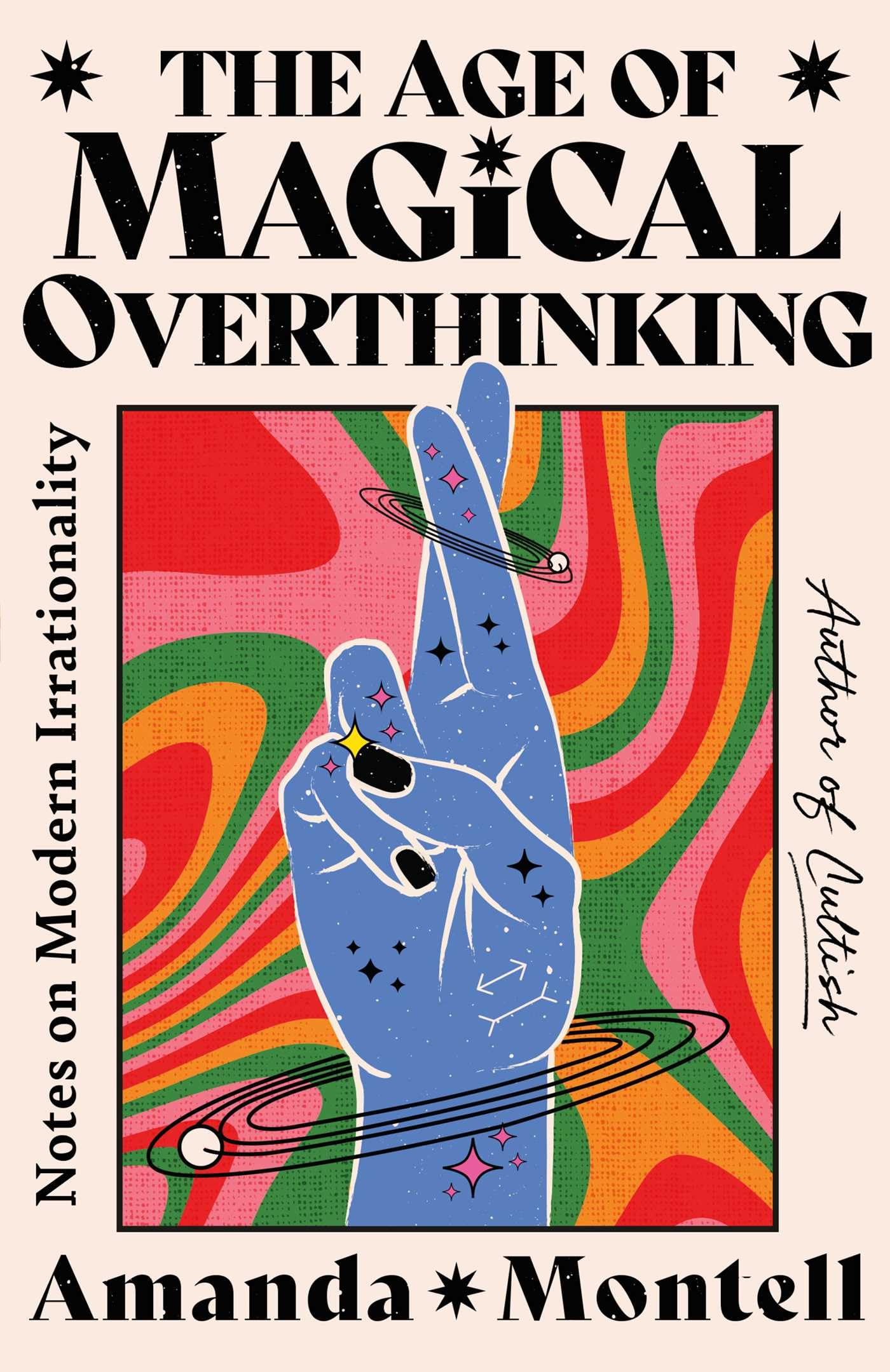
Title
The Age Of Magical Overthinking: Notes On Modern Irrationality,New
Sold by Ergodebooks, an authorized reseller.
Returns accepted within 30 days | support@ergodebooks.com
Shipping Information
- Free Standard Shipping — United States only
- Processing Time: 3–5 business days
- Estimated Delivery: 6–10 business days after dispatch
- Double-boxed, fully insured & discreetly packaged
- Tracking number sent via email once dispatched
Returns & Refund
Returns accepted within 30 days of delivery.
Damaged or Defective Item
Free return shipping + replacement or full refund
Wrong Item Received
Free return shipping + replacement or full refund
Change of Mind
Return shipping at customer's expense · 25% restocking fee applies
Payment Option

From the bestselling author of Cultish and host of the podcast Sounds Like a Cult, a delicious blend of cultural criticism and personal narrative that explores our cognitive biases and the power, disadvantages, and highlights of magical thinking.Utilizing the linguistic insights of her witty and brilliant (Blyth Roberson, author of America the Beautiful?) first book Wordslut and the sociological explorations of her breakout hit Cultish, Amanda Montell now turns her erudite eye to the inner workings of the human mind and its biases in her most personal and electrifying work yet.Magical thinking can be broadly defined as the belief that ones internal thoughts can affect unrelated events in the external world: Think of the conviction that one can manifest their way out of poverty, stave off cancer with positive vibes, thwart the apocalypse by learning to can their own peaches, or transform an unhealthy relationship to a glorious one with loyalty alone. In all its forms, magical thinking works in service of restoring agency amid chaos, but in The Age of Magical Overthinking, Montell argues that in the modern information age, our brains coping mechanisms have been overloaded, and our irrationality turned up to an eleven.In a series of razor sharp, deeply funny chapters, Montell delves into a cornucopia of the cognitive biases that run rampant in our brains, from how the Halo effect cultivates worship (and hatred) of larger than life celebrities, to how the Sunk Cost Fallacy can keep us in detrimental relationships long after weve realized theyre not serving us. As she illuminates these concepts with her signature brilliance and wit, Montells prevailing message is one of hope, empathy, and ultimately forgiveness for our anxietyaddled human selves. If you have all but lost faith in our ability to reason, Montell aims to make some sense of the senseless. To crack open a window in our minds, and let a warm breeze in. To help quiet the cacophony for a while, or even hear a melody in it.
⚠️ WARNING (California Proposition 65):
This product may contain chemicals known to the State of California to cause cancer, birth defects, or other reproductive harm.
For more information, please visit www.P65Warnings.ca.gov.
- Q: How many pages does the book have? A: The book has two hundred seventy-two pages. This length provides a comprehensive exploration of the themes discussed by the author.
- Q: What is the binding type of this book? A: The book features a hardcover binding. This type of binding enhances durability and makes it suitable for frequent reading.
- Q: What are the dimensions of the book? A: The dimensions of the book are five point five one inches in length, one point one eight inches in width, and eight point three nine inches in height. These measurements make it portable and easy to handle.
- Q: Who is the author of this book? A: The author of the book is Amanda Montell. She is known for her insightful commentary on modern culture and cognitive biases.
- Q: What genre does this book belong to? A: This book belongs to the memoirs genre. It combines personal narrative with cultural criticism to explore complex themes.
- Q: Is this book suitable for young readers? A: This book is not specifically designed for young readers. Its themes and discussions may be more appropriate for adults due to the complex nature of its content.
- Q: How should I read this book for best understanding? A: To best understand this book, read it in a quiet environment where you can reflect on the concepts presented. Taking notes on key ideas can also enhance comprehension.
- Q: Can I read this book if I am not familiar with cognitive biases? A: Yes, you can read this book without prior knowledge of cognitive biases. The author explains concepts clearly, making it accessible for all readers.
- Q: What is the main theme of the book? A: The main theme of the book is the exploration of cognitive biases and magical thinking in modern society. It discusses how these biases affect our decision-making.
- Q: How do I keep this book in good condition? A: To keep this book in good condition, store it upright in a cool, dry place away from direct sunlight. Avoid bending the cover or pages.
- Q: Is there a specific way to clean the book? A: Yes, to clean the book, use a dry microfiber cloth to gently wipe the cover. Avoid using liquids, as they can damage the binding and pages.
- Q: What should I do if the book arrives damaged? A: If the book arrives damaged, contact the seller for a return or exchange. Most sellers have policies in place for damaged items.
- Q: Is there a warranty for this book? A: No, books typically do not come with a warranty. However, you can check the retailer’s return policy for more information.
- Q: Can this book help improve my critical thinking skills? A: Yes, this book can help improve your critical thinking skills. It challenges readers to recognize and question their cognitive biases.
- Q: Is this book a good choice for a book club? A: Yes, this book is an excellent choice for a book club. Its thought-provoking themes and engaging writing style can lead to rich discussions.
- Q: How does this book compare to Amanda Montell's previous works? A: This book builds upon the themes in Amanda Montell's previous works, offering deeper insights into modern irrationality and cognitive biases.