
Title
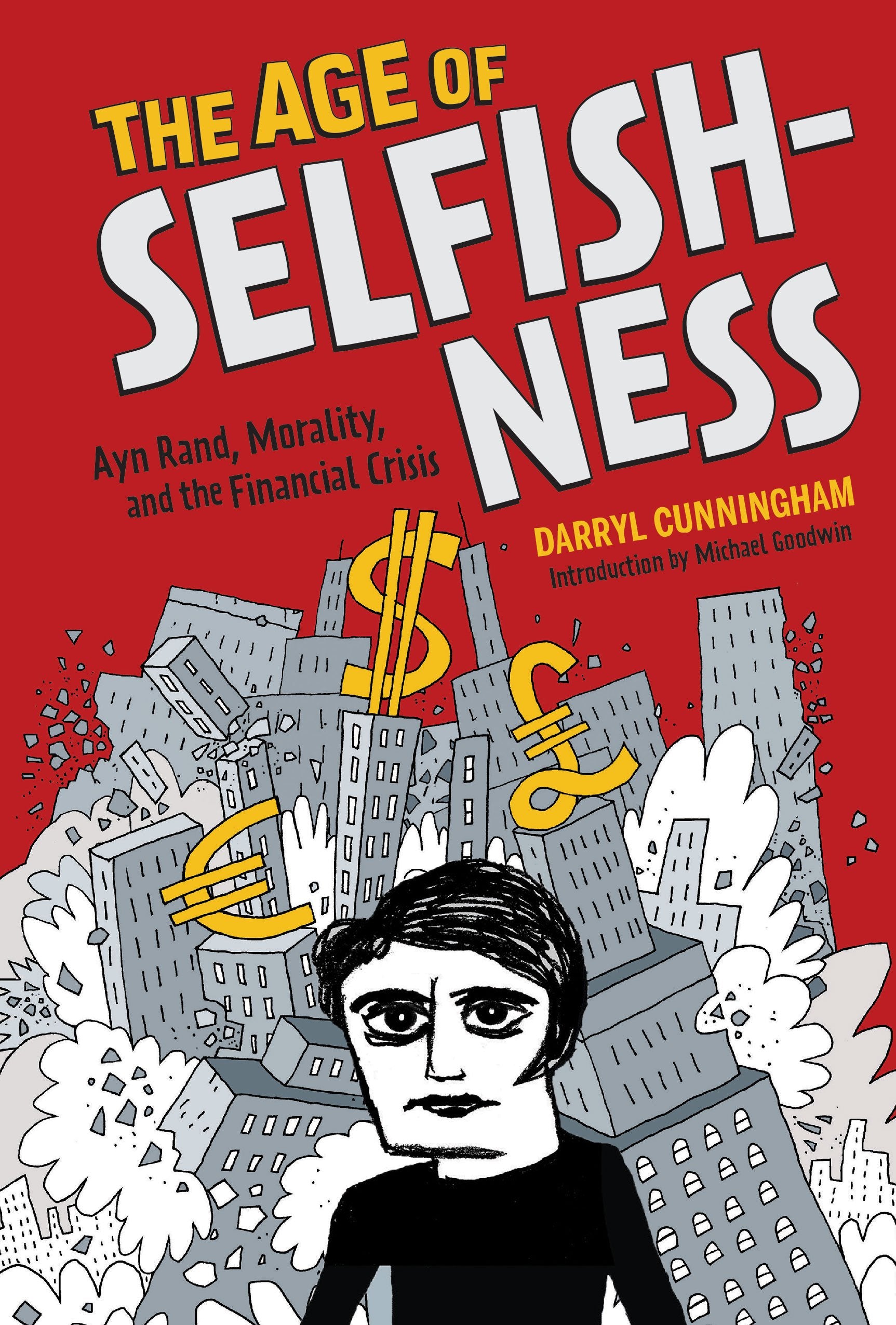
The Age Of Selfishness: Ayn Rand, Morality, And The Financial Crisis
Sold by Ergodebooks, an authorized reseller.
Returns accepted within 30 days | support@ergodebooks.com
Shipping Information
- Free Standard Shipping — United States only
- Processing Time: 3–5 business days
- Estimated Delivery: 6–10 business days after dispatch
- Double-boxed, fully insured & discreetly packaged
- Tracking number sent via email once dispatched
Returns & Refund
Returns accepted within 30 days of delivery.
Damaged or Defective Item
Free return shipping + replacement or full refund
Wrong Item Received
Free return shipping + replacement or full refund
Change of Mind
Return shipping at customer's expense · 25% restocking fee applies
Payment Option

New York Times Bestsellertracing The Emergence Of Ayn Rands Philosophy Of Objectivism In The 1940S To Her Presentday Influence, Darryl Cunninghams Latest Work Of Graphicnonfiction Investigation Leads Readers To The Heart Of The Global Financial Crisis Of 2008. Cunningham Uses Rands Biography To Illuminate The Policies That Led To The Economic Crash In The U.S. And In Europe, And How Her Philosophy Continues To Affect Todays Politics And Policies, Starting With Her Most Noted Disciple, Economist Alan Greenspan (Former Chairman Of The Federal Reserve). Cunningham Also Shows How Rightwing Conservatives, Libertarians, And The Tea Party Movement Have Coopted Rands Teachings (And Inherent Contradictions) To Promote Personal Gain And Profit At The Expense Of The Middle Class. Tackling The Complexities Of Economics By Distilling Them Down To A Series Of Concepts Accessible To All Age Groups, Cunningham Ultimately Delivers A Devastating Analysis Of Our Current Economic World.Praise For Darryl Cunningham:It Takes Other Authors Whole Books To Say What Darryl Cunningham Can Say In A Single Illustration. Jon Ronson, Author Of The Men Who Stare At Goatscunninghams Art Has Clean Lines And A Continuity That Is Often Graceful, Charming, And Endearing. He Speaks With Quiet Authority On His Subjects, But Is Careful To Cite A Whole Range Of Sources And Research Papers. Independentits Good To See The Arguments Presented So Well, Clearly, And Concisely . . . Cunningham Delivers His Message With Style, Great Art, Even Moments Of Outright Comedy.Forbidden Planet
⚠️ WARNING (California Proposition 65):
This product may contain chemicals known to the State of California to cause cancer, birth defects, or other reproductive harm.
For more information, please visit www.P65Warnings.ca.gov.
- Q: What is the page count of this book? A: This book has two hundred forty pages. It offers a comprehensive exploration of Ayn Rand's philosophy and its impact on economics.
- Q: What are the dimensions of the book? A: The book measures five point five one inches in length, one point two six inches in width, and eight point two seven inches in height. These dimensions make it a portable hardcover option.
- Q: Who is the author of this book? A: The author is Darryl Cunningham. He is known for his graphic-nonfiction style that combines illustrations with in-depth analysis.
- Q: How do I read this book? A: You can read this book like any traditional hardcover. It's suitable for anyone interested in economics or philosophy, regardless of age.
- Q: Is this book suitable for beginners in economics? A: Yes, this book is suitable for beginners. It distills complex economic concepts into accessible illustrations and narratives.
- Q: What age group is this book appropriate for? A: This book is appropriate for teens and adults. Its themes and discussions are tailored for mature audiences.
- Q: How should I store this book? A: Store this book in a cool, dry place away from direct sunlight. This will help preserve the integrity of the hardcover and pages.
- Q: Can I clean the book if it gets dirty? A: Yes, you can gently wipe the cover with a soft, dry cloth. Avoid using water or cleaning solutions, as they may damage the pages.
- Q: What should I do if the book arrives damaged? A: If the book arrives damaged, contact the seller for a return or exchange. Most retailers have policies in place for damaged items.
- Q: How does this book compare to other works on Ayn Rand? A: This book provides a unique graphic-narrative approach to Ayn Rand's philosophy, making it distinct from traditional texts that may be more text-heavy.
- Q: Is this book suitable for someone interested in Ayn Rand's philosophy? A: Yes, this book is ideal for readers interested in Ayn Rand's philosophy. It explores her influence on modern economics and politics.
- Q: What genre does this book belong to? A: This book belongs to the genre of graphic nonfiction and economics. It combines visual storytelling with serious analysis.
- Q: Are there illustrations in this book? A: Yes, the book is filled with illustrations. Darryl Cunningham uses visuals to enhance the understanding of complex economic themes.
- Q: Is this book a bestseller? A: Yes, it is a New York Times bestseller. Its engaging presentation of economics has resonated with a wide audience.
- Q: How does this book address the financial crisis? A: The book traces the roots of the 2008 financial crisis through the lens of Ayn Rand’s philosophy. It explores the implications of her ideas on modern economic policies.