
Title
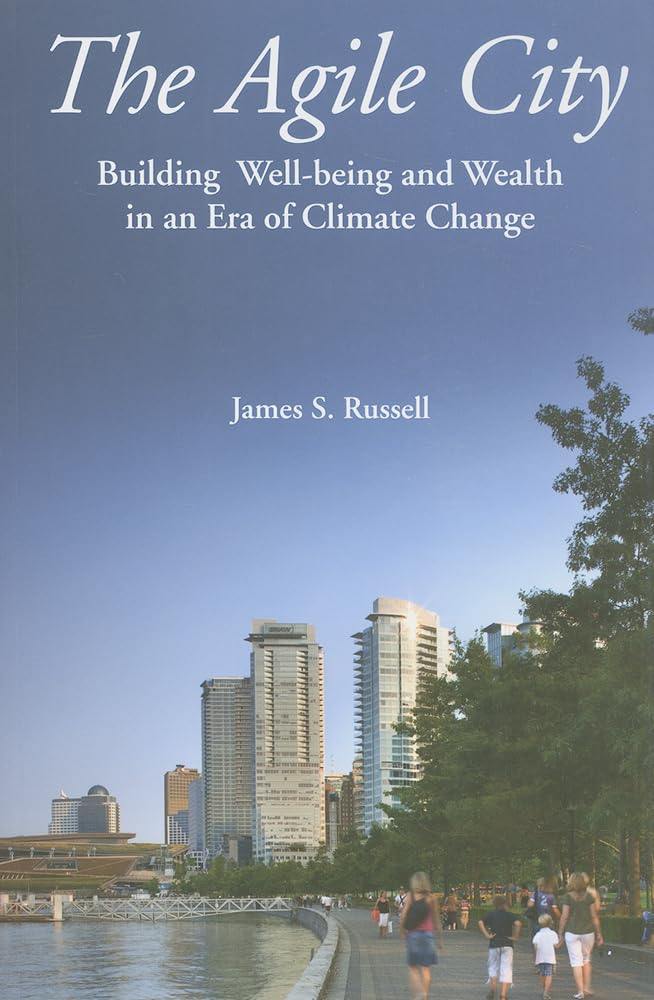
The Agile City: Building Wellbeing And Wealth In An Era Of Climate Change,Used
Sold by Ergodebooks, an authorized reseller.
Returns accepted within 30 days | support@ergodebooks.com
Shipping Information
- Free Standard Shipping — United States only
- Processing Time: 3–5 business days
- Estimated Delivery: 6–10 business days after dispatch
- Double-boxed, fully insured & discreetly packaged
- Tracking number sent via email once dispatched
Returns & Refund
Returns accepted within 30 days of delivery.
Damaged or Defective Item
Free return shipping + replacement or full refund
Wrong Item Received
Free return shipping + replacement or full refund
Change of Mind
Return shipping at customer's expense · 25% restocking fee applies
Payment Option

In a very short time America has realized that global warming poses real challenges to the nation's future. The Agile City engages the fundamental question: what to do about it?Journalist and urban analyst James S. Russell argues that we'll more quickly slow global warmingand blunt its effectsby retrofitting cities, suburbs, and towns. The Agile City shows that change undertaken at the building and community level can reach carbonreduction goals rapidly.Adapting buildings (39 percent of greenhousegas emission) and communities (slashing the 33 percent of transportation related emissions) offers numerous other benefits that tax gimmicks and massive alternativeenergy investments can't match.Rapidly improving building techniques can readily cut carbon emissions by half, and some can get to zero. These cuts can be affordably achieved in the windshieldshattering heat of the desert and the bonechilling cold of the north. Intelligently designing our towns could reduce marathon commutes and child chauffeuring to a few miles or eliminate it entirely. Agility, Russell argues, also means learning to adapt to the effects of climate change, which means redesigning the obsolete ways real estate is financed; housing subsidies are distributed; transportation is provided; and water is obtained, distributed and disposed of. These engines of growth have become increasingly more dysfunctional both economically and environmentally.The Agile City highlights tactics that create multiplier effects, which means that ecologically driven change can shoreup economic opportunity, can make more productive workplaces, and can help revive neglected communities. Being able to look at multiple effects and multiple benefits of political choices and private investments is essential to assuring wealth and wellbeing in the future. Green, Russell writes, grows the future.
⚠️ WARNING (California Proposition 65):
This product may contain chemicals known to the State of California to cause cancer, birth defects, or other reproductive harm.
For more information, please visit www.P65Warnings.ca.gov.