
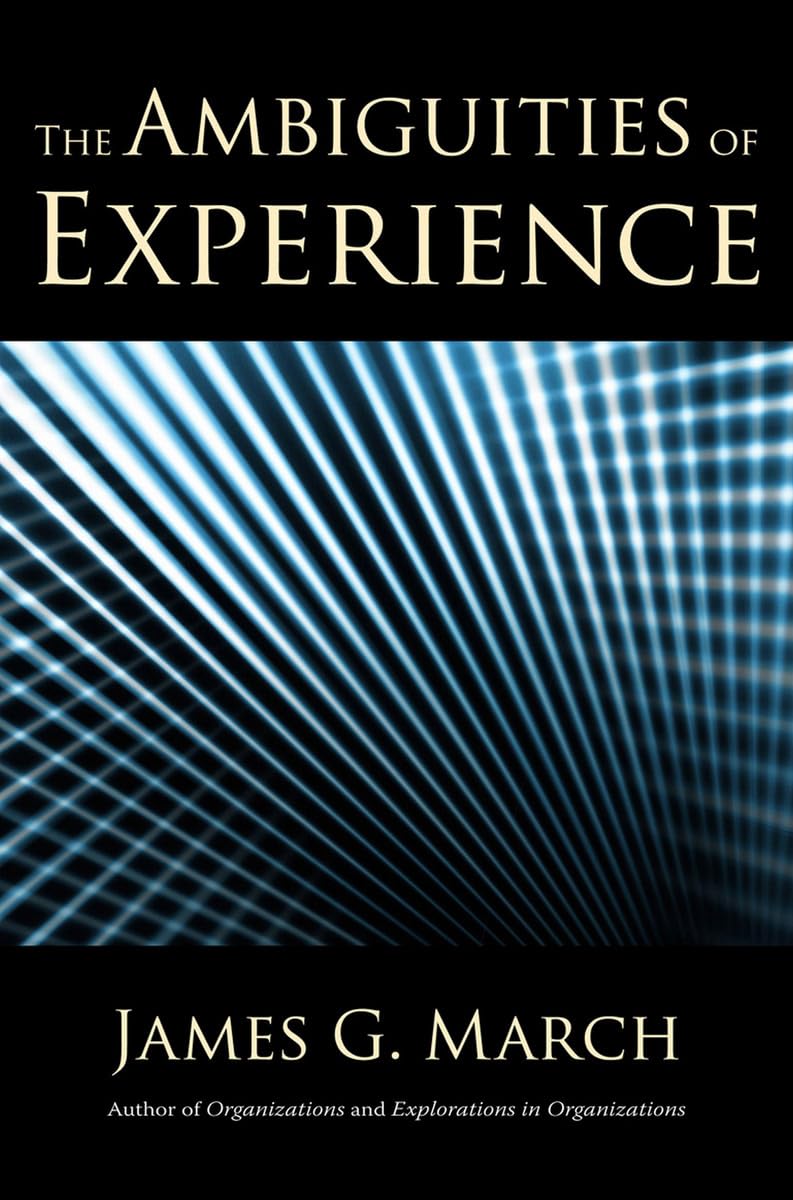
Title
The Ambiguities Of Experience (Messenger Lectures),New
Sold by Ergodebooks, an authorized reseller.
Returns accepted within 30 days | support@ergodebooks.com
Shipping Information
- Free Standard Shipping — United States only
- Processing Time: 3–5 business days
- Estimated Delivery: 6–10 business days after dispatch
- Double-boxed, fully insured & discreetly packaged
- Tracking number sent via email once dispatched
Returns & Refund
Returns accepted within 30 days of delivery.
Damaged or Defective Item
Free return shipping + replacement or full refund
Wrong Item Received
Free return shipping + replacement or full refund
Change of Mind
Return shipping at customer's expense · 25% restocking fee applies
Payment Option

The First Component Of Intelligence Involves Effective Adaptation To An Environment. In Order To Adapt Effectively, Organizations Require Resources, Capabilities At Using Them, Knowledge About The Worlds In Which They Exist, Good Fortune, And Good Decisions. They Typically Face Competition For Resources And Uncertainties About The Future. Many, But Possibly Not All, Of The Factors Determining Their Fates Are Outside Their Control. Populations Of Organizations And Individual Organizations Survive, In Part, Presumably Because They Possess Adaptive Intelligence; But Survival Is By No Means Assured. The Second Component Of Intelligence Involves The Elegance Of Interpretations Of The Experiences Of Life. Such Interpretations Encompass Both Theories Of History And Philosophies Of Meaning, But They Go Beyond Such Things To Comprehend The Grubby Details Of Daily Existence. Interpretations Decorate Human Existence. They Make A Claim To Significance That Is Independent Of Their Contribution To Effective Action. Such Intelligence Glories In The Contemplation, Comprehension, And Appreciation Of Life, Not Just The Control Of It.From The Ambiguities Of Experiencein The Ambiguities Of Experience, James G. March Asks A Deceptively Simple Question: What Is, Or Should Be, The Role Of Experience In Creating Intelligence, Particularly In Organizations? Folk Wisdom Both Trumpets The Significance Of Experience And Warns Of Its Inadequacies. On One Hand, Experience Is Described As The Best Teacher. On The Other Hand, Experience Is Described As The Teacher Of Fools, Of Those Unable Or Unwilling To Learn From Accumulated Knowledge Or The Teaching Of Experts. The Disagreement Between Those Folk Aphorisms Reflects Profound Questions About The Human Pursuit Of Intelligence Through Learning From Experience That Have Long Confronted Philosophers And Social Scientists. This Book Considers The Unexpected Problems Organizations (And The Individuals In Them) Face When They Rely On Experience To Adapt, Improve, And Survive.While Acknowledging The Power Of Learning From Experience And The Extensive Use Of Experience As A Basis For Adaptation And For Constructing Stories And Models Of History, This Book Examines The Problems With Such Learning. March Argues That Although Individuals And Organizations Are Eager To Derive Intelligence From Experience, The Inferences Stemming From That Eagerness Are Often Misguided. The Problems Lie Partly In Errors In How People Think, But Even More So In Properties Of Experience That Confound Learning From It. 'Experience,' March Concludes, 'May Possibly Be The Best Teacher, But It Is Not A Particularly Good Teacher.'
⚠️ WARNING (California Proposition 65):
This product may contain chemicals known to the State of California to cause cancer, birth defects, or other reproductive harm.
For more information, please visit www.P65Warnings.ca.gov.
- Q: How many pages does this book have? A: This book has one hundred sixty-eight pages. It provides a comprehensive exploration of the role of experience in creating intelligence for organizations.
- Q: What type of binding does this book have? A: This book features a hardcover binding. This durable binding style is ideal for preserving the book through repeated use.
- Q: What are the dimensions of this book? A: The dimensions of this book are five inches in length, zero point seventy-five inches in width, and seven point fifty-two inches in height. These dimensions make it easy to handle and read.
- Q: Who is the author of this book? A: The author of this book is James G. March. He is known for his significant contributions to the fields of management and organizational theory.
- Q: What is the main theme of this book? A: The main theme of this book is the complexities of learning from experience in organizations. It examines how experience can both aid and hinder the development of intelligence.
- Q: Is this book suitable for beginners in organizational theory? A: Yes, this book is suitable for beginners. It provides foundational insights into the relationship between experience and intelligence in organizations.
- Q: How can I apply the concepts from this book? A: You can apply the concepts by critically evaluating how your organization uses experience in decision-making. Reflect on case studies and personal experiences to enhance learning.
- Q: Is this book appropriate for academic study? A: Yes, this book is appropriate for academic study. It is often used in management courses and provides valuable insights for students and scholars alike.
- Q: How should I care for this hardcover book? A: To care for this hardcover book, keep it away from direct sunlight and moisture. Store it upright on a shelf to prevent damage to the binding.
- Q: Can this book be damaged easily? A: No, this hardcover book is less likely to be damaged easily compared to paperback editions. However, it should still be handled with care.
- Q: What should I do if my book arrives damaged? A: If your book arrives damaged, contact customer support immediately. They will assist you with a return or replacement process.
- Q: Does this book come with a warranty? A: No, this book does not come with a warranty. However, returns may be possible depending on the seller's policy.
- Q: What if I need help understanding the concepts in this book? A: If you need help, consider joining a discussion group or seeking out academic articles related to the themes of the book. Engaging with others can enhance your understanding.
- Q: How does this book compare to others in organizational theory? A: This book stands out by addressing the paradox of experience in organizations. Unlike many texts that emphasize success, it explores the pitfalls of relying solely on experience.
- Q: Is this book recommended for professionals in management? A: Yes, this book is highly recommended for professionals in management. It offers valuable insights that can inform practice and strategic decision-making.