
Title
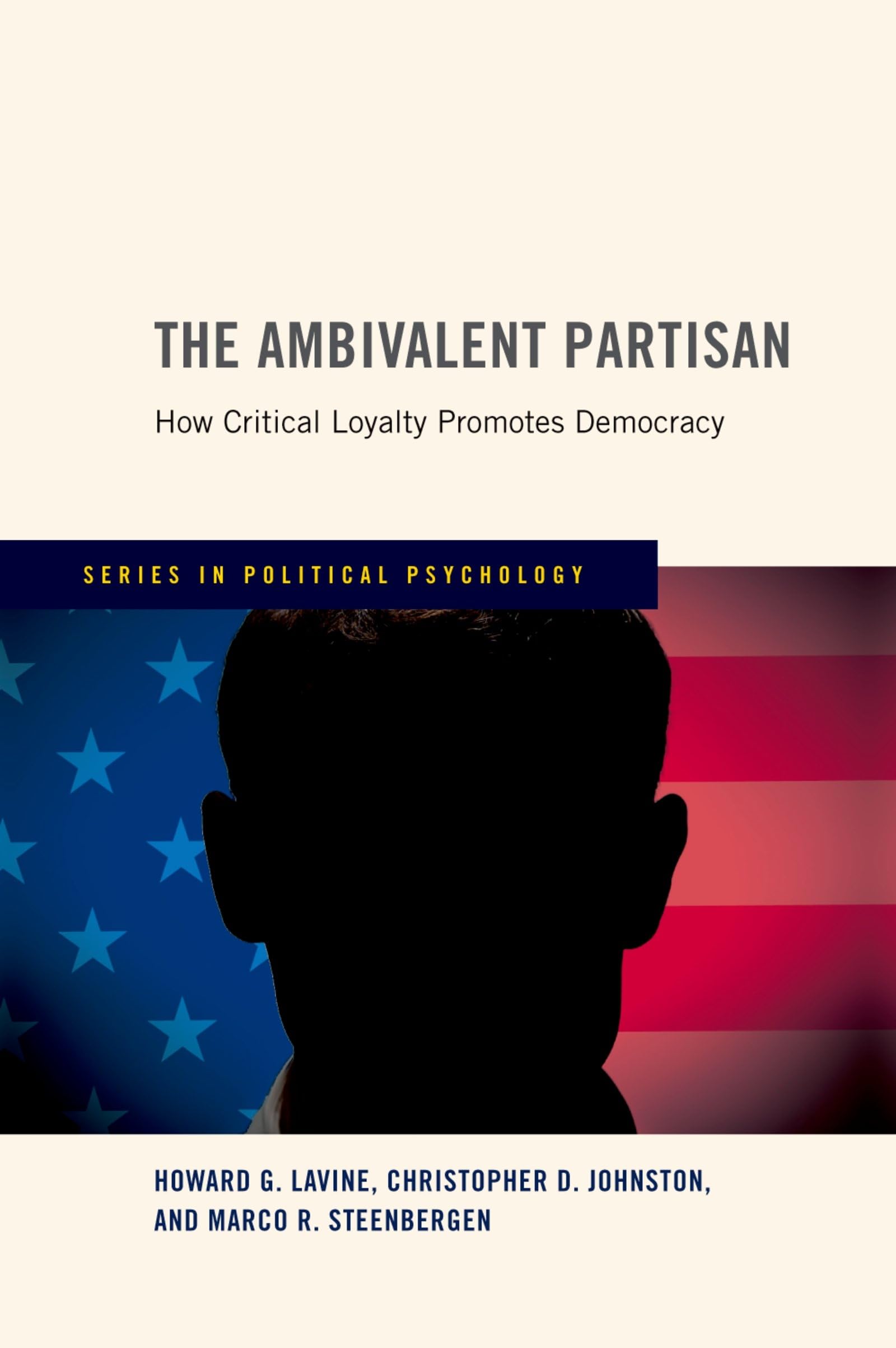
The Ambivalent Partisan: How Critical Loyalty Promotes Democracy (Series in Political Psychology),Used
Sold by Ergodebooks, an authorized reseller.
Returns accepted within 30 days | support@ergodebooks.com
Shipping Information
- Free Standard Shipping — United States only
- Processing Time: 3–5 business days
- Estimated Delivery: 6–10 business days after dispatch
- Double-boxed, fully insured & discreetly packaged
- Tracking number sent via email once dispatched
Returns & Refund
Returns accepted within 30 days of delivery.
Damaged or Defective Item
Free return shipping + replacement or full refund
Wrong Item Received
Free return shipping + replacement or full refund
Change of Mind
Return shipping at customer's expense · 25% restocking fee applies
Payment Option

Over the past half century, two overarching questions have dominated the study of mass political behavior: How do ordinary citizens form their political judgments, and how good are those judgments from a normative perspective? The authors of The Ambivalent Partisan offer a novel approach to these questions, one in which political reasoning is viewed as arising from tradeoffs among three generally conflicting psychological goals: making decisions easily, getting them right, and maintaining cognitive consistency. Taking aim at decades of received wisdom, the central claim of this book is that highquality political judgment hinges less on citizens' cognitive ability than on their willingness to temporarily suspend partisan habits and follow the 'evidence' wherever it leads. This occurs most readily when citizens experience a disjuncture between their stable political identities and their contemporary evaluations of party performance, a state the authors refer to as partisan ambivalence. Drawing on both experimental and survey methods as well as five decades of American political history the authors demonstrate that compared to other citizens, ambivalent partisans perceive the political world accurately, form their policy preferences in a principled manner, and communicate those preferences by making issues an important component of their electoral decisions. The book's most important conclusion is that a nontrivial portion of the electorate manages to escape the vicissitudes of apathy or wanton bias, and it is these citizens these ambivalent partisans who reliably approximate a desirable standard of democratic citizenship.
⚠️ WARNING (California Proposition 65):
This product may contain chemicals known to the State of California to cause cancer, birth defects, or other reproductive harm.
For more information, please visit www.P65Warnings.ca.gov.